
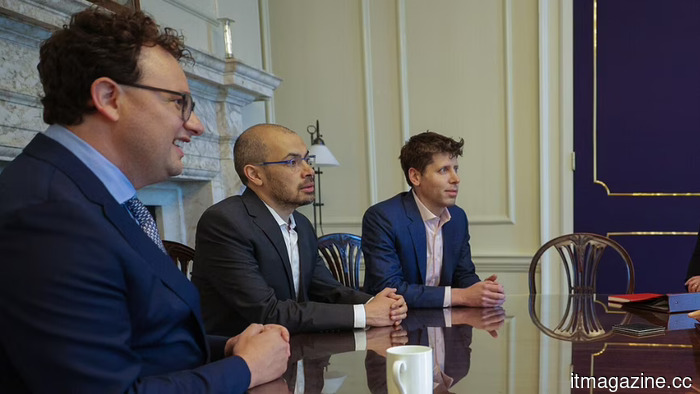
The main competitors in AI are coming together to discuss AI regulation.
The leaders of the most advanced AI companies rarely find common ground. However, this week, three of them reached a consensus on a significant issue: the need for regulation of frontier AI, and it must happen soon.
Over the past five weeks, the heads of Google DeepMind, OpenAI, and Anthropic each released a memo detailing how to govern the most capable AI models, as reported by Axios. Their assessments align closely with one another.
Where they concur
All three leaders advocate for independent, external testing of frontier models prior to their launch, which marks a departure from the industry’s previous reliance on self-reporting. They also seek a unified organization to establish standards, ensure compliance, and limit access to models deemed overly risky.
They agree on leadership as well, favoring U.S. oversight rather than a mix of state or conflicting national regulations. They emphasize immediate national-security threats, including cyberattacks and bioweapons. None of them calls for widespread restrictions; instead, they focus on a small subset of the most powerful models.
Where they differ
However, they diverge on the extent of government intervention. Amodei, who has pushed for a coordinated halt on frontier AI, suggests creating an FAA-like federal agency that could outright block releases.
Conversely, Hassabis proposes a FINRA-style organization that would be funded by the industry but under governmental supervision, starting with voluntary evaluations. Altman, writing in the Financial Times, proposes an IAEA-style international body that would leverage model and market access.
An uncommon agreement
Hassabis's proposal, published on Tuesday, received unexpected commendations amid a highly competitive arena. Altman described it as “thoughtful.” Microsoft’s Satya Nadella noted that the aim is to foster “a frontier ecosystem that encourages innovation and choice.” Even Elon Musk, who typically does not align with Altman, referred to it as “a good starting point.” Jack Clark of Anthropic praised the framework as “excellent.”
The timing is significant. During the same five weeks, Washington intervened twice to restrict or postpone the release of frontier models, first Anthropic's Fable and Mythos, and then OpenAI’s GPT-5.6, citing cybersecurity concerns. The Trump administration has publicly opposed regulation, yet internally seems uncertain about the effectiveness of a hands-off strategy. It is also reported that Meta’s Mark Zuckerberg is crafting his own memo.
The downside
Not everyone is in favor. OpenAI, Google, and Anthropic have the legal resources, security teams, and connections in Washington to navigate a stringent certification process, but startups and open-source developers lack these advantages. Critics caution that this could lead to regulatory capture, where safety regulations inadvertently solidify the dominance of the largest labs. This is the same group of competitors that recently clashed at the G7 and is now strongly advocating for these regulations.
Published July 17, 2026 - 10:46 am UTC
Other articles
 From Bitcoin trading to financial super apps: Binance turns 9.
CoinDesk Research outlines the evolution of cryptocurrency exchanges in five phases, as Binance celebrates nine years and 316 million users by implementing a super-app strategy.
From Bitcoin trading to financial super apps: Binance turns 9.
CoinDesk Research outlines the evolution of cryptocurrency exchanges in five phases, as Binance celebrates nine years and 316 million users by implementing a super-app strategy.
 a16z heads a $20M seed funding round for the AI agent startup Runta.
a16z has spearheaded a $20M seed investment in Runta, which is reconstructing AI agent infrastructure to enable companies to operate agents securely using sandboxes and guardrails.
a16z heads a $20M seed funding round for the AI agent startup Runta.
a16z has spearheaded a $20M seed investment in Runta, which is reconstructing AI agent infrastructure to enable companies to operate agents securely using sandboxes and guardrails.
 DeepMind introduces an AI biosecurity initiative.
Google DeepMind and Isomorphic Labs have initiated an AI biosecurity program aimed at assisting governments in preventing, detecting, and responding to biological threats.
DeepMind introduces an AI biosecurity initiative.
Google DeepMind and Isomorphic Labs have initiated an AI biosecurity program aimed at assisting governments in preventing, detecting, and responding to biological threats.
 Airbus relocates essential applications from AWS to a French cloud.
Airbus is transferring 70 essential applications from AWS to Scaleway in France to ensure digital sovereignty, thereby protecting sensitive information from US extraterritorial regulations.
Airbus relocates essential applications from AWS to a French cloud.
Airbus is transferring 70 essential applications from AWS to Scaleway in France to ensure digital sovereignty, thereby protecting sensitive information from US extraterritorial regulations.
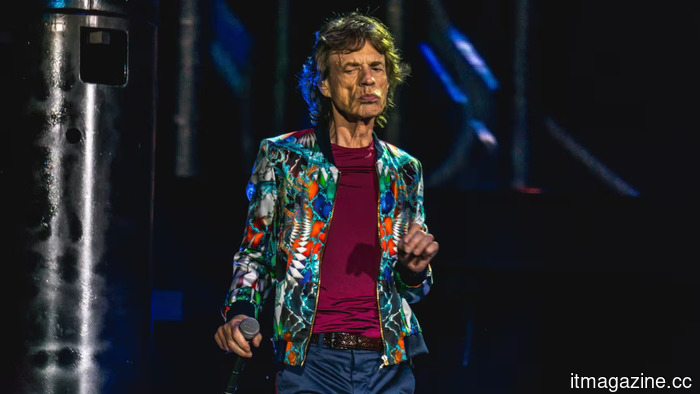 Mick Jagger claims that AI is acceptable for musicians, as long as it doesn't mimic his voice.
Mick Jagger supports AI as a creative resource but firmly opposes software that replicates the Rolling Stones, coinciding with the band's release of Foreign Tongues.
Mick Jagger claims that AI is acceptable for musicians, as long as it doesn't mimic his voice.
Mick Jagger supports AI as a creative resource but firmly opposes software that replicates the Rolling Stones, coinciding with the band's release of Foreign Tongues.
 A "smart" charger with a screen has appeared in Russia.
The company Anker has announced the launch of sales in Russia of its new 45W Anker Nano Charger. This is not just another "brick" for the socket, but a real small computer with a color display.
A "smart" charger with a screen has appeared in Russia.
The company Anker has announced the launch of sales in Russia of its new 45W Anker Nano Charger. This is not just another "brick" for the socket, but a real small computer with a color display.
The main competitors in AI are coming together to discuss AI regulation.
Hassabis, Altman, and Amodei have each released a proposal for regulating AI. They are in consensus about the need for independent testing and the establishment of a US-led organization, but they differ on the extent of Washington's involvement.