
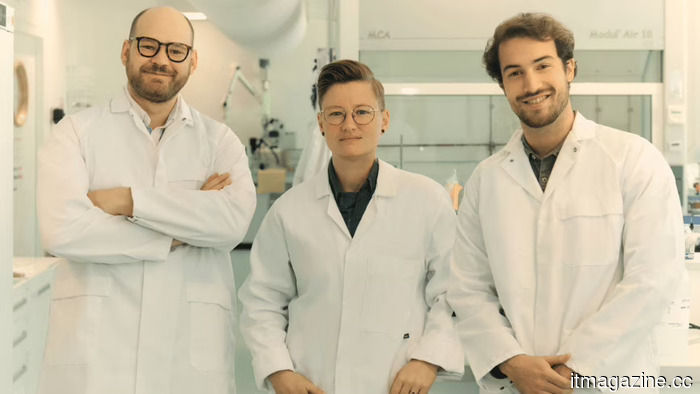
Syntetica secures $30 million to expand nylon recycling efforts.
A French startup has secured $30 million to address one of the fashion industry's most challenging waste issues. Syntetica specializes in recycling nylon, and it is capable of processing two grades simultaneously, a task that has long been difficult for the industry, as stated by its founder to TechCrunch.
The funding round, amounting to €26.1 million, was led by the Ecotechnologies 2 fund, managed by Bpifrance, France's public investment bank. Lululemon participated, along with apparel manufacturer MAS Holdings, EQT Ventures, SWEN Capital Partners, and family offices associated with Peugeot, Etam, and Indorama Ventures. Additionally, the European Innovation Council contributed both equity and grants.
What Syntetica does
Nylon is valued by brands for its strength, but this very characteristic also makes the material difficult to recycle. Syntetica focuses on two grades: Nylon 6 and Nylon 6,6, which recyclers find challenging to separate once they are combined in textile waste.
Utilizing low-temperature chemistry, Syntetica can recycle both grades simultaneously. Bertone explained to TechCrunch that the process is akin to “a sniper; it targets the nylon and leaves everything else behind.” In mixed leggings, the elastane, known for its elasticity, survives, allowing Syntetica to reuse it.
The 💜 of EU tech
The latest developments from the EU tech scene, a narrative from our wise founder Boris, and some questionable AI art are available for free every week in your inbox. Subscribe now!
What is produced is not fabric, but pellets, which can be converted into yarn by others. The company claims that the resulting product is of comparable quality to virgin nylon.
Why it matters
According to the company, recycled nylon currently constitutes about 2% of the global market, based on figures from Textile Exchange. The majority of discarded textiles are disposed of in incinerators or landfills. Additionally, fluctuations in oil prices have increased the cost of new, petroleum-based nylon.
Bertone noted that this instability serves as “a wake-up call to many brands.” He believes there should be no green premium involved. “To scale effective solutions for a sustainable future, they must be cost-competitive, easily scalable, and partnerships should be established from the outset,” he told TechCrunch.
A factory with Michelin
The funding will be utilized to establish a first commercial demonstration plant. Syntetica is collaborating with Michelin on this project at the tire maker’s Centre for Sustainable Materials in Clermont-Ferrand. Bertone anticipates it will be operational within 18 months, with an annual output of hundreds of tonnes.
Lululemon reportedly collaborated with Syntetica for around two years prior to its investment. The brand has previously supported other recyclers, including Samsara Eco and Epoch Biodesign.
This fundraising aligns with a broader European initiative. Investors like Bpifrance and the EIC view startups such as Syntetica as instrumental in developing local industries and reducing dependence on fossil fuels. It is part of a broader trend of European deep-tech funding in material sciences, spanning technologies from London energy AI to new deep-tech funds.
Other articles
 Coca-Cola stops fairlife production in the US following a ransomware attack.
Coca-Cola has reported that a ransomware attack has affected its fairlife dairy division, leading to the suspension of all production in the US while the company looks into the incident.
Coca-Cola stops fairlife production in the US following a ransomware attack.
Coca-Cola has reported that a ransomware attack has affected its fairlife dairy division, leading to the suspension of all production in the US while the company looks into the incident.
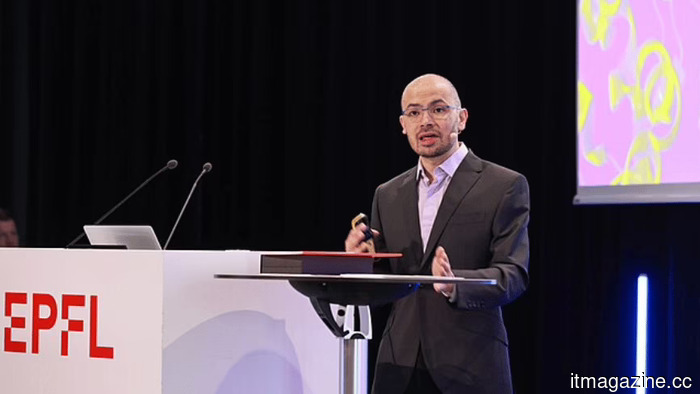 Hassabis: Having a STEM degree enhances your AI skills tenfold.
DeepMind's CEO, Demis Hassabis, asserts that having a STEM degree remains significant in the age of AI, as individuals with a strong grasp of the fundamentals can leverage AI tools much more effectively—up to ten times better.
Hassabis: Having a STEM degree enhances your AI skills tenfold.
DeepMind's CEO, Demis Hassabis, asserts that having a STEM degree remains significant in the age of AI, as individuals with a strong grasp of the fundamentals can leverage AI tools much more effectively—up to ten times better.
 Roblox's AI Build feature aims to simplify game development to the level of sending a text message.
Roblox is commemorating its 20th anniversary with Build, a new feature that converts text prompts into playable games directly from your mobile device.
Roblox's AI Build feature aims to simplify game development to the level of sending a text message.
Roblox is commemorating its 20th anniversary with Build, a new feature that converts text prompts into playable games directly from your mobile device.
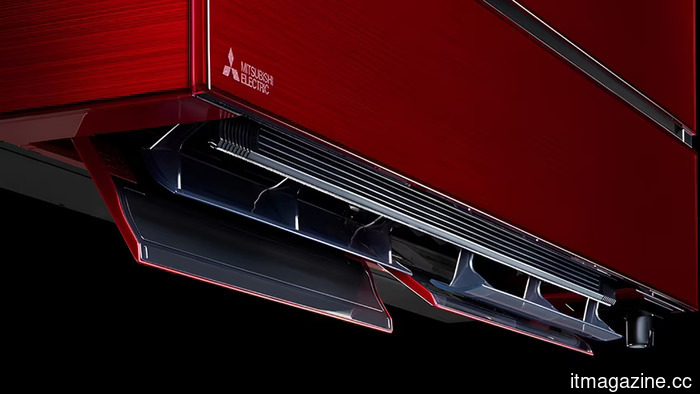 Mitsubishi Electric is considering a merger of its power chip business with Rohm and Toshiba.
According to sources, Mitsubishi Electric is looking into a power-chip collaboration with Rohm and Toshiba that would establish it as the second-largest supplier in the world.
Mitsubishi Electric is considering a merger of its power chip business with Rohm and Toshiba.
According to sources, Mitsubishi Electric is looking into a power-chip collaboration with Rohm and Toshiba that would establish it as the second-largest supplier in the world.
 DeepMind introduces an AI biosecurity initiative.
Google DeepMind and Isomorphic Labs have initiated an AI biosecurity program aimed at assisting governments in preventing, detecting, and responding to biological threats.
DeepMind introduces an AI biosecurity initiative.
Google DeepMind and Isomorphic Labs have initiated an AI biosecurity program aimed at assisting governments in preventing, detecting, and responding to biological threats.
 Galaxy Z Fold 8 Ultra: All the information we have on Samsung's upcoming flagship foldable device.
Samsung's upcoming flagship foldable may feature significant enhancements throughout, such as a more visible crease improvement and a noticeably quicker chipset.
Galaxy Z Fold 8 Ultra: All the information we have on Samsung's upcoming flagship foldable device.
Samsung's upcoming flagship foldable may feature significant enhancements throughout, such as a more visible crease improvement and a noticeably quicker chipset.
Syntetica secures $30 million to expand nylon recycling efforts.
French deeptech company Syntetica has secured $30 million to enhance its nylon recycling capabilities, allowing for the recycling of two grades simultaneously, with support from Lululemon and Bpifrance among its investors.