

Meta will notify parents about conversations related to self-harm that teens have with AI.
Meta will notify parents when a teenager engages in discussions about suicide or self-harm with its Meta AI chatbot. This update was announced in a blog post on Thursday.
The notifications are directed to parents using Instagram supervision tools and are currently active in the US, UK, Australia, and Canada, according to TechCrunch. They are expected to be available worldwide by the end of the year.
How the notifications function
Meta has developed a specialized AI system for this purpose. It identifies conversations in which a teenager explicitly refers to self-harm. Every flagged conversation is reviewed by a human before a notification is sent to the parent. If the intent is ambiguous, Meta states it will prioritize caution by notifying the parent regardless.
The alert will not contain the specific message, as reported by CNET. Instead, parents will receive a notification along with expert-sourced tips on how to discuss the matter. This builds upon previous tools like search-term alerts on Instagram and a feature displaying topics a teenager discusses with Meta AI.
Emergency services and stricter settings
Meta is also working on a feature that would alert emergency services when a conversation indicates that an individual, whether an adult or a teenager, is at immediate risk. This function is already in place for posts on Facebook and Instagram, with over 19,000 such referrals made last year.
Its stricter "Limited Content" setting now also applies to Meta AI. When activated, this setting prevents the chatbot from responding to a broader range of prompts. Meta AI has already been trained to steer clear of conversations related to sexual content, romance, or alcohol with teenagers.
Mixed reactions
Meta claims it consulted over 75 clinicians in formulating this approach. Larry Magid from the nonprofit organization ConnectSafely endorsed this move as a way to balance teen privacy with parental awareness.
However, some experts expressed caution. Fairplay attorney Brendan Bouffard described the change as "a step in the right direction, but... should be met with skepticism," according to Mashable. Dr. John Ackerman, a clinical expert, warned that these alerts risk becoming mere "lip service" unless they are user-friendly and result in concrete actions.
The pressure here is both legal and ethical. Meta has faced legal challenges regarding child safety and social media addiction, recently losing two trials this year and currently appealing both decisions. OpenAI has also implemented its own protections for teenagers, including a "Trusted Contact" feature.
A broader safety reassessment
This development occurs during a busy period for AI safety. The same day, a Meta Oversight Board study revealed that significant models from Meta, Anthropic, and OpenAI tended to avoid criticizing restrictive governments more often than they did permissive regimes, as reported by the Associated Press. Such behavior could "extend the long arm of restrictive governments across borders," the report cautioned.
Meanwhile, Google dismissed a Common Sense Media report labeling its AI Search as an "unacceptable risk" for children, as reported by Digital Trends, claiming the tests employed hypothetical searches that were not replicable.
This situation is part of a larger wave of scrutiny. Canada has tightened regulations for chatbots and minors, Ofcom is investigating TikTok, Australia has introduced restrictions on teen social media usage, and China has intensified regulation on AI companions.
This is a sensitive issue. If you or someone you know is struggling, help is accessible. In the US, you can call or text 988. For assistance in other regions, please visit findahelpline.com for local support services.
Other articles
 XPeng unveils the MONA L03 in Munich, targeting the electric SUV market in Europe.
On Thursday, XPeng introduced the MONA L03 smart SUV during its global launch event in Munich, Germany. This model is set to be released in 65 countries and regions.
XPeng unveils the MONA L03 in Munich, targeting the electric SUV market in Europe.
On Thursday, XPeng introduced the MONA L03 smart SUV during its global launch event in Munich, Germany. This model is set to be released in 65 countries and regions.
 An FCC proposal might put an end to anonymous burner phones in the United States.
A newly proposed FCC know-your-customer initiative would mandate identity verification for purchasing a phone, effectively putting an end to anonymous burner phones. Privacy advocates label this move as misdirected.
An FCC proposal might put an end to anonymous burner phones in the United States.
A newly proposed FCC know-your-customer initiative would mandate identity verification for purchasing a phone, effectively putting an end to anonymous burner phones. Privacy advocates label this move as misdirected.
 DeepMind introduces an AI biosecurity initiative.
Google DeepMind and Isomorphic Labs have initiated an AI biosecurity program aimed at assisting governments in preventing, detecting, and responding to biological threats.
DeepMind introduces an AI biosecurity initiative.
Google DeepMind and Isomorphic Labs have initiated an AI biosecurity program aimed at assisting governments in preventing, detecting, and responding to biological threats.
 a16z heads a $20M seed funding round for the AI agent startup Runta.
a16z has spearheaded a $20M seed investment in Runta, which is reconstructing AI agent infrastructure to enable companies to operate agents securely using sandboxes and guardrails.
a16z heads a $20M seed funding round for the AI agent startup Runta.
a16z has spearheaded a $20M seed investment in Runta, which is reconstructing AI agent infrastructure to enable companies to operate agents securely using sandboxes and guardrails.
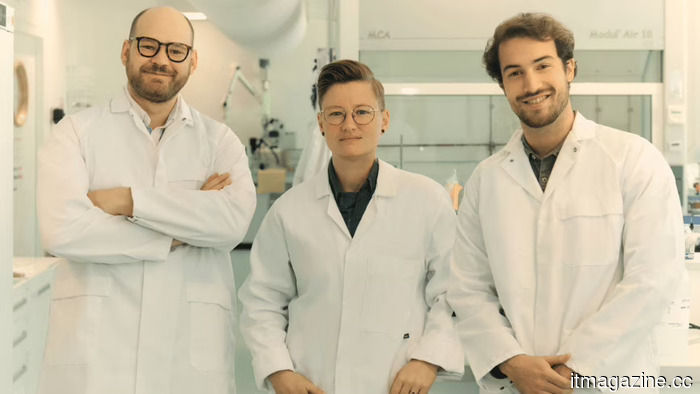 Syntetica secures $30 million to expand nylon recycling efforts.
French deeptech company Syntetica has secured $30 million to enhance its nylon recycling capabilities, allowing for the recycling of two grades simultaneously, with support from Lululemon and Bpifrance among its investors.
Syntetica secures $30 million to expand nylon recycling efforts.
French deeptech company Syntetica has secured $30 million to enhance its nylon recycling capabilities, allowing for the recycling of two grades simultaneously, with support from Lululemon and Bpifrance among its investors.
 The new robot vacuum cleans in a new way.
It seems our floors will soon be cleaner than a politician's conscience before elections. The TROUVER brand has decided to shake things up and is bringing three brand new dirt-killing robots to Russia. In fact, these guys have been roaming the global market under the MOVA brand for quite some time. Now it's our turn.
The new robot vacuum cleans in a new way.
It seems our floors will soon be cleaner than a politician's conscience before elections. The TROUVER brand has decided to shake things up and is bringing three brand new dirt-killing robots to Russia. In fact, these guys have been roaming the global market under the MOVA brand for quite some time. Now it's our turn.
Meta will notify parents about conversations related to self-harm that teens have with AI.
Meta will notify parents if their teenager talks about suicide or self-harm with Meta AI, in response to increasing concerns regarding the treatment of young users by AI chatbots.