

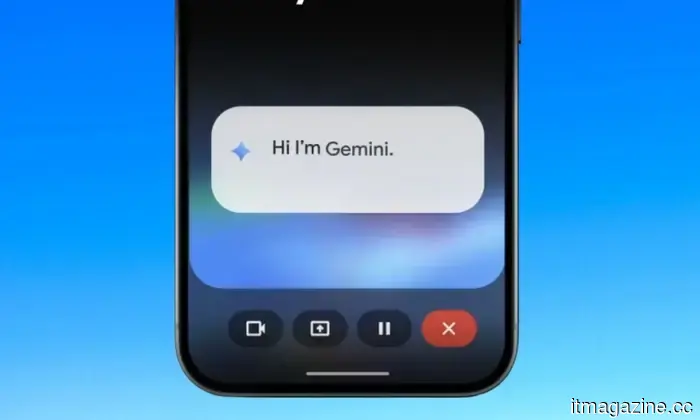
Gemini might finally allow you to decide on the tone of friendliness it conveys.
Google has been working for several months to make Gemini sound more natural, expressive, and conversational. It now seems that the company is preparing to provide users with greater control over the AI's voice.
Code discovered by Android Authority’s APK Insights in the latest beta version of the Google app indicates that Gemini may soon let users customize its voice through four distinct parameters: Energy, Formality, Warmth, and Speed. Rather than selecting from a predetermined list of personalities, users could modify these traits to create a voice that aligns more closely with their preferences.
This feature hasn’t been officially announced yet, but its discovery suggests Google is moving towards making AI assistants more personalized.
Gemini’s voice is becoming more adaptable
The newly found controls were identified in the Google app version 17.41.12 beta, which includes references to a specific “Customize” section in Gemini’s voice settings.
The code indicates that users will have the ability to adjust four traits:
Energy: Low, Medium, High
Formality: Low, Medium, High
Warmth: Low, Medium, High
Speed: Slow, Normal, Fast
Rather than replacing Gemini’s current voices, these settings seem intended to enhance them. After customization, the personalized voice is expected to carry over to both Gemini Live and the regular chat experience, ensuring a consistent tone throughout the app.
This represents a significant shift. Previously, choosing a Gemini voice mostly involved selecting from Google’s established personalities. The introduction of these new controls indicates that Google aims to empower users to shape the assistant’s tone rather than merely selecting one that feels most appropriate.
Google recently updated Gemini's voices following I/O
This discovery follows Google's update that revamped the voice selection experience after Google I/O.
The redesigned picker has replaced the earlier carousel interface with a more streamlined list view and introduced two new voices: Flare and Glow, which take the place of the older Nova and Lyra options.
The current voice lineup includes:
Ursa
Vega
Pegasus
Dipper
Eclipse
Capella
Orbit
Orion
Flare
Glow
Notably, Google has also eliminated the descriptive labels that used to define each voice’s personality, such as “Calm” or “Bright.” Users now have to evaluate the voices by listening rather than relying on text-based descriptions.
The update also brings a visual refresh to Gemini’s interface with sleeker, more modern icons for features like the microphone, camera, gallery, file uploads, video, screen sharing, and Gemini Live. These aesthetic changes are being deployed through a server-side update along with Gemini version 1.0.913571982.
The timing is particularly interesting. At Google I/O, the company announced plans for regional dialects for Gemini. Voice customization aligns nicely with this larger initiative to make AI interactions feel less mechanical and more tailored to individual users.
Google is not the only company moving in this direction. Apple’s iOS 27 introduces similar options for Siri, letting users adjust Pace and Expressivity, with those preferences reflecting across Siri-supported applications like Maps and Safari.
Allowing users to control tone, warmth, and speaking style may seem like a minor modification, but it signifies a broader transformation in the AI landscape. Companies are no longer just competing on the capabilities of their assistants; they are increasingly competing on how those assistants sound while performing their tasks.

Other articles
 A "smart" charger with a screen has appeared in Russia.
The company Anker has announced the launch of sales in Russia of its new 45W Anker Nano Charger. This is not just another "brick" for the socket, but a real small computer with a color display.
A "smart" charger with a screen has appeared in Russia.
The company Anker has announced the launch of sales in Russia of its new 45W Anker Nano Charger. This is not just another "brick" for the socket, but a real small computer with a color display.
 A study warns that AI models could be suppressing political discourse.
A study conducted by an Oversight Board funded by Meta revealed that top AI models are twice as inclined to avoid criticizing repressive governments, thus influencing political discourse.
A study warns that AI models could be suppressing political discourse.
A study conducted by an Oversight Board funded by Meta revealed that top AI models are twice as inclined to avoid criticizing repressive governments, thus influencing political discourse.
 An FCC proposal might put an end to anonymous burner phones in the United States.
A newly proposed FCC know-your-customer initiative would mandate identity verification for purchasing a phone, effectively putting an end to anonymous burner phones. Privacy advocates label this move as misdirected.
An FCC proposal might put an end to anonymous burner phones in the United States.
A newly proposed FCC know-your-customer initiative would mandate identity verification for purchasing a phone, effectively putting an end to anonymous burner phones. Privacy advocates label this move as misdirected.
 From trading Bitcoin to becoming a financial super app: Binance turns 9.
CoinDesk Research outlines the evolution of cryptocurrency exchanges in five stages, as Binance celebrates nine years and 316 million users with its super-app approach.
From trading Bitcoin to becoming a financial super app: Binance turns 9.
CoinDesk Research outlines the evolution of cryptocurrency exchanges in five stages, as Binance celebrates nine years and 316 million users with its super-app approach.
 Messi or Ronaldo? Caviar transformed football's greatest rivalry into a luxurious 24-karat decision.
Caviar has turned the longstanding Messi-Ronaldo argument in football into a competition between Android and iPhone, featuring artisanal enamel, 24-karat gold, and price tags in the five figures.
Messi or Ronaldo? Caviar transformed football's greatest rivalry into a luxurious 24-karat decision.
Caviar has turned the longstanding Messi-Ronaldo argument in football into a competition between Android and iPhone, featuring artisanal enamel, 24-karat gold, and price tags in the five figures.
 Google employees gather at their Mountain View headquarters, calling for job security.
Approximately 100 members of the Alphabet Workers Union assembled at Google's headquarters in Mountain View, presenting a petition with 4,500 signatures advocating for severance and protections against layoffs.
Google employees gather at their Mountain View headquarters, calling for job security.
Approximately 100 members of the Alphabet Workers Union assembled at Google's headquarters in Mountain View, presenting a petition with 4,500 signatures advocating for severance and protections against layoffs.
Gemini might finally allow you to decide on the tone of friendliness it conveys.
Google is experimenting with voice customization for Gemini, allowing users to modify energy, warmth, formality, and speaking speed to create a more personalized AI assistant experience.