
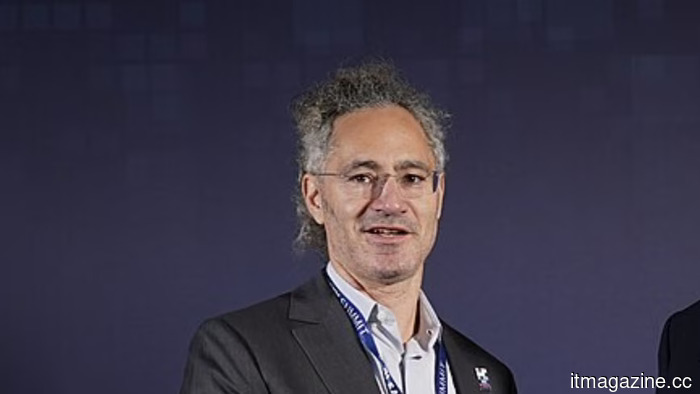
The CEO of Palantir anticipates that AI will increase his wealth by twentyfold while middle-class employees receive only small salary increases.
TL;DR: Karp claims AI could potentially increase his wealth by 20 times to nearly $300 billion, while middle-class salaries may only double. He referred to AI-driven wealth inequality as “a problem for society.”
Palantir CEO Alex Karp estimated that AI could make him “20 times wealthier,” suggesting a fortune nearing $300 billion, up from around $15 billion currently. He mentioned that middle-class salaries could merely double in the next decade. Karp described the difference as “a complete decoupling of unimaginable wealth and normal wealth,” labeling it as “a problem for society.”
“The primary issue in this country is that while AI will enhance the standard of living for the average person, those involved may become 10 to 100 times wealthier than they are now,” Karp stated during an interview with Axel Springer CEO Mathias Döpfner on the MDMeets podcast. He noted that the wealth is accumulating among “people you can’t really relate to, like unusually gifted individuals you probably wouldn’t invite over for dinner.” He also criticized the exaggeration of AI’s potential as “disconcerting” and “depressing.”
This admission stands out since Karp is acknowledging a problem associated with his own company. Palantir’s market value has surged to approximately $322 billion, fueled by the demand for AI. Karp has previously suggested that the increased political pushback against concentrated wealth might lead to the full nationalization of AI firms. According to Oxfam, global billionaire wealth increased by 16% in 2025, reaching $18.3 trillion, which is three times faster than the five-year average. Elon Musk briefly became the world’s first trillionaire this year.
Karp isn’t the only one raising this concern. BlackRock CEO Larry Fink remarked at Davos that initial AI benefits are primarily going to “owners of models, data, and infrastructure,” questioning the fate of others if AI impacts white-collar jobs as globalization did blue-collar jobs. Nobel-winning AI researcher Geoffrey Hinton was more direct: “Wealthy individuals will employ AI to replace workers. This isn’t AI’s fault; it’s the capitalist system.” In May, South Korea’s deputy prime minister echoed this thought when Samsung’s chip workers nearly went on strike over the distribution of AI profits. The pressing issue is no longer whether AI concentration of wealth occurs, but whether any government will intervene before the disparity becomes entrenched.
Other articles
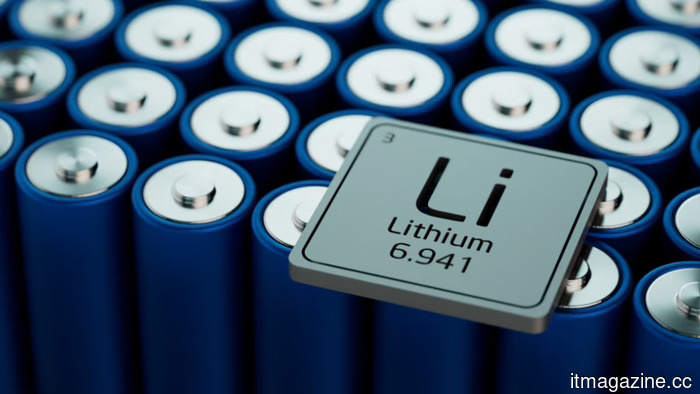 For the first time in ten years, China will impose taxes on lithium and solar batteries, while sodium batteries will remain tax-exempt.
China is discontinuing a 10-year exemption from consumption tax on lithium batteries (2% starting in September, 4% beginning in 2027) and solar cells. However, sodium and solid-state options will remain exempt.
For the first time in ten years, China will impose taxes on lithium and solar batteries, while sodium batteries will remain tax-exempt.
China is discontinuing a 10-year exemption from consumption tax on lithium batteries (2% starting in September, 4% beginning in 2027) and solar cells. However, sodium and solid-state options will remain exempt.
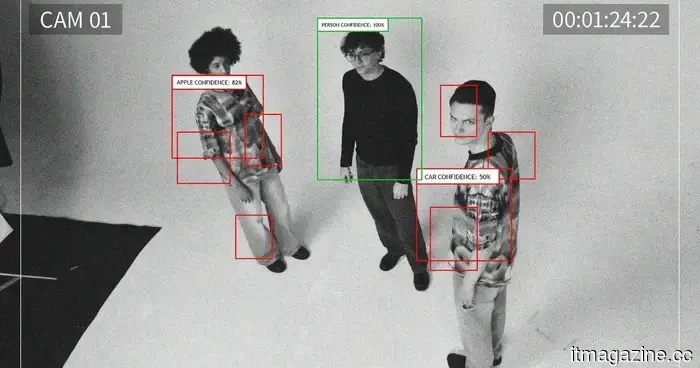 Clothing designed to counteract surveillance is becoming more affordable, but don’t anticipate an invisibility cloak.
Anti-surveillance clothing is becoming accessible enough for everyday wardrobes, but its designs only deceive specific computer vision systems. At this moment, it serves more effectively as a statement for privacy rather than as dependable protection.
Clothing designed to counteract surveillance is becoming more affordable, but don’t anticipate an invisibility cloak.
Anti-surveillance clothing is becoming accessible enough for everyday wardrobes, but its designs only deceive specific computer vision systems. At this moment, it serves more effectively as a statement for privacy rather than as dependable protection.
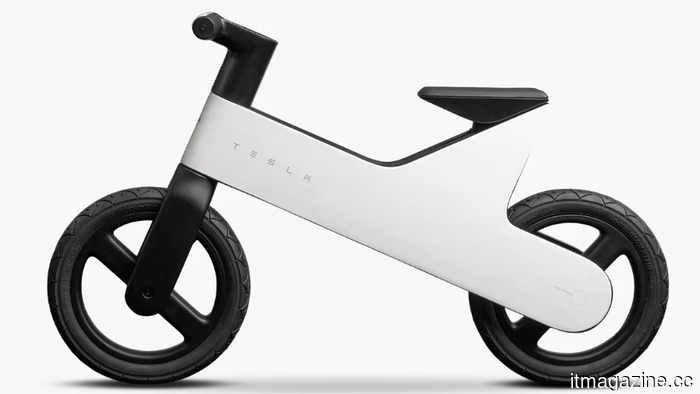 Tesla produced a balance bike for toddlers priced at $225. It features no motor and no pedals, and is already out of stock.
Tesla's Balance Bike for Kids is a toy designed for children aged 2 to 5, featuring a magnesium frame and no pedals or motors. It sold out immediately. Musk continues to refrain from producing an electric bike for adults.
Tesla produced a balance bike for toddlers priced at $225. It features no motor and no pedals, and is already out of stock.
Tesla's Balance Bike for Kids is a toy designed for children aged 2 to 5, featuring a magnesium frame and no pedals or motors. It sold out immediately. Musk continues to refrain from producing an electric bike for adults.
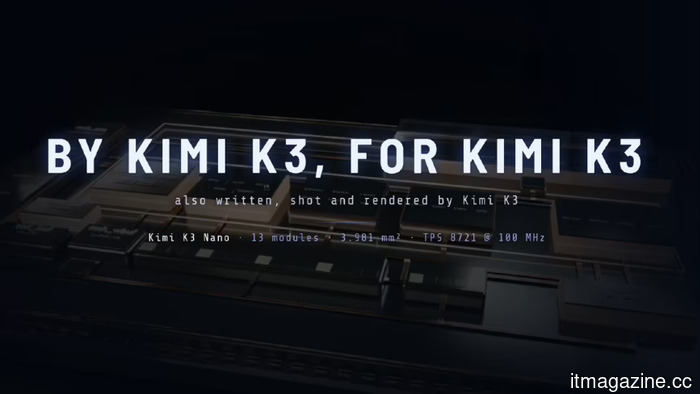 Trump's AI advisor states that Kimi K3 demonstrates
Kimi K3 reached the top of coding leaderboards in just one day. Sacks cautioned regarding US regulations. Khosla attributed issues to immigration. Marcus raised questions about the $1 trillion in US AI capital expenditures compared to China's expenditure.
Trump's AI advisor states that Kimi K3 demonstrates
Kimi K3 reached the top of coding leaderboards in just one day. Sacks cautioned regarding US regulations. Khosla attributed issues to immigration. Marcus raised questions about the $1 trillion in US AI capital expenditures compared to China's expenditure.
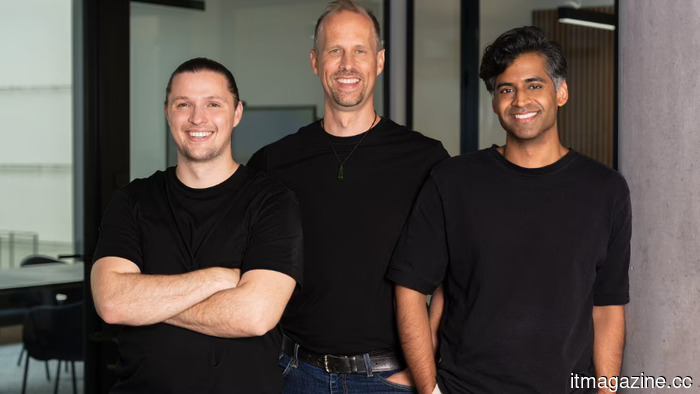 SAP's EUR 1 billion investment in AI focuses on tables rather than chatbots.
SAP has finalized its acquisition of Prior Labs, the creator of TabPFN, a foundational model designed for structured data. This investment, exceeding EUR 1 billion, represents a significant commitment to tabular AI and marks an uncommon success for Europe.
SAP's EUR 1 billion investment in AI focuses on tables rather than chatbots.
SAP has finalized its acquisition of Prior Labs, the creator of TabPFN, a foundational model designed for structured data. This investment, exceeding EUR 1 billion, represents a significant commitment to tabular AI and marks an uncommon success for Europe.
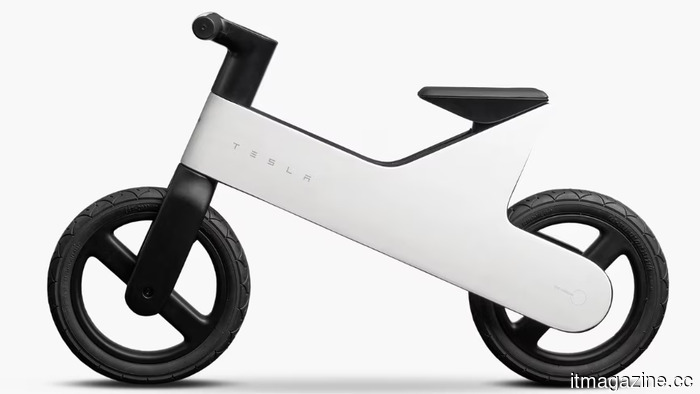 Tesla produced a $225 balance bike designed for toddlers. It features no motor or pedals and is already out of stock.
Tesla's Balance Bike designed for children is a pedal-free, motor-free toy made of magnesium, suitable for kids aged 2 to 5. It sold out immediately. Musk has yet to produce an e-bike for adults.
Tesla produced a $225 balance bike designed for toddlers. It features no motor or pedals and is already out of stock.
Tesla's Balance Bike designed for children is a pedal-free, motor-free toy made of magnesium, suitable for kids aged 2 to 5. It sold out immediately. Musk has yet to produce an e-bike for adults.
The CEO of Palantir anticipates that AI will increase his wealth by twentyfold while middle-class employees receive only small salary increases.
Alex Karp stated that AI might increase his $15 billion fortune to $300 billion, while average salaries might only double. He described the disparity as a "complete decoupling" and labeled it "a problem for society."