

Visa introduced a stablecoin platform, causing Circle's shares to drop by six percent.
TL;DR: Visa introduced a stablecoin platform featuring Open USD support, causing Circle shares to drop six percent amid card networks competing to dominate crypto payments.
On Thursday, Visa unveiled the Visa Stablecoin Platform, a new infrastructure product enabling banks and payment processors to issue, manage, and settle stablecoin transactions via Visa’s network. The platform debuts with native support for Open USD, a stablecoin backed by over 140 firms, including Visa, Mastercard, Stripe, and BlackRock. Jack Forestell, Visa’s Chief Product and Strategy Officer, stated that the product aims to make stablecoins “as easy to use as any other form of money on the Visa network,” as announced by the company.
The platform features a Wallet-as-a-Service offering that provides custody, compliance, and transaction management for institutions wishing to hold and transfer stablecoins without developing their own infrastructure. Security measures incorporate dual-control approval workflows, audit logging, passkey authentication, and customizable allow lists for counterparties. Visa mentioned that the platform is currently in beta testing with select clients and will broaden its availability in the coming months.
As a result of the announcement, shares of Circle, the company behind the USDC stablecoin, fell approximately six percent, while Coinbase decreased by about four and a half percent, according to Bloomberg. Conversely, Visa’s stock rose by around two percent following the news. Open USD imposes no mint or redeem fees and redistributes nearly all reserve income to distribution partners, a pricing strategy that undercuts Circle’s economics, explaining the market reaction.
The stablecoin market has expanded to over $310 billion in circulation, with Morningstar predicting it could reach nearly $1.5 trillion by 2035. The US GENIUS Act, enacted in July 2025, established the first federal regulatory framework for stablecoins, providing institutions like Visa with clearer operational guidelines. The Open Standard consortium launching Open USD earlier this month received support from companies such as Alphabet, BNY, and Coinbase, aiming to challenge Circle’s market presence.
Visa indicated that the platform is intended to complement its existing stablecoin capabilities, including a settlement infrastructure that achieved a $7 billion annualized run rate in April and stablecoin-linked card programs. This development is akin to Mastercard’s acquisition of stablecoin infrastructure company BVNK for nearly $2 billion earlier this year, signifying that both major card networks now view stablecoins as essential to their future rather than merely a niche endeavor. PayPal is also expanding its own stablecoin PYUSD, highlighting the payments industry’s shift toward blockchain-based settlement as a key trend for 2026.
The Visa Stablecoin Platform remains in beta, with Visa not disclosing the number of clients testing it or when it will be widely available. However, the combination of Visa’s extensive network, which processes transactions in over 200 countries and territories, and the zero-fee model of Open USD poses a competitive challenge that Circle and other stablecoin issuers have yet to encounter. The adoption by banks and fintechs will depend on Visa’s execution of the integration, but the infrastructure strategy clearly signals that traditional payment companies aim to control the stablecoin layer rather than simply connect to it.
Other articles
 EU compels Google to make Android more accessible under the Digital Markets Act.
The EU has mandated that Google make Android accessible to competing AI assistants and share its search data with rival companies as part of the Digital Markets Act.
EU compels Google to make Android more accessible under the Digital Markets Act.
The EU has mandated that Google make Android accessible to competing AI assistants and share its search data with rival companies as part of the Digital Markets Act.
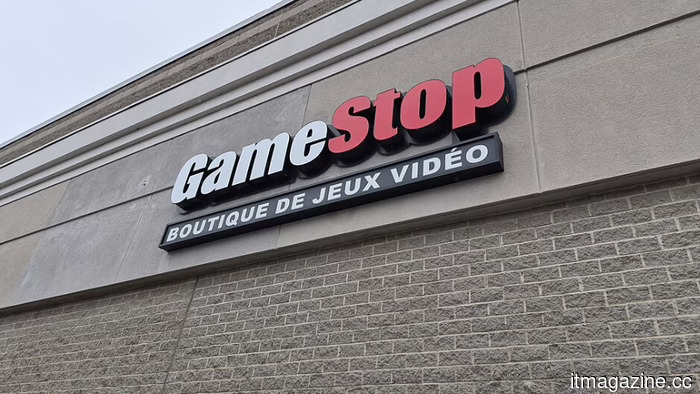 Ryan Cohen from GameStop describes physical game sales as 'completely insignificant' and redirects every inquiry towards eBay.
GameStop CEO Ryan Cohen deemed physical game sales as unimportant during an appearance on Bloomberg TV, as collectibles accounted for 41 percent of revenue and he advances his eBay proposal.
Ryan Cohen from GameStop describes physical game sales as 'completely insignificant' and redirects every inquiry towards eBay.
GameStop CEO Ryan Cohen deemed physical game sales as unimportant during an appearance on Bloomberg TV, as collectibles accounted for 41 percent of revenue and he advances his eBay proposal.
 Oracle is now rated just above junk status following a downgrade by S&P, as expenditures on AI data centers consume cash rapidly.
S&P lowered Oracle's rating to BBB-, just one level above junk status, as $250 billion in AI data center expenditures depletes cash reserves and bond investors assess the debt as nearing junk levels.
Oracle is now rated just above junk status following a downgrade by S&P, as expenditures on AI data centers consume cash rapidly.
S&P lowered Oracle's rating to BBB-, just one level above junk status, as $250 billion in AI data center expenditures depletes cash reserves and bond investors assess the debt as nearing junk levels.
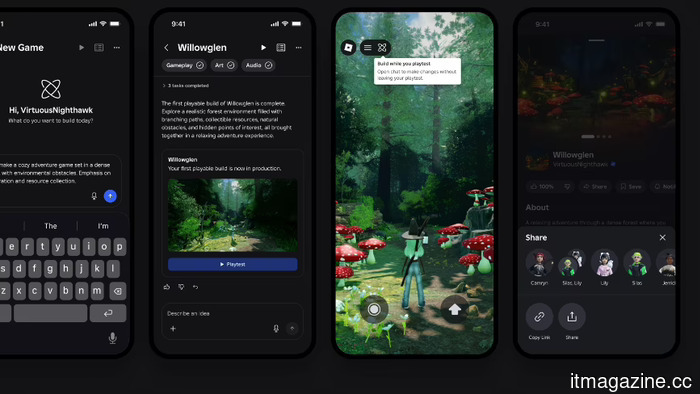 Roblox introduces Build, a mobile feature that converts text prompts into interactive games.
Roblox's new Build tab enables users to create a game from a text prompt on mobile devices, with alpha testing commencing on July 28 in New Zealand for users aged nine and above.
Roblox introduces Build, a mobile feature that converts text prompts into interactive games.
Roblox's new Build tab enables users to create a game from a text prompt on mobile devices, with alpha testing commencing on July 28 in New Zealand for users aged nine and above.
 Sable secured $45 million in funding from Sequoia to develop an AI designed to conduct product demonstrations without the need for human involvement.
Sable secured $45 million from Sequoia and 8VC to develop Aidan, an AI employee designed to conduct live product demonstrations and manage sales for businesses such as Notion.
Sable secured $45 million in funding from Sequoia to develop an AI designed to conduct product demonstrations without the need for human involvement.
Sable secured $45 million from Sequoia and 8VC to develop Aidan, an AI employee designed to conduct live product demonstrations and manage sales for businesses such as Notion.
 WarpSpeed aims to be the AI assistant that truly helps you get your life in order.
The majority of AI tools are designed to respond to inquiries or create content. However, WarpSpeed is adopting a different strategy by integrating email, calendars, tasks, and messaging into a single AI-driven workspace. In a discussion with founder Martin Warner, we delve into the reasons why the upcoming phase of AI could focus less on chatbots and more on assisting individuals in managing their daily activities.
WarpSpeed aims to be the AI assistant that truly helps you get your life in order.
The majority of AI tools are designed to respond to inquiries or create content. However, WarpSpeed is adopting a different strategy by integrating email, calendars, tasks, and messaging into a single AI-driven workspace. In a discussion with founder Martin Warner, we delve into the reasons why the upcoming phase of AI could focus less on chatbots and more on assisting individuals in managing their daily activities.
Visa introduced a stablecoin platform, causing Circle's shares to drop by six percent.
Visa introduced the Visa Stablecoin Platform, which supports Open USD, enabling banks to issue and settle stablecoins. As a result, shares of Circle fell by approximately six percent.