
EU compels Google to make Android more accessible under the Digital Markets Act.
Google will be required to allow competing AI assistants to operate on Android in the same manner as its own Gemini. Additionally, it must share certain search data with rival companies. These directives were outlined by the European Commission on Thursday.
These two mandates fall under the EU’s Digital Markets Act (DMA), according to the Commission. The legislation compels “gatekeeper” platforms to grant rivals access equivalent to what they provide themselves. These measures are binding specifications rather than penalties, defining Google's obligations.
“We anticipate the emergence of alternative options to Google Search and Google’s AI services, like Gemini,” stated Henna Virkkunen, the Commission’s technology head. She added that users in the EU should have more choices.
Regarding AI on Android, the first mandate pertains to AI assistants. Currently, the Commission noted that non-Google assistants have limited access to essential Android features, hindering their performance for the 60% of EU users on Android.
Google will need to allow users to choose a preferred assistant and activate it by voice, similar to how they interact with Gemini. These assistants must also be capable of functioning within applications, such as booking a taxi or suggesting chat replies. Google has until July 2027 to implement these Android modifications.
On the matter of sharing search data, the second requirement specifies that, once anonymized, Google must provide the same data it gathers to enhance its search capabilities to competing search engines and AI chatbots. The EU's intention is to “rebalance the playing field,” with data sharing set to commence in January 2027.
The Commission has also implemented safeguards, as reported by The Register. Records containing rare or sensitive information would be suppressed, user data would be grouped into bundles of at least 1,000, and personal identifiers would be removed. Only approved companies with intentions to improve search could access this data, and independent audits would apply. Google will maintain some control over what information it shares.
Google has expressed dissatisfaction, consistent with its reactions to previous EU rulings. Kent Walker, Google’s president of global affairs, stated in a press release that these decisions "risk undermining essential privacy and security protections for millions of Europeans."
“Private searches of Europeans could be exposed to unknown companies, lacking sufficient anonymization… without user awareness or consent,” Walker asserted. He argued that these changes could “weaken citizens' privacy, jeopardize business trade secrets, and threaten national security.”
The Commission believes its anonymization measures are robust. It also noted that Google can refuse data requests from any company that poses significant security risks.
This directive is part of a broader effort by the EU against Big Tech under the DMA. Brussels has previously instructed Meta to eliminate addictive features and encouraged Google to make its Play store accessible to competitors. Regulators have also scrutinized the choice screens on Android.
If Google fails to comply, the Commission has the authority to impose fines of up to 10% of the company’s global annual revenue. The DMA has faced opposition from the Trump administration, which argues that it unfairly targets American companies. The Verge highlighted that Google has been granted a longer timeline than Apple, which needs to ensure its Siri AI complies before launching in the region.
Other articles
 WarpSpeed Aims to Be the AI Assistant That Effectively Organizes Your Life
The majority of AI tools are designed to respond to queries or create content. WarpSpeed is adopting a unique strategy by integrating email, calendars, tasks, and messaging into a single AI-driven workspace. In a discussion with founder Martin Warner, we delve into the idea that the future of AI could focus less on chatbots and more on assisting individuals in managing their daily activities.
Google's upcoming Gemini Pro is several months delayed due to coding functionalities not meeting internal targets.
Google is several months delayed in its Gemini Pro upgrade due to inadequate coding, engineers departing for Anthropic, and a disappointing internal refresh of training data.
1Password allows Claude to log you into websites without having to view your passwords.
1Password for Claude employs a zero-exposure design, allowing Anthropic's AI agent to access your logins without the credentials ever being exposed to the model.
WarpSpeed Aims to Be the AI Assistant That Effectively Organizes Your Life
The majority of AI tools are designed to respond to queries or create content. WarpSpeed is adopting a unique strategy by integrating email, calendars, tasks, and messaging into a single AI-driven workspace. In a discussion with founder Martin Warner, we delve into the idea that the future of AI could focus less on chatbots and more on assisting individuals in managing their daily activities.
Google's upcoming Gemini Pro is several months delayed due to coding functionalities not meeting internal targets.
Google is several months delayed in its Gemini Pro upgrade due to inadequate coding, engineers departing for Anthropic, and a disappointing internal refresh of training data.
1Password allows Claude to log you into websites without having to view your passwords.
1Password for Claude employs a zero-exposure design, allowing Anthropic's AI agent to access your logins without the credentials ever being exposed to the model.
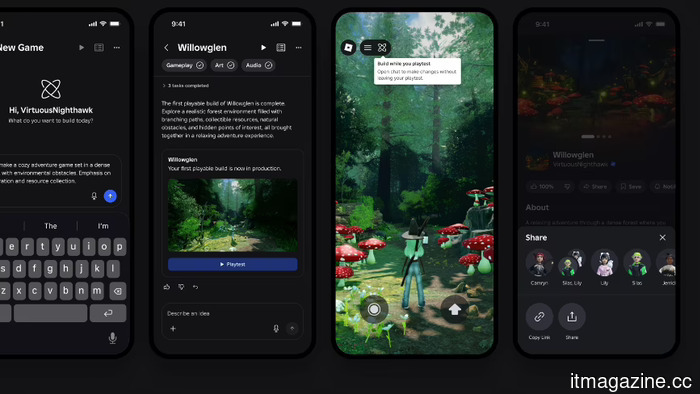 Roblox introduces Build, a mobile feature that converts text prompts into games that can be played.
The new Build tab in Roblox allows users to create a game from a text prompt on mobile devices, with alpha testing commencing on July 28 in New Zealand for users aged nine and above.
Roblox introduces Build, a mobile feature that converts text prompts into games that can be played.
The new Build tab in Roblox allows users to create a game from a text prompt on mobile devices, with alpha testing commencing on July 28 in New Zealand for users aged nine and above.
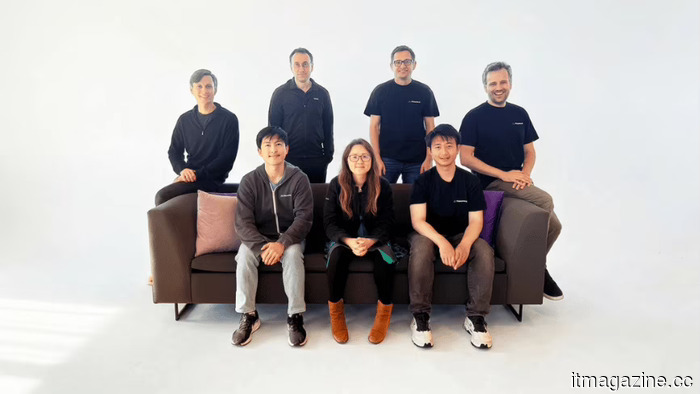 Fireworks has secured $1.5 billion to develop specialized intelligence.
Fireworks secured $1.5 billion at a valuation of $17.5 billion, believing that every company will develop its own tailored intelligence rather than leasing it from a major laboratory.
Fireworks has secured $1.5 billion to develop specialized intelligence.
Fireworks secured $1.5 billion at a valuation of $17.5 billion, believing that every company will develop its own tailored intelligence rather than leasing it from a major laboratory.
 Sable secured $45 million in funding from Sequoia to develop an AI that conducts product demonstrations in place of human presenters.
Sable secured $45 million from Sequoia and 8VC to develop Aidan, an AI assistant designed to conduct live product demonstrations and manage sales for businesses such as Notion.
Sable secured $45 million in funding from Sequoia to develop an AI that conducts product demonstrations in place of human presenters.
Sable secured $45 million from Sequoia and 8VC to develop Aidan, an AI assistant designed to conduct live product demonstrations and manage sales for businesses such as Notion.
EU compels Google to make Android more accessible under the Digital Markets Act.
The EU has mandated that Google make Android accessible to competing AI assistants and share its search data with rival companies as part of the Digital Markets Act.