

OpenAI created a small $230 keyboard that enables you to enhance an AI's capabilities.
The Codex Micro places reasoning settings, agent status indicators, and customizable AI shortcuts right on your desk.
OpenAI has created a $230 mini keyboard that allows Codex users to modify how intensely its AI operates using a physical dial. The Codex Micro also features dedicated buttons for initiating workflows and monitoring active agents, eliminating the need to switch between different chats.
Created in collaboration with keyboard manufacturer Work Louder, this compact accessory for Mac and Windows connects via Bluetooth or USB-C. Although it is currently listed as out of stock on OpenAI’s store, the company has announced that additional units will be available soon.
How the brainpower dial operates
The rotary dial enables users to adjust Codex’s reasoning level in real-time. For simple tasks, users can maintain a lower setting for quicker responses, then increase it when a task demands more complex thought.
This approach provides a refreshingly direct interface for a feature commonly found deep within software settings. AI reasoning is simplified to a volume control, allowing users to toggle between speed and thorough analysis without needing to navigate through various menus.
Additional controls
A small joystick can activate commonly used Codex functions, such as reviewing a pull request or fixing an error. Programmable keys allow users to easily perform frequent actions, like accepting changes or starting a new chat.
These keys also serve as status indicators. Real-time RGB lighting shows whether agents are thinking, running, waiting, or done. Individuals managing multiple tasks can quickly assess progress without needing to open each conversation.
Who is the keyboard intended for
The Codex Micro includes 13 mechanical switches, a joystick, touch sensor, and a rotary dial. This is substantial hardware for a companion device to a single AI coding tool, especially considering its $230 price tag.
Its attractiveness largely depends on how integral Codex has become in your daily tasks. Users juggling several agents may find value in having discrete buttons and status lights for those otherwise unseen processes. For those who use Codex occasionally, it may be more challenging to justify the expense.
The Codex Micro is currently sold out. Anyone interested in a physical AI brainpower dial will need to wait for the next restock and decide if this specific convenience is worth the $230 investment.
Paulo Vargas is an English major turned reporter turned technical writer, with a career that has always circled back to…
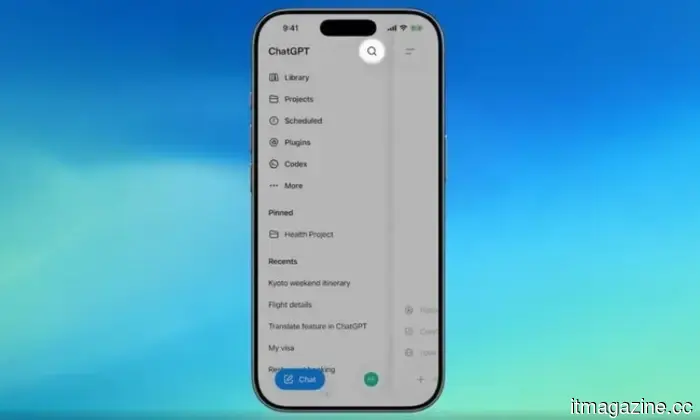
ChatGPT’s new search feature eliminates the need to sift through old chats, files, and images.
You are now able to filter ChatGPT search results by type of content.
If you've ever misplaced a valuable ChatGPT response within your extensive chat history, that frustration is finally resolved. OpenAI has introduced a significant search enhancement that allows you to locate old chats, projects, documents, and images all from one location. Previously, the sidebar search only retrieved past conversations, leaving uploaded files, projects, and images inaccessible. The new search feature is available on the web, iOS, and Android for all ChatGPT plans, including free accounts.
Google integrates your favorite apps into AI Mode in Search for enhanced productivity.
AI Mode now works with Instacart, Canva, and YouTube Music within Search.
Google is improving the practicality of AI Mode in Search by enabling connections to third-party applications. Starting this week in the US, you can securely link some of your preferred apps directly to AI Mode, allowing Search to perform tasks for you rather than just answering questions. This update builds upon a similar feature Google previously implemented in the Gemini app, and it is now being introduced into Search itself. The initial launch includes three partner apps: Instacart, Canva, and YouTube Music, with Google indicating that further integrations are forthcoming.
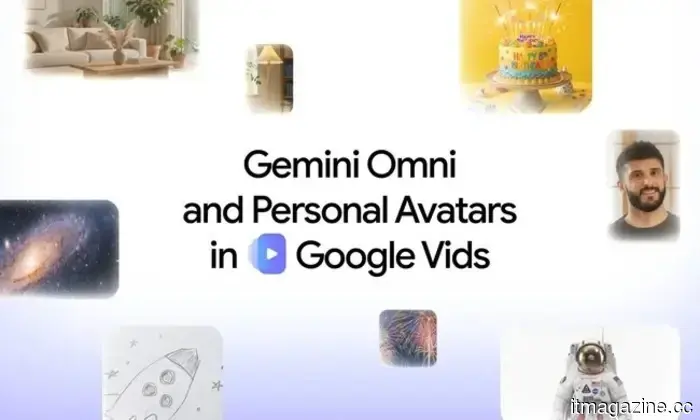
Editing videos in Google Vids is now possible by simply describing the changes.
Gemini Omni powers the new editing tools in Google Vids, with personal avatars being added as well.
Google is integrating Gemini Omni and personal avatars into Google Vids, enhancing the app’s AI-assisted video creation capabilities for paid users. Gemini Omni can now generate and edit clips through natural language commands, while personal avatars enable users to feature themselves in videos without the need for on-camera recording. Vids previously offered video generation powered by Veo, AI presenters, screen recording, and tools to convert Slides presentations into narrated videos. Omni expands this setup into a more comprehensive editing workflow, allowing users to refine clips through conversations rather than needing to rebuild them after each modification.




Other articles
 Oracle is at the forefront of developing an air-gapped cloud for Japan.
Oracle is leading the effort to develop an air-gapped cloud for Japan that is disconnected from the internet, as the United States encourages Tokyo to defend against Chinese cyberattacks.
Oracle is at the forefront of developing an air-gapped cloud for Japan.
Oracle is leading the effort to develop an air-gapped cloud for Japan that is disconnected from the internet, as the United States encourages Tokyo to defend against Chinese cyberattacks.
 This stylish Chinese electric vehicle combines supercar aesthetics with three artificial intelligence systems.
Xpeng’s L03, designed for a global market, features three proprietary AI chips, seamless integration with Google Maps, two powertrain options, and ample towing and cargo capacity suitable for genuine road trips.
This stylish Chinese electric vehicle combines supercar aesthetics with three artificial intelligence systems.
Xpeng’s L03, designed for a global market, features three proprietary AI chips, seamless integration with Google Maps, two powertrain options, and ample towing and cargo capacity suitable for genuine road trips.
 This smart ring offers a blood pressure capability that neither Apple nor Oura have yet committed to.
The $399 Signal Ring claims to provide systolic and diastolic readings without the need for an arm cuff or calibration. However, the lack of FDA approval and available clinical data means it's wise to stick with your traditional arm cuff for now.
This smart ring offers a blood pressure capability that neither Apple nor Oura have yet committed to.
The $399 Signal Ring claims to provide systolic and diastolic readings without the need for an arm cuff or calibration. However, the lack of FDA approval and available clinical data means it's wise to stick with your traditional arm cuff for now.
 Vint Cerf aims to provide AI agents with a sense of identity.
Vint Cerf, regarded as one of the founding figures of the internet, is participating in a project aimed at creating a robust identity layer for AI agents, enabling the web to recognize their creators.
Vint Cerf aims to provide AI agents with a sense of identity.
Vint Cerf, regarded as one of the founding figures of the internet, is participating in a project aimed at creating a robust identity layer for AI agents, enabling the web to recognize their creators.
 As Sony ends support for PS3 games, RPCS3 has successfully archived thousands for PC.
RPCS3 is now capable of running 75% of the monitored PS3 library on PC, achieving this milestone as Sony gets ready to shut down the console's digital store and stop new physical releases.
As Sony ends support for PS3 games, RPCS3 has successfully archived thousands for PC.
RPCS3 is now capable of running 75% of the monitored PS3 library on PC, achieving this milestone as Sony gets ready to shut down the console's digital store and stop new physical releases.
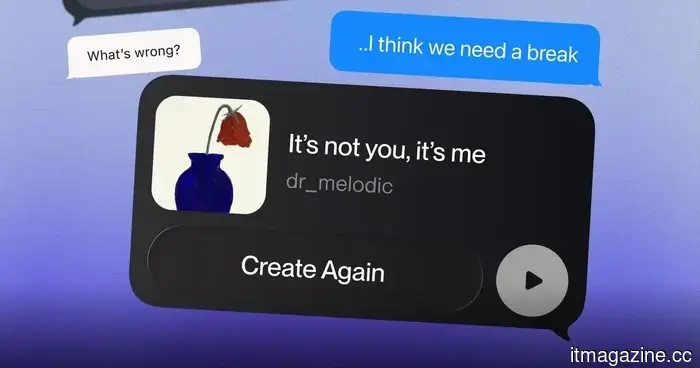 You can now create songs within your iMessage conversations.
Suno's newest iOS update allows users to create 30-second songs from text prompts, voice messages, and messages sent via iMessage.
You can now create songs within your iMessage conversations.
Suno's newest iOS update allows users to create 30-second songs from text prompts, voice messages, and messages sent via iMessage.
OpenAI created a small $230 keyboard that enables you to enhance an AI's capabilities.
OpenAI and Work Louder have created a $230 mini keyboard that offers Codex users physical shortcuts, lights indicating live agent status, and a dial for modifying the AI's processing intensity.