
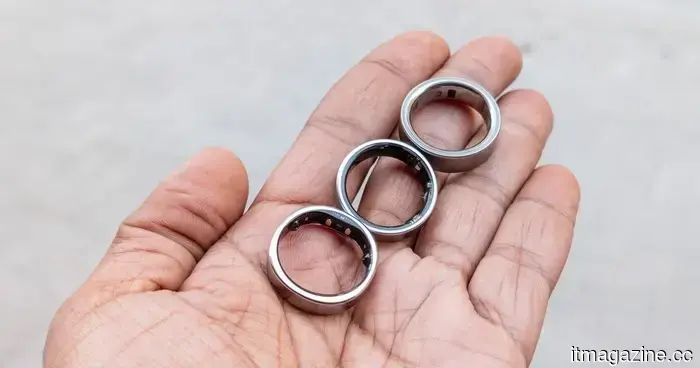
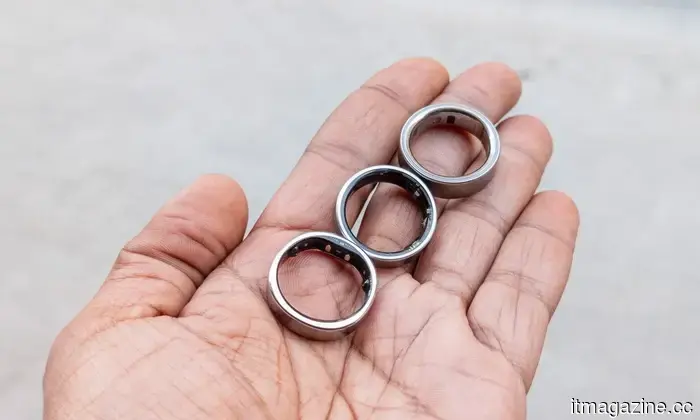
This smart ring offers a blood pressure capability that neither Apple nor Oura have yet committed to.
Digital Trends may receive a commission if you make a purchase through links on our site. Why trust us?
The $399 Signal Ring offers real systolic and diastolic measurements, but it is being introduced as a wellness product without FDA approval.
Vital Signals has launched a smart ring for $399 that surpasses the current offerings from Apple and Oura. The Signal Ring provides numerical blood pressure readings without the need for an arm cuff for initial or ongoing calibration.
According to Bloomberg, preorders will begin on July 16, with shipments expected to start in October. The ring can take measurements throughout the day and while sleeping, with results accessible through an iOS or Android app.
The consumer model has not yet been cleared by the FDA. Vital Signals is also developing a medical-grade version aimed at diagnosing hypertension and identifying concerning trends, but clinical trial outcomes for this version have not been released.
How the Signal Ring functions
The device uses custom electronics and proprietary algorithms to estimate blood pressure from the finger. Vital Signals claims that its method takes into account physiological factors such as body mass and variations in arterial stiffness.
The American Heart Association describes a similar methodology for cuffless devices. Optical sensors gather cardiovascular signals, which are converted into estimated blood pressure readings by software.
For the most accurate readings, users must remain still and manually initiate a session. The app includes breathing exercises and pauses when it detects movement or conversation, which may affect accuracy.
Why caution is advised
During Bloomberg’s practical demonstration, some readings were found to be inaccurate. Vital Signals attributed these discrepancies to the fit of the ring, highlighting a significant limitation for a device that relies on consistent skin contact.
Additionally, most data processing occurs in the cloud. While the ring can record readings offline, results will only be available once it reconnects to the internet.
The FDA advises against depending on non-approved blood pressure wearables. An incorrect reading could hinder treatment or result in an inappropriate medication adjustment. The agency's draft guidance for cuffless devices also outlines the thorough performance testing required in this category.
Who is the intended audience for this ring?
Vital Signals is focusing on individuals with hypertension or those at increased risk, rather than general fitness enthusiasts. The ring tracks heart rate and provides some sleep analysis, but these features are secondary.
There is no subscription fee, which makes the $399 price point more palatable compared to Oura. Anyone whose treatment relies on precise readings should continue using an approved arm cuff and consult a healthcare professional. Once the ring is shipped in October, everyday usage will determine how well it performs under movement and imperfect fits outside of controlled environments.
Paulo Vargas is an English major turned reporter turned technical writer, with a career that has consistently cycled back to…
HTC’s smart glasses appear to be on the verge of launching in the US, though HTC has yet to officially confirm this.
Amazon briefly listed the VIVE Eagle for a September 1 release, despite HTC claiming the $499 glasses are currently only obtainable in Taiwan.
HTC's VIVE Eagle smart glasses may soon arrive in the US. Amazon seemed to have received news of this ahead of HTC’s official announcement.
Notebookcheck discovered six pre-order options available at $499, all with a September 1 launch date. However, Amazon has since removed these listings, leaving customers unsure about the status of their orders.
Don’t expect to see smartwatches and fitness bands with replaceable batteries in the near future.
It turns out that even the EU believes your smartwatch is too compact for a battery replacement.
The EU often encourages tech companies to implement significant changes in their products. This is why iPhones now feature a USB-C port, and why manufacturers are required to provide spare parts and repair support for several years post-launch. Consequently, many anticipated that wearables would soon be next in line for mandated replaceable batteries. However, the EU has recently taken a different direction.
What did the EU announce?
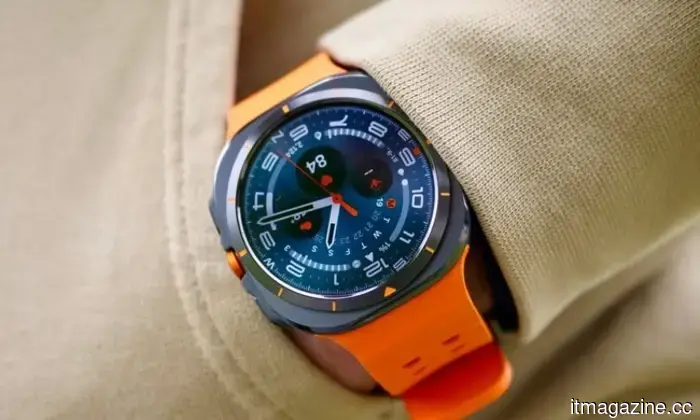
Samsung aims for its forthcoming Galaxy Watch to serve as your AI health partner.
Ahead of its July 22 Unpacked event, Samsung has hinted at AI-enhanced health tracking and upgraded internals for its upcoming smartwatches.
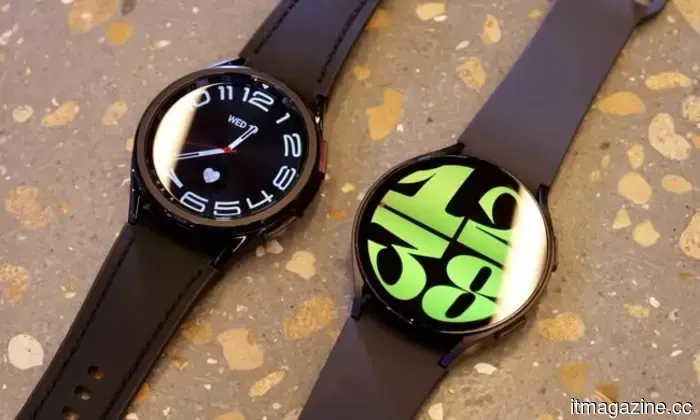
Samsung’s Galaxy Unpacked event on July 22 will not solely focus on new foldable devices. The company has begun to promote its next-generation smartwatches, emphasizing their AI capabilities. In a press release prior to the event, Samsung promises "a whole new level of effortless wellness," characterizing the upcoming watches as an "AI-powered health companion."
From tracking to analyzing.



Other articles
 Anthropic and Blackstone introduce Ode, a firm focused on AI implementation.
Anthropic and Blackstone have unveiled Ode, a $1.5 billion AI implementation company that believes the next big opportunity in AI lies in deployment rather than in developing superior models.
Anthropic and Blackstone introduce Ode, a firm focused on AI implementation.
Anthropic and Blackstone have unveiled Ode, a $1.5 billion AI implementation company that believes the next big opportunity in AI lies in deployment rather than in developing superior models.
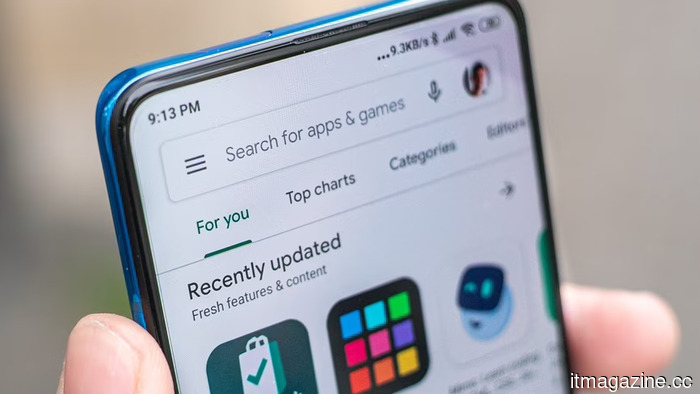 Google Play will be accessible to third-party app stores starting on July 22.
Starting July 22, Google will include third-party app stores within Google Play in the US, following the decision by Google and Epic to abandon their efforts to modify the court order.
Google Play will be accessible to third-party app stores starting on July 22.
Starting July 22, Google will include third-party app stores within Google Play in the US, following the decision by Google and Epic to abandon their efforts to modify the court order.
 Oracle is at the forefront of developing an air-gapped cloud for Japan.
Oracle is leading the effort to develop an air-gapped cloud for Japan that is disconnected from the internet, as the United States encourages Tokyo to defend against Chinese cyberattacks.
Oracle is at the forefront of developing an air-gapped cloud for Japan.
Oracle is leading the effort to develop an air-gapped cloud for Japan that is disconnected from the internet, as the United States encourages Tokyo to defend against Chinese cyberattacks.
 Nokia and Nvidia unveil the inaugural commercial AI-RAN.
Nokia and Nvidia have developed the inaugural commercial AI-RAN platform, which aims to double network capacity using the current spectrum, with a launch planned for 2027.
Nokia and Nvidia unveil the inaugural commercial AI-RAN.
Nokia and Nvidia have developed the inaugural commercial AI-RAN platform, which aims to double network capacity using the current spectrum, with a launch planned for 2027.
 A NeuroAI startup founded by a Face ID pioneer secures $52 million in funding.
Hemispheric, a NeuroAI startup co-founded by a pioneer in Face ID technology, secured $52 million for Descartes, a model with 6 billion parameters that interprets brain activity non-invasively.
A NeuroAI startup founded by a Face ID pioneer secures $52 million in funding.
Hemispheric, a NeuroAI startup co-founded by a pioneer in Face ID technology, secured $52 million for Descartes, a model with 6 billion parameters that interprets brain activity non-invasively.
 As Sony ends support for PS3 games, RPCS3 has successfully archived thousands for PC.
RPCS3 is now capable of running 75% of the monitored PS3 library on PC, achieving this milestone as Sony gets ready to shut down the console's digital store and stop new physical releases.
As Sony ends support for PS3 games, RPCS3 has successfully archived thousands for PC.
RPCS3 is now capable of running 75% of the monitored PS3 library on PC, achieving this milestone as Sony gets ready to shut down the console's digital store and stop new physical releases.
This smart ring offers a blood pressure capability that neither Apple nor Oura have yet committed to.
The $399 Signal Ring claims to provide systolic and diastolic readings without the need for an arm cuff or calibration. However, the lack of FDA approval and available clinical data means it's wise to stick with your traditional arm cuff for now.