
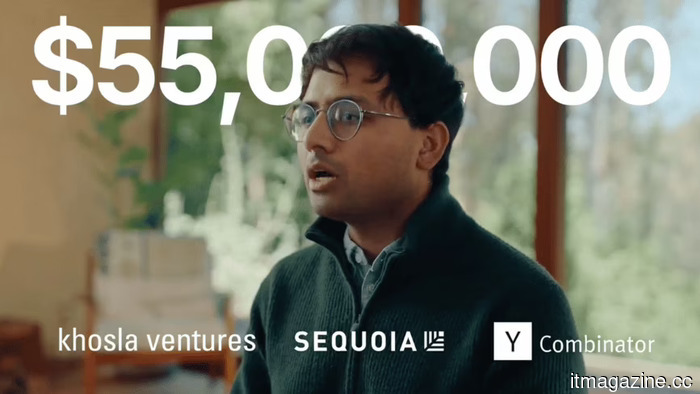
Bunkerhill Health secures $55 million for healthcare AI technology.
The challenging aspect of medical AI has never been the model itself; it has always been the implementation of that model within hospitals. Bunkerhill Health has secured new funding to bridge that divide.
The startup recently completed a $25 million Series B funding round led by Khosla Ventures, as reported exclusively to Fortune. This brings its total funding to $55 million. Investors also include Sequoia, Felicis, Optum Ventures, and Y Combinator.
The company is experiencing significant growth. According to the founder, revenue has increased twenty-fold over the past year, and more than a dozen health systems have signed on.
What Bunkerhill offers
Bunkerhill provides AI agents via a platform known as Carebricks. Hospitals present the platform with challenges—ranging from excessive wait times to missed follow-ups and paperwork—allowing them to create an agent tailored to address those issues.
The platform is currently operational in 15 health systems, including Cleveland Clinic, Mayo Clinic, and Intermountain Health. It features nine FDA-cleared clinical algorithms, including one that detects silent heart-valve disease and another that identifies osteoporosis risk.
A personal motivation behind the initiative
The concept is deeply personal for Chief Executive Nishith Khandwala, who began his journey at Stanford in 2017. He nearly abandoned the effort when hospitals showed reluctance, but everything changed in 2020 when his father suffered a heart attack.
A cardiologist later informed the family that an earlier scan had already indicated the risk. “I think we could have caught this earlier,” Khandwala remembered the doctor saying. He co-founded Bunkerhill with David Eng, maintaining the same mission throughout.
“Medicine has progressed faster than our healthcare system has been able to implement it,” Khandwala remarked. “Why should a hospital have to collaborate with 100 different companies to address 100 different challenges?”
The outcomes and concerns
At the University of Texas Medical Branch, 22 agents are currently operational. In their first month, one agent analyzing coronary scans identified a patient at immediate risk, leading doctors to refer him for a triple bypass, which his team credits with saving his life.
Other agents have reduced nephrology wait times by over half and expedited lung finding follow-ups by 80%. Peter McCaffrey, UTMB’s AI chief, describes the platform as “a shared brain” for the health system. “We don’t require superintelligence to tackle our most pressing issues,” he stated. “What we need is average intelligence.”
However, the field also presents genuine risks. Concerns over accuracy and privacy persist, and Mayo Clinic is currently facing a lawsuit from a former research director regarding its AI oversight. McCaffrey emphasizes the importance of maintaining the integrity of the doctor-patient relationship.
A competitive and well-funded landscape
Investment in healthcare AI is surging, positioning Bunkerhill alongside Neko Health and other medical AI funding initiatives. Its backer, Vinod Khosla, is well-acquainted with the sector, having been an early investor in OpenAI and funding healthcare startups for many years.
“The bottleneck in healthcare AI has never been the technology; it has always been getting a health system to actually implement it,” Khosla explained. “Bunkerhill has addressed that gap.”
Sequoia's Alfred Lin, who oversaw the seed round in 2023, views the crowded field positively. “I much prefer having 1,000 flowers bloom,” he noted, “and the best will ultimately persist over time.”
Other articles
 Sable secured $45 million in funding from Sequoia to develop an AI that conducts product demonstrations in place of human presenters.
Sable secured $45 million from Sequoia and 8VC to develop Aidan, an AI assistant designed to conduct live product demonstrations and manage sales for businesses such as Notion.
Sable secured $45 million in funding from Sequoia to develop an AI that conducts product demonstrations in place of human presenters.
Sable secured $45 million from Sequoia and 8VC to develop Aidan, an AI assistant designed to conduct live product demonstrations and manage sales for businesses such as Notion.
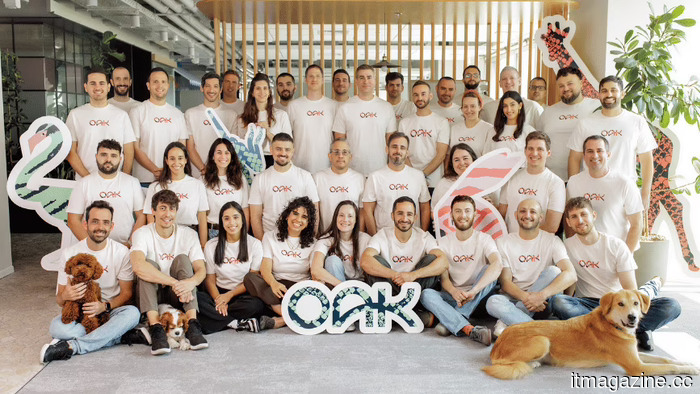 Oak secures $60 million for an AI-driven identity platform.
Israeli startup Oak has secured $60 million for an AI-native identity platform that manages all users, machines, and AI agents from one centralized control panel.
Oak secures $60 million for an AI-driven identity platform.
Israeli startup Oak has secured $60 million for an AI-native identity platform that manages all users, machines, and AI agents from one centralized control panel.
 WarpSpeed Aims to Be the AI Assistant That Effectively Organizes Your Life
The majority of AI tools are designed to respond to queries or create content. WarpSpeed is adopting a unique strategy by integrating email, calendars, tasks, and messaging into a single AI-driven workspace. In a discussion with founder Martin Warner, we delve into the idea that the future of AI could focus less on chatbots and more on assisting individuals in managing their daily activities.
WarpSpeed Aims to Be the AI Assistant That Effectively Organizes Your Life
The majority of AI tools are designed to respond to queries or create content. WarpSpeed is adopting a unique strategy by integrating email, calendars, tasks, and messaging into a single AI-driven workspace. In a discussion with founder Martin Warner, we delve into the idea that the future of AI could focus less on chatbots and more on assisting individuals in managing their daily activities.
 EU compels Google to make Android more accessible under the Digital Markets Act.
The EU has mandated that Google make Android accessible to competing AI assistants and share its search data with rival companies as part of the Digital Markets Act.
EU compels Google to make Android more accessible under the Digital Markets Act.
The EU has mandated that Google make Android accessible to competing AI assistants and share its search data with rival companies as part of the Digital Markets Act.
 SWISSto12 secures $70 million for national space infrastructure.
SWISSto12, an unusual profitable satellite manufacturer, secured $70 million in a Series C funding round as Europe strives to establish its independent space infrastructure.
SWISSto12 secures $70 million for national space infrastructure.
SWISSto12, an unusual profitable satellite manufacturer, secured $70 million in a Series C funding round as Europe strives to establish its independent space infrastructure.
 Sable secured $45 million in funding from Sequoia to develop an AI designed to conduct product demonstrations without the need for human involvement.
Sable secured $45 million from Sequoia and 8VC to develop Aidan, an AI employee designed to conduct live product demonstrations and manage sales for businesses such as Notion.
Sable secured $45 million in funding from Sequoia to develop an AI designed to conduct product demonstrations without the need for human involvement.
Sable secured $45 million from Sequoia and 8VC to develop Aidan, an AI employee designed to conduct live product demonstrations and manage sales for businesses such as Notion.
Bunkerhill Health secures $55 million for healthcare AI technology.
Bunkerhill Health secured $25M in a Series B round led by Khosla Ventures, increasing its total funding to $55M, to implement healthcare AI agents in hospitals.