
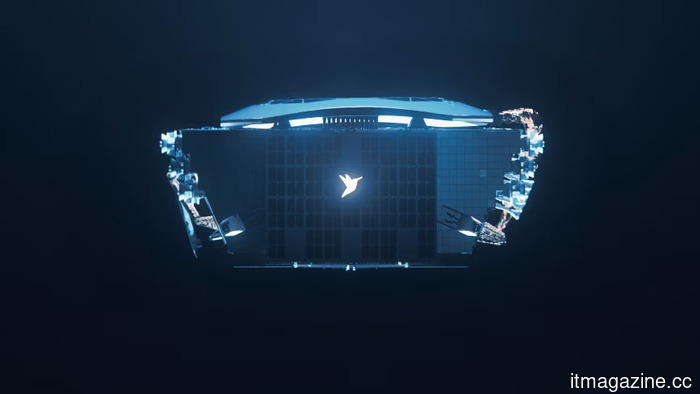
SWISSto12 secures $70 million for national space infrastructure.
Most space-hardware startups secure funding because they are consuming cash rapidly. SWISSto12 successfully raised $70 million while achieving profitability, which is rare in the satellite industry.
The Swiss company announced the closing of a €61 million funding round just days after member states of the European Space Agency contributed $84.8 million to its HummingSat initiative. This totals over $150 million in new funding within a month, although the company did not disclose the identities of its investors.
A profitable space startup
These figures are unusual for the industry. SWISSto12 reported $140 million in revenue for 2025, has more than $500 million in signed contracts, and has experienced annual growth of 110% since 2022. The company anticipates being EBITDA-positive this year.
Established in 2011 as a spin-off from Switzerland’s EPFL, the company currently employs approximately 224 individuals. Its advantage lies in its manufacturing process. It utilizes 3D printing for the radio-frequency components of its products, making them lighter and quicker to produce.
What it builds
SWISSto12 offers two main products. HummingSat is a compact geostationary satellite, roughly one-tenth the size of a conventional satellite, designed to accompany larger spacecraft into orbit. HummingLink comprises a range of payloads and antennas that can be attached to other operators’ satellites across various orbits.
This approach has allowed SWISSto12 to collaborate with established companies rather than competing against them. The company holds seven contracts for HummingSat, including partnerships with SES and Viasat, and has over 2,000 HummingLink units in orbit. Its offerings extend to direct-to-device connectivity, broadcasting, and sovereign communications.
Europe’s investment in space
This funding aligns with a broader trend. European capital is increasingly flowing into the space and deep tech sectors as the continent seeks to cultivate its own champions, exemplified by ICEYE’s €450 million funding round and a series of smaller investments. Government funding typically leads the charge, with private investments following closely.
The motivation behind this trend is sovereignty. Governments are looking for communication solutions that rely neither on a single orbit, a single operator, nor a foreign power. “Space is increasingly regarded as essential infrastructure for the global economy,” stated founder and CEO Emile de Rijk in the announcement.
The challenges ahead
However, this strategy is not without risks. Orders for geostationary satellites are diminishing as low-orbit constellations increasingly dominate broadband and maritime services, putting SWISSto12 in a volatile market. The company also faces competition from better-funded, more established rivals.
One of the primary competitors is Astranis, a US company developing similar small geostationary satellites, which has raised around $1.2 billion, according to TechFundingNews. The question of whether “any payload, any orbit” can outperform a more focused strategy may prove to be more significant than the funding raised. For now, SWISSto12 possesses what many space-hardware companies lack: profitability.
Published July 16, 2026 - 4:48 pm UTC
Other articles
 The TEWA MOTO M3 Pro is Creating a Buzz in Electric Off-Road Riding.
Electric dirt bikes are entering a new phase of off-road performance, and the TEWA Moto M3 Pro exemplifies how contemporary electric riding is advancing beyond mere speed and power through intelligent engineering and rider-centric innovation.
The TEWA MOTO M3 Pro is Creating a Buzz in Electric Off-Road Riding.
Electric dirt bikes are entering a new phase of off-road performance, and the TEWA Moto M3 Pro exemplifies how contemporary electric riding is advancing beyond mere speed and power through intelligent engineering and rider-centric innovation.
 Fireworks has secured $1.5 billion to develop specialized intelligence.
Fireworks secured $1.5 billion at a valuation of $17.5 billion, believing that every company will develop its own tailored intelligence rather than leasing it from a major laboratory.
Apple is gearing up to launch an OLED iPad mini in October as it broadens its tablet range.
Apple is gearing up for the most significant update to the iPad mini in years, featuring an OLED display and A19 Pro chip, with plans for a release in October despite increasing component costs.
Fireworks has secured $1.5 billion to develop specialized intelligence.
Fireworks secured $1.5 billion at a valuation of $17.5 billion, believing that every company will develop its own tailored intelligence rather than leasing it from a major laboratory.
Apple is gearing up to launch an OLED iPad mini in October as it broadens its tablet range.
Apple is gearing up for the most significant update to the iPad mini in years, featuring an OLED display and A19 Pro chip, with plans for a release in October despite increasing component costs.
 Sable secured $45 million in funding from Sequoia to develop an AI designed to conduct product demonstrations without the need for human involvement.
Sable secured $45 million from Sequoia and 8VC to develop Aidan, an AI employee designed to conduct live product demonstrations and manage sales for businesses such as Notion.
Sable secured $45 million in funding from Sequoia to develop an AI designed to conduct product demonstrations without the need for human involvement.
Sable secured $45 million from Sequoia and 8VC to develop Aidan, an AI employee designed to conduct live product demonstrations and manage sales for businesses such as Notion.
 WarpSpeed Aims to Be the AI Assistant That Effectively Organizes Your Life
The majority of AI tools are designed to respond to queries or create content. WarpSpeed is adopting a unique strategy by integrating email, calendars, tasks, and messaging into a single AI-driven workspace. In a discussion with founder Martin Warner, we delve into the idea that the future of AI could focus less on chatbots and more on assisting individuals in managing their daily activities.
WarpSpeed Aims to Be the AI Assistant That Effectively Organizes Your Life
The majority of AI tools are designed to respond to queries or create content. WarpSpeed is adopting a unique strategy by integrating email, calendars, tasks, and messaging into a single AI-driven workspace. In a discussion with founder Martin Warner, we delve into the idea that the future of AI could focus less on chatbots and more on assisting individuals in managing their daily activities.
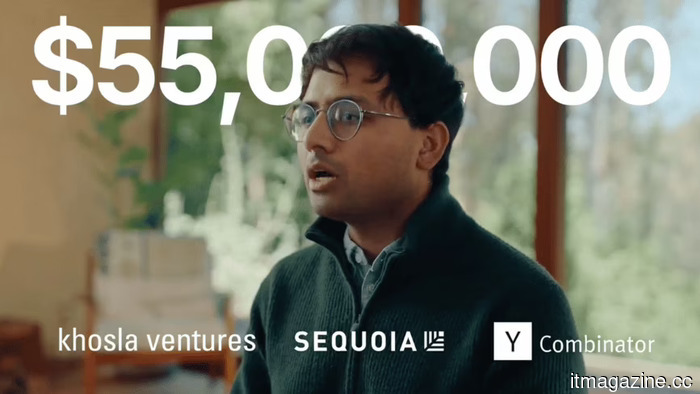 Bunkerhill Health secures $55 million for healthcare AI technology.
Bunkerhill Health secured $25M in a Series B round led by Khosla Ventures, increasing its total funding to $55M, to implement healthcare AI agents in hospitals.
Bunkerhill Health secures $55 million for healthcare AI technology.
Bunkerhill Health secured $25M in a Series B round led by Khosla Ventures, increasing its total funding to $55M, to implement healthcare AI agents in hospitals.
SWISSto12 secures $70 million for national space infrastructure.
SWISSto12, an unusual profitable satellite manufacturer, secured $70 million in a Series C funding round as Europe strives to establish its independent space infrastructure.