
Anthropic's safety hiring focuses on mitigating risks related to nuclear and biological threats.
An examination of Anthropic's safety hiring reveals its main concerns: they are recruiting analysts to prevent their models from assisting in the creation of nuclear, chemical, and biological weapons. While most job advertisements promote a mission, Anthropic's resemble a risk analysis.
The company has recently advertised multiple positions for enforcement analysts tasked with ensuring their AI does not aid in weapon development, scams, or cybercrimes, as first reported by Axios. One position seeks an "Enforcement Analyst focused on Radiological & Nuclear Harms," while others address chemicals, explosives, and financial fraud.
Salaries are in the mid- to upper-$200,000 range, and the roles do not involve coding. Anthropic requires real-world knowledge in areas such as biology and explosives, as well as individuals capable of thinking like attackers aiming to breach its security measures.
The straightforward job titles are intentional. A spokesperson stated, “Ensuring our models don’t provide potentially harmful information is central to responsible development.” The company frequently hires experts from sensitive domains to evaluate its models before public release.
Clearly identifying the specific dangers helps attract suitable candidates. Anthropic claims to have hundreds of employees focused on safety, identifying vulnerabilities and addressing them.
Critics refer to Anthropic as the industry's foremost alarmist, and the pattern of its safety recruitment serves as a response to that criticism. The company is investing substantial resources into the risks it continuously highlights.
CEO Dario Amodei has dedicated months to outlining potential dangers. In a January essay, he expressed that biological attacks are his greatest concern. “I do not think biological attacks will necessarily be carried out the instant it becomes widely possible,” he wrote. “But accumulated across millions of people and a few years' time, I believe there is a significant risk of a major attack, with casualties potentially reaching millions or more.”
He has also voiced concerns regarding AI's potential to assist cybercriminals and bolster authoritarian regimes. Earlier this year, Anthropic parted ways with the US Defense Department over the use of its technology for mass surveillance and autonomous weaponry.
Similar efforts are seen at OpenAI, which is also hiring a researcher focused on biological and chemical risks, offering a base salary up to $445,000. As models become more advanced, all serious laboratories are competing to assemble red teams.
This competition occurs in an environment devoid of comprehensive AI safety legislation in the US. Congress has been attempting to address this issue for years without success. Some individuals advocate for a regulatory body, with Google’s Demis Hassabis proposing a Wall-Street-style watchdog for advanced models. Less than one percent of AI PhD graduates pursue government roles, leaving expertise largely within private companies.
The outcome is a peculiar form of self-regulation, where those developing the most dangerous capabilities are also the ones determining how to manage them. Amodei has highlighted this conflict, stating that AI companies pose a risk tier just below hostile nations. His careers page embodies both an argument and a warning: the individuals best equipped to prevent a catastrophe are employed by the company that could potentially instigate it.
Other articles
 The Summer Sale on the PlayStation Store kicks off on July 15, offering discounts of up to 75% on hundreds of games.
The Summer Sale on Sony's PlayStation Store starts on July 15, featuring discounts of up to 75% on a wide range of PS5, PS4, and PS VR2 games.
The Summer Sale on the PlayStation Store kicks off on July 15, offering discounts of up to 75% on hundreds of games.
The Summer Sale on Sony's PlayStation Store starts on July 15, featuring discounts of up to 75% on a wide range of PS5, PS4, and PS VR2 games.
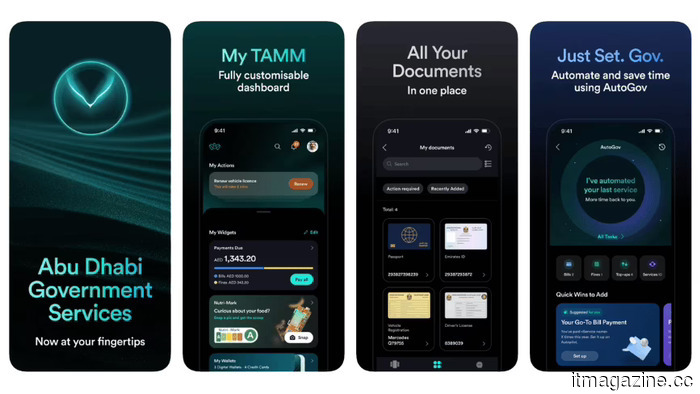 The AI-driven government of Abu Dhabi manages everyday life.
Abu Dhabi’s AI-driven government operates through a single app, TAMM, which handles ID renewals and fine payments. The drawback is a system that cannot be replicated by any democracy.
The AI-driven government of Abu Dhabi manages everyday life.
Abu Dhabi’s AI-driven government operates through a single app, TAMM, which handles ID renewals and fine payments. The drawback is a system that cannot be replicated by any democracy.
 Zipline is starting a healthcare drone delivery service in partnership with Cleveland Clinic. It has recruited former employees from Tesla and Waymo to help expand the initiative.
Zipline has reached 2.5 million deliveries and is set to commence healthcare delivery in partnership with the Cleveland Clinic. The company has brought on former executives from Tesla, Waymo, and Uber to facilitate further expansion.
Zipline is starting a healthcare drone delivery service in partnership with Cleveland Clinic. It has recruited former employees from Tesla and Waymo to help expand the initiative.
Zipline has reached 2.5 million deliveries and is set to commence healthcare delivery in partnership with the Cleveland Clinic. The company has brought on former executives from Tesla, Waymo, and Uber to facilitate further expansion.
 The AI-driven government of Abu Dhabi manages everyday life.
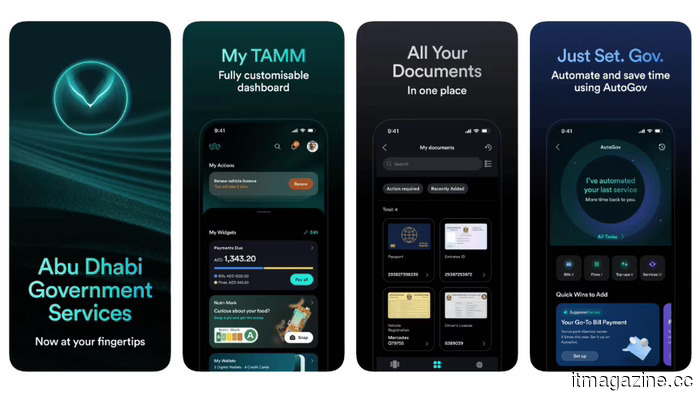
Abu Dhabi's AI-driven government operates through a single app, TAMM, which allows you to renew your ID and settle fines. The downside is that its model is not replicable by any democratic system.
The AI-driven government of Abu Dhabi manages everyday life.
Abu Dhabi's AI-driven government operates through a single app, TAMM, which allows you to renew your ID and settle fines. The downside is that its model is not replicable by any democratic system.
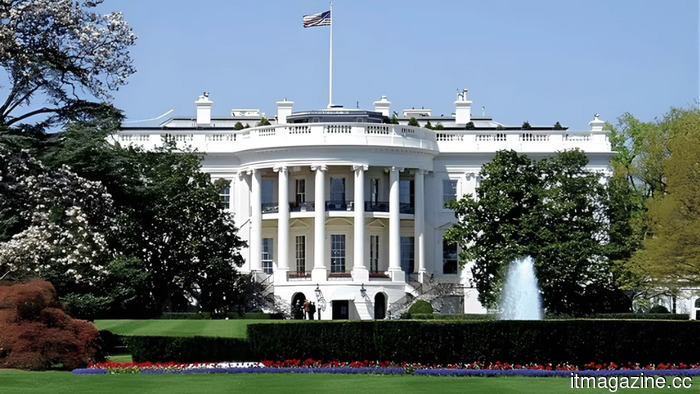 Gold Eagle: the AI cybersecurity hub of the White House
Gold Eagle is the White House's new AI-powered clearinghouse designed to consolidate, prioritize, and manage solutions for cybersecurity vulnerabilities within US critical infrastructure.
Gold Eagle: the AI cybersecurity hub of the White House
Gold Eagle is the White House's new AI-powered clearinghouse designed to consolidate, prioritize, and manage solutions for cybersecurity vulnerabilities within US critical infrastructure.
Anthropic's safety hiring focuses on mitigating risks related to nuclear and biological threats.
Anthropic's current safety hiring efforts focus on preventing nuclear, chemical, and biological threats by employing analysts to ensure that its AI does not assist anyone in creating weapons.