
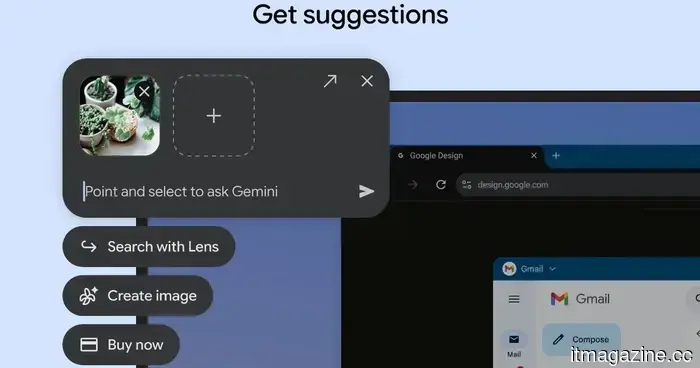
The new Play Store listing for Google’s Magic Pointer indicates a Gemini shortcut designed for Google Books.
The unreleased app transforms the cursor into a contextual AI tool for tasks like searching, creating images, and shopping.
Google has discreetly launched a new Play Store listing for Magic Pointer, an app designed for Googlebooks that has not been officially announced. Updated on July 10, this app modifies the cursor into a Gemini shortcut, allowing users to perform actions on any selected item on the screen.
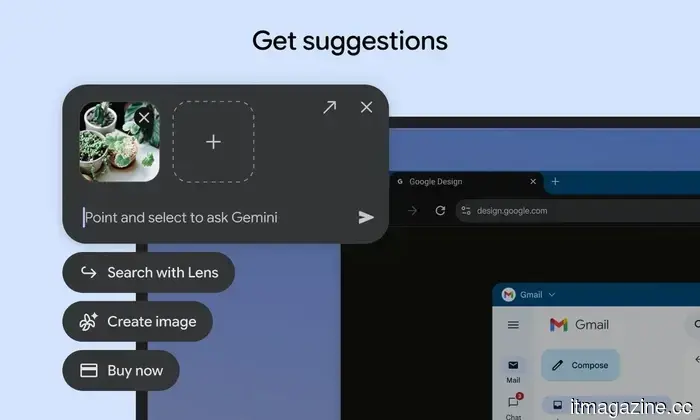
Magic Pointer can send an image to Lens, generate a related image, or initiate a shopping action without needing to open a separate chatbot. Currently, standard Android devices are marked as incompatible, which means the listing offers a preview rather than a full release.
Functionality of Magic Pointer
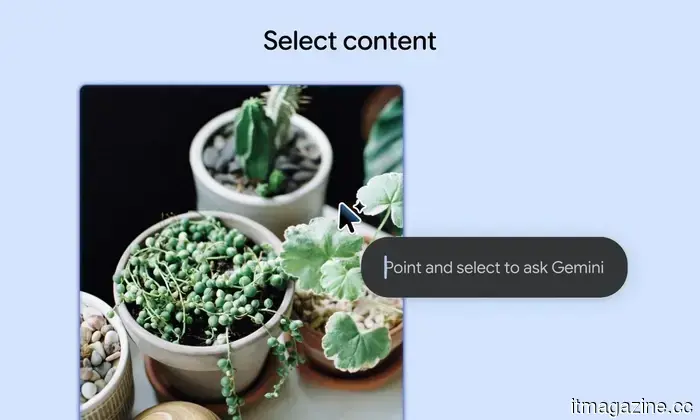
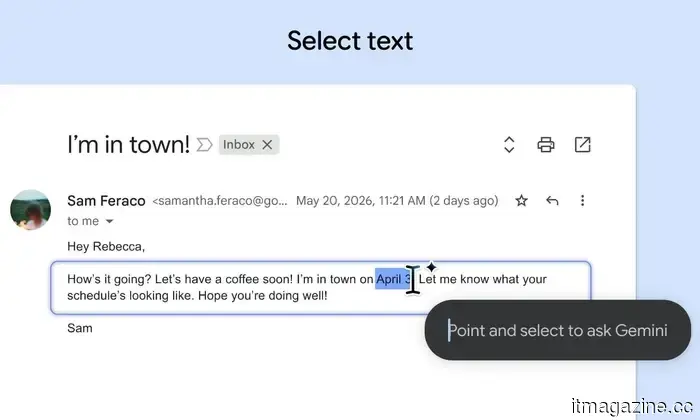
Magic Pointer infuses the cursor with Gemini capabilities, enabling users to highlight text or visual content directly on the display. This triggers a compact menu that presents options related to the selection.
The most significant advantage is increased efficiency. Users examining a product or image can take action right away instead of copying content, launching Gemini, and crafting a prompt from scratch. Essentially, Google aims to make the cursor function like an AI command button without overhauling the established desktop experience.
Reason for Separate Listing by Google
Google LLC is indicated as the developer, and the app page marks this as the initial release of Magic Pointer. It first appeared on June 9, later updated to version 1.0.260708, and surpassed 1,000 downloads by the time the listing became available.
A dedicated Play Store package could simplify updates for Magic Pointer. New Gemini features might be introduced without the need for a larger Googlebook operating system update, although Google has not specified its update strategy.
Access to Magic Pointer
Currently, standard Android phones and tablets cannot install Magic Pointer. Google has also not disclosed when Googlebooks or the associated feature will be accessible to users.
This leaves the listing as an informative preview of Google’s desktop AI initiatives but not a tool most users can try out at present. Google is anticipated to announce more details about Googlebooks this fall, which should clarify whether Magic Pointer will be a fundamental feature or remain an experiment limited to incompatible devices.
---
What occurs when AI detection fails? Researchers suggest that human training may be essential for identifying fake AI-generated faces.
Researchers propose that recognizing AI-created faces will increasingly rely on human capability rather than improved software solutions.
Artificial intelligence has become exceptionally skilled at generating lifelike human faces. In fact, traditional methods that individuals used to identify fakes—such as counting fingers, spotting distorted earrings, or noticing warped backgrounds—are rapidly becoming ineffective. A new study discussed by the BBC indicates that enhanced human training could be the next line of defense, rather than advanced AI detection tools.
Researchers from the University of Aberdeen, in collaboration with Australia’s National University, discovered that individuals could substantially enhance their aptitude for differentiating AI-generated faces from real ones after brief structured training. Instead of searching for overt visual flaws, participants were instructed to identify subtle patterns that contemporary image generators still find challenging to reproduce consistently.
---
You may choose to reduce your AI usage, but a recent report suggests full avoidance may not be feasible.
A UK survey revealed that many individuals consider avoiding AI exposure to be unrealistic, raising important issues regarding consent, privacy, and the achievability of opting out.
While more people aim to minimize their AI usage, completely escaping it may be impossible. A survey involving 2,055 UK adults found that 42% intentionally limit their AI interactions. Meanwhile, 70% reported that avoiding AI exposure would be challenging or unfeasible, even if they desired to do so.
---
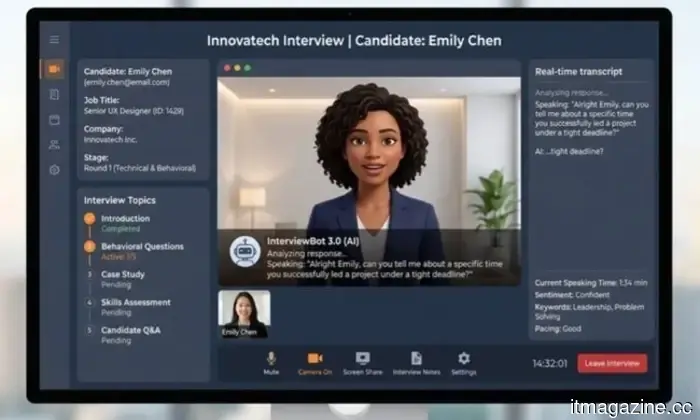
The appearance of an AI interviewer could be as significant as the decisions made during the interview process.
Researchers discovered that matching the race and gender of an interviewer influenced how fairly rejected candidates perceived the automated interview, even though all candidates received the same result.
An AI hiring system can treat every applicant impartially and still leave some feeling discriminated against. Researchers found that candidates who were rejected assessed an automated interview based on the race and gender of the avatar delivering the outcome.
Around 220 participants took part in a simulated interview for a fictional customer support position using one of four photorealistic AI avatars. Despite everyone facing rejection, perceptions of fairness varied based on the appearance of the interviewer. An algorithm audit might overlook this reaction, as candidates do not interact with the system solely as raw code; they engage with a face asking questions and evaluating their responses.



Other articles
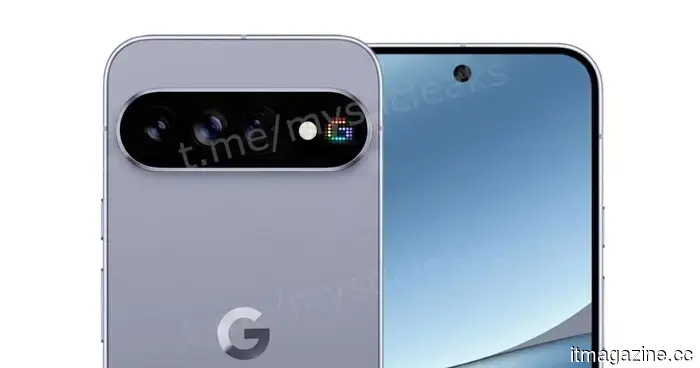 Google might finally move away from Samsung’s modem in the Pixel 11, and the Tensor G6 could be an improvement as a result.
The FCC documentation for Google’s Pixel 11 includes a reference to MediaTek, indicating that the Tensor G6 might move away from Samsung’s Exynos modem in an effort to enhance battery efficiency and improve daily connectivity.
Google might finally move away from Samsung’s modem in the Pixel 11, and the Tensor G6 could be an improvement as a result.
The FCC documentation for Google’s Pixel 11 includes a reference to MediaTek, indicating that the Tensor G6 might move away from Samsung’s Exynos modem in an effort to enhance battery efficiency and improve daily connectivity.
 You may choose to stop utilizing AI, but this recent report suggests that you are likely unable to avoid it.
A recent survey in the UK reveals that individuals are intentionally restricting their use of AI, despite the fact that many feel it has become challenging or even impossible to avoid exposure to AI.
You may choose to stop utilizing AI, but this recent report suggests that you are likely unable to avoid it.
A recent survey in the UK reveals that individuals are intentionally restricting their use of AI, despite the fact that many feel it has become challenging or even impossible to avoid exposure to AI.
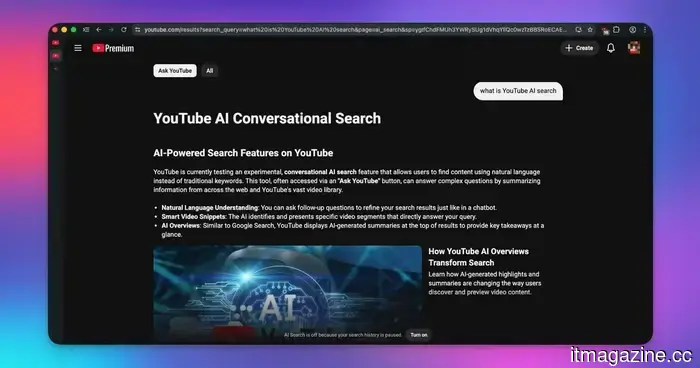 YouTube's AI-driven search is being launched in the US, allowing users to discover videos by describing specific situations.
U.S. users can now pose conversational questions on YouTube to search for videos related to specific situations, ideas, and activities.
YouTube's AI-driven search is being launched in the US, allowing users to discover videos by describing specific situations.
U.S. users can now pose conversational questions on YouTube to search for videos related to specific situations, ideas, and activities.
 Researchers concealed a prompt injection within a PNG file, and the AI was deceived by it.
Recent security research indicates that a seemingly innocent PNG image could trick AI coding assistants into revealing sensitive information.
Researchers concealed a prompt injection within a PNG file, and the AI was deceived by it.
Recent security research indicates that a seemingly innocent PNG image could trick AI coding assistants into revealing sensitive information.
 Researchers concealed a prompt injection within a PNG, and the AI was deceived by it.
Recent security research indicates that a seemingly innocuous PNG image could deceive AI coding assistants into revealing sensitive information.
Researchers concealed a prompt injection within a PNG, and the AI was deceived by it.
Recent security research indicates that a seemingly innocuous PNG image could deceive AI coding assistants into revealing sensitive information.
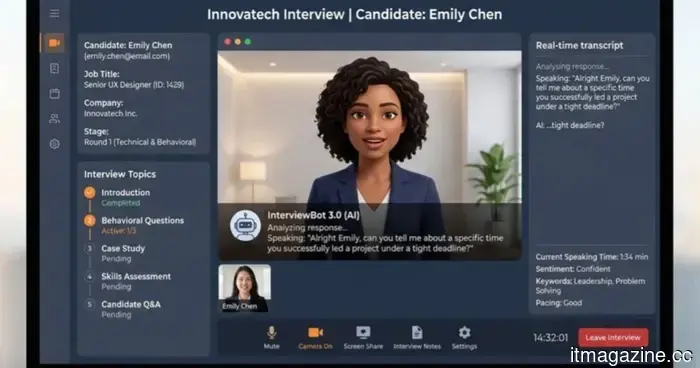 The appearance of an AI interviewer might be just as important as the choices it makes.
Candidates responded variably to the same AI hiring rejections based on the race and gender of the avatar, indicating that issues of fairness can originate from interface design even before the algorithm is reviewed.
The appearance of an AI interviewer might be just as important as the choices it makes.
Candidates responded variably to the same AI hiring rejections based on the race and gender of the avatar, indicating that issues of fairness can originate from interface design even before the algorithm is reviewed.
The new Play Store listing for Google’s Magic Pointer indicates a Gemini shortcut designed for Google Books.
The recently discovered Magic Pointer listing from Google shows a Gemini-powered cursor for Google Books; however, due to compatibility issues with Android devices, the feature is still in early preview and not available for consumer testing at this time.