

Meta withdraws Muse Image AI following privacy concerns from Hollywood.
Meta has removed its Muse Image AI feature from Instagram just three days after its debut due to backlash from SAG-AFTRA, talent agency CAA, and actors like Hannah Einbinder. This tool, the first developed by Meta Superintelligence Labs, allowed users to create images from public Instagram profiles without requiring any opt-in.
In a statement, Meta explained that the tool “missed the mark” on user privacy. The model, which was launched on Tuesday under chief AI officer Alexandr Wang, had a critical design flaw: public Instagram accounts were automatically opted in.
“We intended to offer a valuable creative tool and give users control over whether their public content could be used in this manner,” Meta's statement on Friday said. “We’ve received feedback indicating this feature was not aligned with user expectations, so it has been disabled.”
What Muse Image did
The feature was integrated into the Meta AI chatbot on Instagram and WhatsApp, allowing users to tag any public Instagram account to generate AI images based on that person's publicly shared photos. Private accounts and users under 18 were automatically excluded, but all others had to actively opt out.
This setup drew immediate comparisons to Meta’s ongoing practice of treating user data as opt-out rather than opt-in, which posed commercial risks for actors, musicians, and creators whose value is linked to their image and likeness.
Hollywood’s response
SAG-AFTRA, representing over 160,000 film and television professionals, urged its members and all Instagram users to opt out on Thursday. The union stated, “Any usage of Instagram users’ images without a clear and conspicuous opt-in is unacceptable and reflects a significant misjudgment of public sentiment regarding the dangers and harms associated with such use.”
Talent agency CAA echoed this sentiment, asserting that no one’s “name, image, likeness, voice, or creative work should be used by any third party, including AI models, without clear, documented consent.” Their roster includes celebrities like Tom Cruise, Charlize Theron, and Zoe Saldaña.
Emmy-winning actor Hannah Einbinder, known for HBO’s Hacks, shared on Instagram that the feature had been automatically enabled and encouraged her followers to turn it off. Mark Zuckerberg publicly defended the tool, claiming it included safety measures, but Meta reversed its position less than a day later.
A pattern Meta has struggled to break
This incident reflects a recurring issue for Meta: launching AI features that treat user data as freely accessible by default, only to withdraw them in response to public outcry. The EU has ruled that Meta’s “pay or consent” advertising model violates the Digital Markets Act, and state attorneys general are pursuing up to $1.4 trillion in damages over youth safety in a trial set for August.
SAG-AFTRA welcomed the feature's removal, with a spokesperson stating, “Given the known risks of nonconsensual digital replicas, a feature that promoted such practices is imprudent,” adding that its discontinuation “is the responsible action.”
Muse Image was part of a wider launch that also featured Muse Video, a separate tool for video generation developed by Meta Superintelligence Labs, which remains available.
Other articles
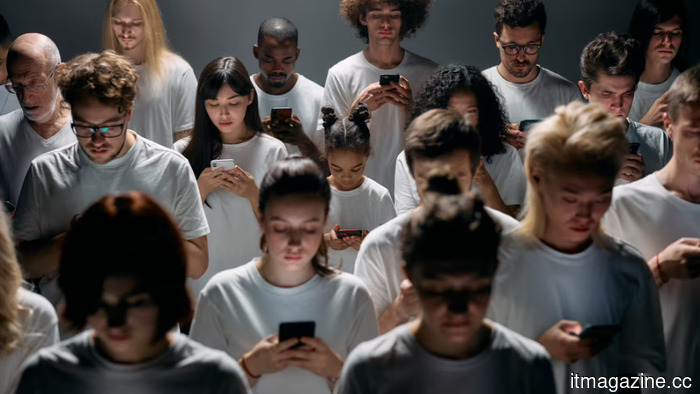 EU: Meta's autoplay feature and infinite scroll violate the DSA.
The EU released initial findings alleging that Facebook and Instagram have addictive designs, demanding that Meta disable autoplay and infinite scrolling, or risk facing fines as high as $12 billion.
EU: Meta's autoplay feature and infinite scroll violate the DSA.
The EU released initial findings alleging that Facebook and Instagram have addictive designs, demanding that Meta disable autoplay and infinite scrolling, or risk facing fines as high as $12 billion.
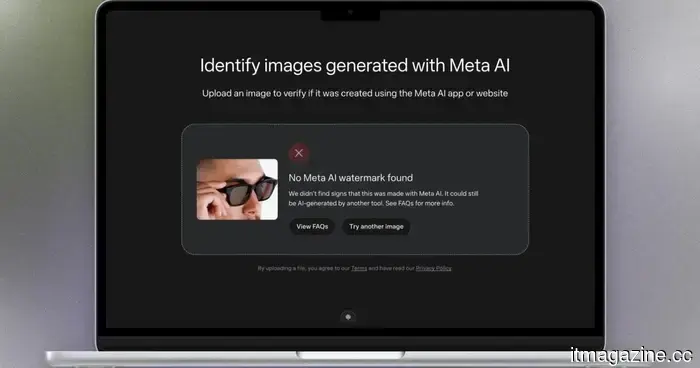 Meta's detection tool is unable to recognize images created by its own Muse Image AI.
A Reuters analysis reveals that Meta's AI image detector is unable to recognize images produced by Muse Image in over half of the instances, even after simply cropping the AI-generated pictures.
Meta's detection tool is unable to recognize images created by its own Muse Image AI.
A Reuters analysis reveals that Meta's AI image detector is unable to recognize images produced by Muse Image in over half of the instances, even after simply cropping the AI-generated pictures.
 Apple is suing OpenAI for allegedly pilfering hardware designs, claiming that employees brought prototypes to
Apple alleges that OpenAI employed both current and former employees to obtain hardware secrets while developing a competitor to the iPhone. More than 400 former Apple employees are now part of OpenAI.
Apple is suing OpenAI for allegedly pilfering hardware designs, claiming that employees brought prototypes to
Apple alleges that OpenAI employed both current and former employees to obtain hardware secrets while developing a competitor to the iPhone. More than 400 former Apple employees are now part of OpenAI.
 Apple has filed a lawsuit against OpenAI, claiming that its employees took hardware designs and brought prototypes to the company.
Apple asserts that OpenAI utilized current and former employees to acquire hardware secrets while developing a competitor to the iPhone. More than 400 former Apple employees are now employed at OpenAI.
Apple has filed a lawsuit against OpenAI, claiming that its employees took hardware designs and brought prototypes to the company.
Apple asserts that OpenAI utilized current and former employees to acquire hardware secrets while developing a competitor to the iPhone. More than 400 former Apple employees are now employed at OpenAI.
 Claude Code now has the ability to browse the web without needing to open Chrome.
Anthropic has incorporated an in-app browser into Claude Code on desktop, enabling the AI coding assistant to visit websites, access documentation, and engage with web pages right within the application.
Claude Code now has the ability to browse the web without needing to open Chrome.
Anthropic has incorporated an in-app browser into Claude Code on desktop, enabling the AI coding assistant to visit websites, access documentation, and engage with web pages right within the application.
 Apple is filing a major lawsuit against OpenAI for allegedly stealing trade secrets.
Apple has filed a lawsuit against OpenAI, claiming that the company has conducted a scheme to obtain confidential product details via former employees, as both firms compete to develop advanced AI hardware.
Apple is filing a major lawsuit against OpenAI for allegedly stealing trade secrets.
Apple has filed a lawsuit against OpenAI, claiming that the company has conducted a scheme to obtain confidential product details via former employees, as both firms compete to develop advanced AI hardware.
Meta withdraws Muse Image AI following privacy concerns from Hollywood.
Meta's initial Muse Image model allowed users to create images based on public Instagram accounts by default. However, SAG-AFTRA, CAA, and actors opposed this, leading Meta to retract it within three days.