
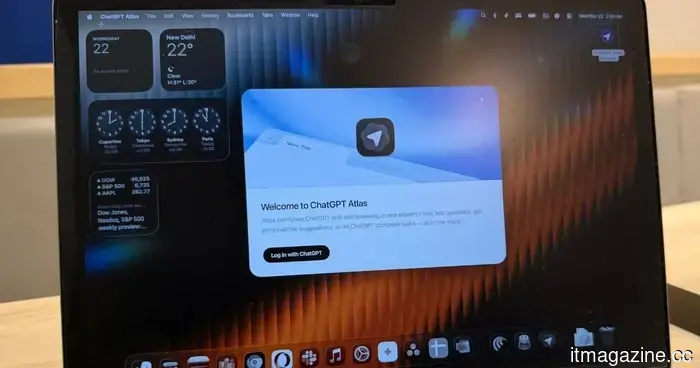
OpenAI is discontinuing the ChatGPT Atlas browser. I really enjoyed it, but it felt like a challenging journey to reach the top.
When OpenAI introduced its own web browser, many were doubtful about why a leading AI research lab would take on such a project. Nevertheless, the company proceeded to launch ChatGPT Atlas, integrating numerous AI features. However, the browser's time has come to an end, and it will be discontinued in September this year.
OpenAI has announced that it will phase out this short-lived browser to focus on developing the new ChatGPT desktop app, which includes its own built-in browser as well as a cloud browser for AI agents. Additionally, with ChatGPT now available as an extension for other browsers, including Chrome, there is little necessity to maintain a separate browser project.
But why is this happening?
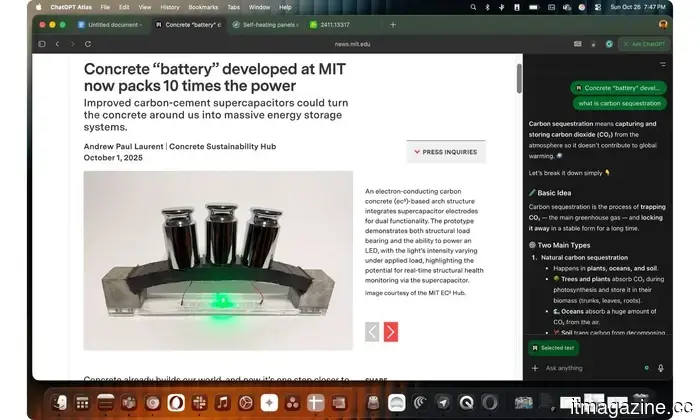
The assistant side panel in ChatGPT Atlas. Nadeem Sarwar / Digital Trends
“All these features were informed by the feedback from Atlas users who ventured into using a new browser. You demonstrated how agents can enhance browsing and working on the open web, and we are applying these insights to our new products,” stated James Sung, an OpenAI executive responsible for the browsing initiative.
ChatGPT Atlas was launched in October of the previous year, positioning ChatGPT at the forefront of the browsing experience. Its design is sleek and instantly recognizable since it is built on the Chromium engine. Your extensions, bookmarks, browsing history, and saved logins transfer over seamlessly, making it feel like a familiar browser.
Everything begins on the homepage, which features a single, unified search bar. The real highlight is the sidebar. By collapsing the left pane, you access all the ChatGPT tools you are already accustomed to, including Search, Library, custom GPTs, Codex, and your entire chat history. On the other side, there is a dedicated panel that opens whenever you click the “Ask ChatGPT” button located in the top-right corner.
A pioneer in its field
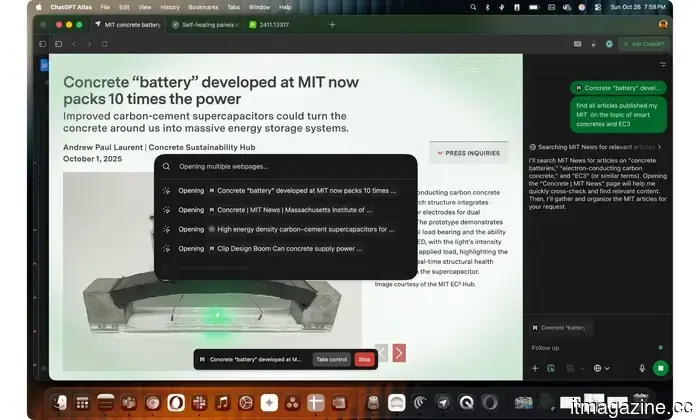
Agent Mode browsing on your behalf in ChatGPT Atlas. Nadeem Sarwar / Digital Trends
The side panel was my favorite feature of this AI browser and has since been fully integrated into Gemini for Chrome and Copilot for the Edge browser. Even smaller browsers like Opera and Firefox have adopted this model, sometimes with even more ambitious features. Perplexity followed suit with its own AI-centric browser called Comet.
Atlas even offered an agent mode that could autonomously complete tasks for you. However, it faced significant challenges. Why opt for Atlas when Chrome, built on the same technology, provided a more extensive feature set? Additionally, there was the issue of familiarity; Atlas aimed to innovate the web browsing experience with advanced tools that had their own learning curve.
Then, a wave of security alerts surfaced, labeling AI browsers such as ChatGPT Atlas and Perplexity Comet as potentially risky. The situation was exacerbated when Google took inspiration (or rather, copied) some of Atlas's best features, like tab awareness and multi-tab actions, for Chrome, thereby diminishing Atlas’s appeal. The endeavor lasted less than a year, but I commend OpenAI for pushing the boundaries of what web browsers can achieve with AI technology.
Other articles
 What AI companies are seeking for their midterm millions
AI super PACs supported by OpenAI and a16z are inundating the 2026 midterm elections to prevent state AI regulations and penalize legislators who advocate for them.
What AI companies are seeking for their midterm millions
AI super PACs supported by OpenAI and a16z are inundating the 2026 midterm elections to prevent state AI regulations and penalize legislators who advocate for them.
 The rush for data center land by AI is now extending to Native reservations.
Developers of AI data centers are looking at tribal land due to its resources of space, water, and power, creating a divide within Native communities between the potential for economic gains and concerns over "data colonialism."
The rush for data center land by AI is now extending to Native reservations.
Developers of AI data centers are looking at tribal land due to its resources of space, water, and power, creating a divide within Native communities between the potential for economic gains and concerns over "data colonialism."
 Zuckerberg: an AI cloud venture is logical for Meta.
Mark Zuckerberg has stated that Meta is looking into the possibility of selling AI computing services, a step that would compete with AWS and Azure and pose a challenge to emerging cloud providers like CoreWeave.
Zuckerberg: an AI cloud venture is logical for Meta.
Mark Zuckerberg has stated that Meta is looking into the possibility of selling AI computing services, a step that would compete with AWS and Azure and pose a challenge to emerging cloud providers like CoreWeave.
 Zuckerberg: an AI cloud venture for Meta 'is logical'
Mark Zuckerberg has confirmed that Meta is investigating the possibility of selling AI computing resources, a strategy that would compete with AWS and Azure and pose a challenge to emerging cloud providers such as CoreWeave.
Zuckerberg: an AI cloud venture for Meta 'is logical'
Mark Zuckerberg has confirmed that Meta is investigating the possibility of selling AI computing resources, a strategy that would compete with AWS and Azure and pose a challenge to emerging cloud providers such as CoreWeave.
 If you're feeling exhausted from supervising ChatGPT, the new GPT-5.6 models could be the solution you need.
OpenAI has introduced GPT-5.6 Sol, Terra, and Luna, a new series of AI models designed to enhance workflow speed, reduce costs, and minimize the need for subsequent prompts.
If you're feeling exhausted from supervising ChatGPT, the new GPT-5.6 models could be the solution you need.
OpenAI has introduced GPT-5.6 Sol, Terra, and Luna, a new series of AI models designed to enhance workflow speed, reduce costs, and minimize the need for subsequent prompts.
 EU Parliament brings back legislation on child-abuse detection.
The European Parliament proceeded with a renewed CSAM-scanning bill through an unusual process, featuring an encryption exemption that pleased neither party.
EU Parliament brings back legislation on child-abuse detection.
The European Parliament proceeded with a renewed CSAM-scanning bill through an unusual process, featuring an encryption exemption that pleased neither party.
OpenAI is discontinuing the ChatGPT Atlas browser. I really enjoyed it, but it felt like a challenging journey to reach the top.
OpenAI is terminating the ChatGPT Atlas browser less than a year after its launch, as the company redirects its attention to ChatGPT Work.