
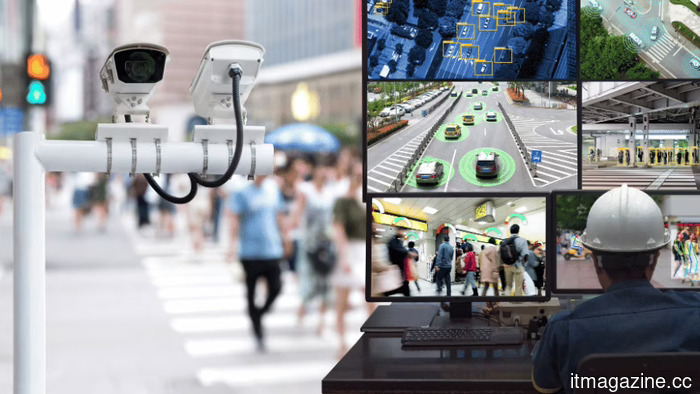
Facewatch will notify UK police within seconds if you are flagged.
Entering a store with a mismatched facial recognition profile could prompt the police to respond in under four seconds. This is the proposal, and it raises concerns.
A facial recognition system currently implemented in over 100 UK shops is set to start alerting police in real time whenever it identifies a flagged individual. Facewatch, which has already installed its cameras in Sainsbury’s, B&M, and Spar, claims this is a first for the UK. However, civil liberties organizations deem it a troubling development.
The Guardian brought this feature to light. Facewatch states it will "instantly notify police when a serious offender triggers a live facial recognition match." This tool is set to be launched in the autumn.
Nick Fisher, the chief executive, described it as a "unique technical advancement," noting that it can alert law enforcement in an average of four seconds when the “most serious offenders” are detected.
From observation to intervention
Facewatch already performs a useful function by scanning faces at store entrances and notifying staff when someone on its watchlist enters. It utilizes the same facial recognition technology prevalent in consumer devices, aiming it now at customers. The new functionality alters the next steps: instead of just notifying store personnel, the system is capable of contacting the police directly.
This transition raises legal concerns. Charlie Whelton, a policy officer at Liberty, stated, “It’s not illegal to enter a shop, even if you have a criminal history.” He emphasized that calling law enforcement on individuals based on potential future offenses represents a significant shift in standard practices.
He also noted that such systems are prone to errors, highlighting the difficulty of challenging wrongful identifications.
The justification for its use
Retailers are feeling overwhelmed. Facewatch claims its system identified a "known repeat offender" entering stores nearly 300,000 times in the first half of 2026. They argue this helps staff intervene before theft, abuse, or violence occurs or escalates.
Official statistics indicate over 509,000 shoplifting incidents in England and Wales during the year ending December 2025. The British Retail Consortium has warned that theft and violence rates are "spiraling out of control."
Despite the controversy, Sainsbury's is moving forward, hoping to increase its usage from 55 to more than 200 stores by year's end. The deployment of cameras is advancing at a pace that's outstripping accompanying regulations.
A hidden blacklist
Critics argue that the main concern lies in accountability. People may be flagged against "a secret blacklist created by unaccountable companies and private security personnel," according to Big Brother Watch. They accused police of becoming involved in what they termed a "cowboy operation."
The implications of errors are real and could have dire consequences. Shoppers misidentified as thieves have been forced to leave stores, labeling the experience as "Orwellian"—guilty until proven innocent. Studies indicate that the system misidentifies people of color more frequently than white individuals.
Sarah Lasoye from the Open Rights Group remarked, “The prospect of people’s faces being scanned without their consent and then added to lists is concerning.” She stated that the speed of police interaction "during their everyday shopping" represents "a very dangerous escalation."
The regulatory void
The UK is advancing live facial recognition technology faster than it is establishing regulations for its use. The Metropolitan Police plan to expand their application throughout central London by Christmas. Oversight authorities warn that regulation is trailing behind the technology. This reflects the government’s tendency to implement policing measures for online activities before establishing proper oversight.
Experts are particularly concerned about the discrepancy in regulations. The proposed legislation for facial recognition would apply to police use but not to private entities like Facewatch.
Nuala Polo of the Ada Lovelace Institute noted, “If this technology poses significant risks for police usage, but remains unchecked in the private sector, there’s a contradiction.” She cautioned that this could create "backdoors" that link private surveillance with law enforcement, bypassing standardized regulations. Some courts in other regions have started to restrict police surveillance methods, while UK retailers seem to be moving in the opposite direction.
The significance of these developments
Facewatch presents its technology as an expedited approach to crime prevention, with some suggesting that constant monitoring promotes better behavior. However, critics view it more narrowly, asserting that a private entity determines who is viewed as a threat, with a direct four-second communication line to law enforcement.
The UK has spent the past year debating facial recognition in public spaces. This controversy has now extended into the realm of shopping, where the cameras not only observe individuals but can also summon the police.
Otros artículos
 Android is now capable of backing up a larger portion of your device, though Google is also giving you the option to decline.
Android is introducing detailed switches for message and device backups and is experimenting with automatic document uploads to Google Drive, allowing users greater control over what is stored and what takes up space in their cloud storage.
Android is now capable of backing up a larger portion of your device, though Google is also giving you the option to decline.
Android is introducing detailed switches for message and device backups and is experimenting with automatic document uploads to Google Drive, allowing users greater control over what is stored and what takes up space in their cloud storage.
 China successfully lands a reusable rocket booster for the first time.
China successfully captured a Long March-10B booster in a net at sea, marking its initial recovery of a reusable rocket. This move puts it in the same league as SpaceX and Blue Origin, although it lags significantly behind them.
MiniMax secures $2 billion, with its CEO opting to waive their salary until the achievement of AGI.
MiniMax is seeking to raise up to $2 billion following an 80% decline, with founder Yan Junjie committing to forgo his salary until the achievement of AGI and promising 5% of his shares to employees and the open-source community.
China successfully lands a reusable rocket booster for the first time.
China successfully captured a Long March-10B booster in a net at sea, marking its initial recovery of a reusable rocket. This move puts it in the same league as SpaceX and Blue Origin, although it lags significantly behind them.
MiniMax secures $2 billion, with its CEO opting to waive their salary until the achievement of AGI.
MiniMax is seeking to raise up to $2 billion following an 80% decline, with founder Yan Junjie committing to forgo his salary until the achievement of AGI and promising 5% of his shares to employees and the open-source community.
 The Prime Minister of Malaysia is introducing an AI version of himself.
The government of Anwar Ibrahim will soon introduce PMX AI, an interactive avatar designed to mimic his speech patterns and guide citizens through government services.
The Prime Minister of Malaysia is introducing an AI version of himself.
The government of Anwar Ibrahim will soon introduce PMX AI, an interactive avatar designed to mimic his speech patterns and guide citizens through government services.
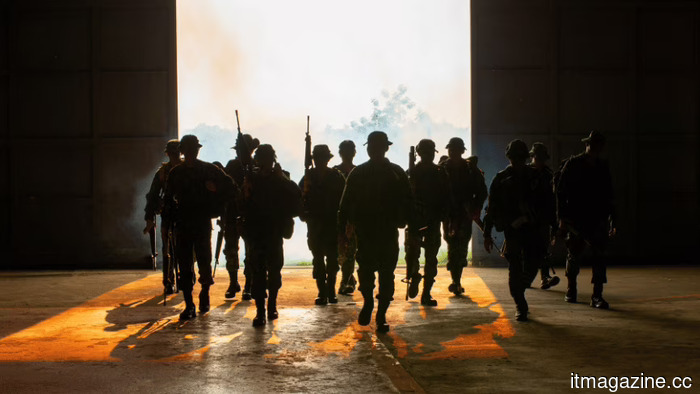 The UK's £2 billion AI 'Combat Laboratory' designed for the British Army
Britain's new £2 billion AI 'Combat Laboratory' is set to train 60,000 soldiers annually. A US company is at the forefront of the initiative, while Germany's Rheinmetall holds nearly half of the involvement.
The UK's £2 billion AI 'Combat Laboratory' designed for the British Army
Britain's new £2 billion AI 'Combat Laboratory' is set to train 60,000 soldiers annually. A US company is at the forefront of the initiative, while Germany's Rheinmetall holds nearly half of the involvement.
 Home robots are capable of walking. The challenging aspect is preventing them from damaging your glassware.
1X's NEO home robot features tendon-driven hands equipped with tactile sensing, force control, and water resistance. However, despite its impressive hardware, it still requires dependable autonomy to manage everyday tasks.
Home robots are capable of walking. The challenging aspect is preventing them from damaging your glassware.
1X's NEO home robot features tendon-driven hands equipped with tactile sensing, force control, and water resistance. However, despite its impressive hardware, it still requires dependable autonomy to manage everyday tasks.
Facewatch will notify UK police within seconds if you are flagged.
Facewatch will soon notify the police within approximately four seconds when a flagged customer enters a store in the UK. Civil liberties organizations describe this as a "dangerous escalation."