
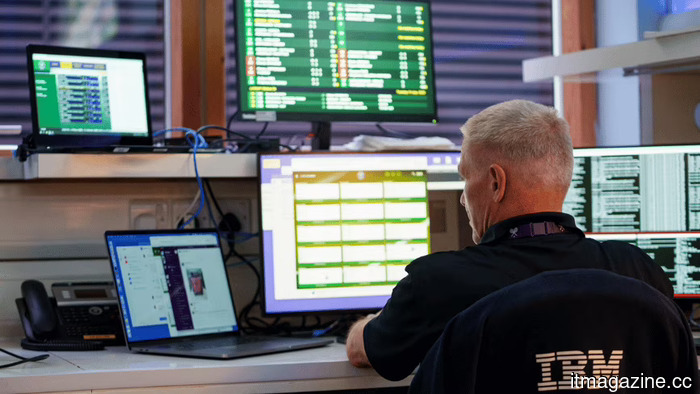
Inside the secretive 'Court 19' at Wimbledon operated by IBM
A serve appears instantly on the Wimbledon scoreboard before the ball has even settled. This figure originates from a collaboration that predates most players on the court. IBM has been Wimbledon’s technology partner for 36 years, having introduced serve-speed radar behind the baselines in 1991. This year, the partnership was extended until 2030, as reported by Fortune.
The influence of this partnership has expanded beyond the grass courts. Over two weeks, more than half a million attendees experience the event live, but they represent only a small fraction of the overall audience. In 2025, Wimbledon recorded approximately 18 billion impressions across its digital platforms, reaching around 730 million people, according to the All England Lawn Tennis and Croquet Club.
Traffic to the website and app increased by over 20 percent in the last year. The unseen operations take place in IBM’s hub, referred to as “Court 19”, located beneath the 18th grass court. During the tournament, it processes about 2.7 million data points, including ball speed, shot location, and momentum shifts, which are then transformed into features utilized by fans on the app.
For IBM, tennis serves a greater purpose. Wimbledon acts as a testing ground. Kameryn Stanhouse, vice president of global sports and entertainment partnerships, mentions a prevalent “fear around AI” among executives. “Not because leaders doubt they need it,” she explains, but due to the potential threat to their jobs if things go awry. The high-stakes environment demonstrates that IBM can effectively implement the technology without failure.
However, when the system does falter, the concerns become real. In 2025, Wimbledon replaced its 300 line judges, a tradition lasting 147 years, with automated electronic line-calling. The rollout faced challenges; the system made errors during a quarter-final and erroneously announced a “fault” mid-play, necessitating intervention from an umpire. Jack Draper questioned its accuracy, and Emma Raducanu deemed some calls “dodgy.”
Though this system operates on Sony’s Hawk-Eye, not IBM's technology, such incidents cast a shadow over discussions regarding robotic decision-making. IBM emphasizes that its features are “human-led,” with a governance framework that assesses confidence and checks for bias before any information reaches fans. This is a subtle distinction that may not be appreciated by a frustrated fan when discrepancies occur on the screen.
Some elements of the spectacle have diminished too. Players used to contest calls while the crowd went silent, followed by a replay on the big screen. Even IBM’s “Likelihood to Win,” which updates the odds after each point, reduces some of the suspense. Stanhouse believes this is a reasonable trade-off. “Fans argue less about the marginal calls and more about the tennis itself,” she states.
The business rationale is straightforward. The global sports industry may exceed $600 billion by 2030, as predicted by Kearney. IBM is not alone in leveraging sports to demonstrate its AI capabilities before marketing it elsewhere. Stanhouse points out that a match provides what few enterprise trials can: immense amounts of live data, under pressure and in full view.
The push for productivity is even clearer. To revamp the app and website, IBM utilized an accelerator known as Bob. It transitioned over 15,000 digital assets to a new platform, a process that would take a team of five specialists months, was completed by one engineer in a month, according to Stanhouse. The final migration was executed in just 47 minutes.
Future developments will be more personalized and remote. IBM has already created a Masters golf app for Apple Vision Pro and anticipates a similar offering for tennis. There may also be potential applications for quantum computing, though IBM has yet to identify a role for it in sports.
The significance of this lies in Wimbledon being a rare public trial to determine if AI can be integrated into a beloved pastime without compromising its essence. A 2025 Capgemini study revealed that 70 percent of fans desire real-time data, yet more than half worry that excessive technology diminishes the essence of live sports. This presents a challenging balance. As Stanhouse succinctly states, no technology can predict the outcome in advance. “Someone might wake up with a stiff neck and not serve like they usually do.”
Other articles
 Jack Dorsey's Block resolves Cash App fraud allegations with 46 states for $45 million.
Block will pay $45 million to 46 U.S. states regarding its handling of Cash App fraud, as state regulators step in to fill the gap left by the diminished CFPB.
Jack Dorsey's Block resolves Cash App fraud allegations with 46 states for $45 million.
Block will pay $45 million to 46 U.S. states regarding its handling of Cash App fraud, as state regulators step in to fill the gap left by the diminished CFPB.
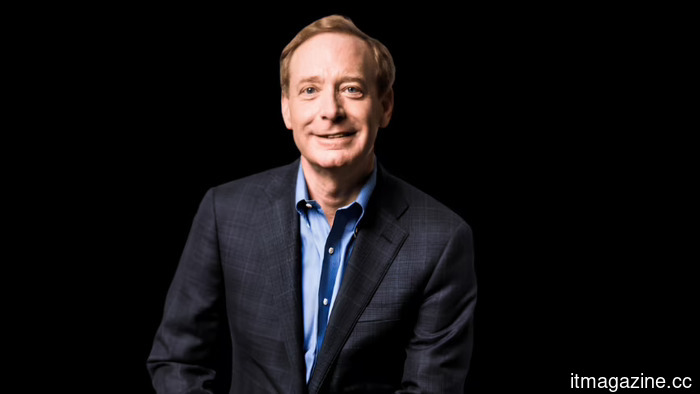 Brad Smith: The United States governs AI without specific regulations.
Microsoft president Brad Smith has stated that Washington is imposing regulations on AI without clear guidelines, following sudden export control actions affecting Anthropic and OpenAI.
Brad Smith: The United States governs AI without specific regulations.
Microsoft president Brad Smith has stated that Washington is imposing regulations on AI without clear guidelines, following sudden export control actions affecting Anthropic and OpenAI.
 Researchers compromise GitHub Copilot's safety using a workflow.
Researchers at the Alan Turing Institute were able to get GitHub Copilot to generate harmful content that it typically denies in chat, by distributing the request throughout a coding workflow.
Researchers compromise GitHub Copilot's safety using a workflow.
Researchers at the Alan Turing Institute were able to get GitHub Copilot to generate harmful content that it typically denies in chat, by distributing the request throughout a coding workflow.
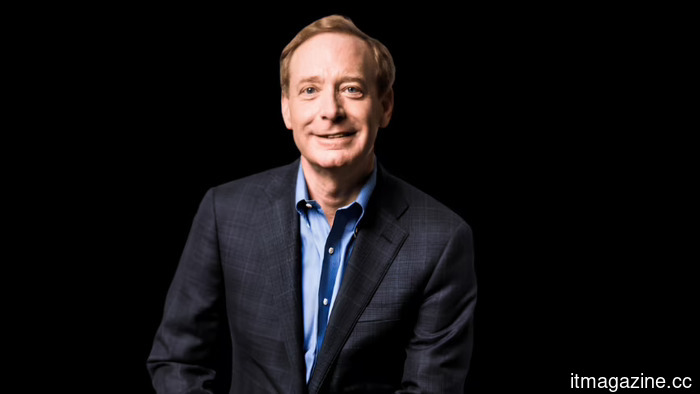 Brad Smith: The United States oversees AI without well-defined regulations.
Microsoft president Brad Smith stated that Washington is regulating AI without clear guidelines, following sudden export-control actions regarding Anthropic and OpenAI.
Brad Smith: The United States oversees AI without well-defined regulations.
Microsoft president Brad Smith stated that Washington is regulating AI without clear guidelines, following sudden export-control actions regarding Anthropic and OpenAI.
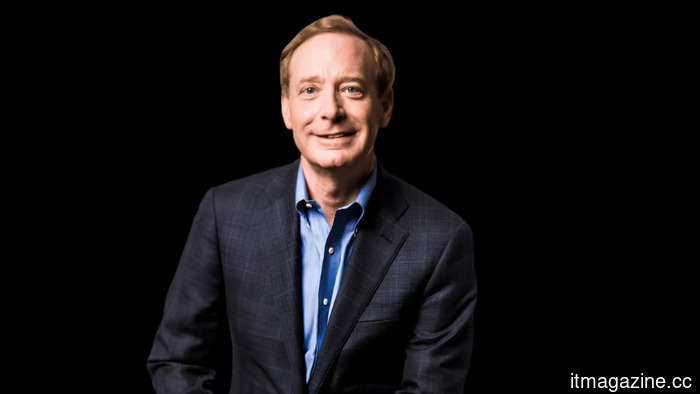 Brad Smith: the United States oversees AI without defined regulations.
Microsoft president Brad Smith states that Washington is imposing regulations on AI without clear guidelines, following sudden export-control actions against Anthropic and OpenAI.
Brad Smith: the United States oversees AI without defined regulations.
Microsoft president Brad Smith states that Washington is imposing regulations on AI without clear guidelines, following sudden export-control actions against Anthropic and OpenAI.
 Jack Dorsey’s Block resolves Cash App fraud allegations with 46 states for $45 million.
Block will disburse $45 million to 46 U.S. states concerning the management of fraud on Cash App, as state regulators step in to fill the void left by the diminished CFPB.
Jack Dorsey’s Block resolves Cash App fraud allegations with 46 states for $45 million.
Block will disburse $45 million to 46 U.S. states concerning the management of fraud on Cash App, as state regulators step in to fill the void left by the diminished CFPB.
Inside the secretive 'Court 19' at Wimbledon operated by IBM
Underneath Wimbledon's 18th court, IBM's 'Court 19' processes 2.7 million data points per tournament, transforming the Championships into a showcase for AI.