

Databento secures $97 million to compete with Bloomberg's terminal.
Databento has secured $97 million in Series B funding to develop what it refers to as the market data platform for contemporary finance. The investment round was led by New Enterprise Associates, with participation from DRW, Redpoint Ventures, and Tribe Capital. The announcement was made on Thursday.
The demand significantly exceeded expectations, as the round was oversubscribed, attracting over $300 million in interest, according to the company. This funding brings Databento's total disclosed investment to around $127 million, three years after its inception.
From hedge fund to data infrastructure
CEO Christina Qi approached this challenge through her previous experience. She co-founded Domeyard, a high-frequency trading fund that, at its peak, handled billions of dollars in trades daily, as reported by Fortune. She discovered that the bottleneck for the fund was not the trading strategy but rather the market data itself and the complications associated with utilizing it effectively in production.
Databento was created to address these issues. The company aims to streamline the process from concept to production, enabling engineers to access clean price data via an API instead of dealing with raw exchange feeds. It develops its own feed handlers for over 70 exchanges and currently serves more than 3,000 companies.
Targeting the terminal
The objective is to enter a market that has long been dominated by established players. Bloomberg’s terminal, the standard in the industry, costs between $20,000 and $27,000 per seat annually. In 2025, global expenditure on market data, as counted by Databento, surpassed $50 billion.
Qi believes that industry practices are on the verge of transformation. She stated, “Programmatic access to market data is becoming the industry default,” and anticipates that within three years, a greater number of finance professionals will be proficient in using a Databento API compared to a traditional terminal.
The clientele currently includes hedge funds, proprietary trading firms, broker-dealers, and fintech companies, as well as artificial intelligence labs that purchase its data, with Nvidia being both a customer and a technology partner.
The financial details of the raise
Databento approached this funding from a position of strength, which is uncommon for a startup at this stage. The company reports revenue growth of 6.65 times year over year, with an enterprise retention rate of 97 percent since its founding. It achieved profitability ahead of schedule, without drawing on its previous funding round.
This was accomplished with a small workforce. Fewer than 30 engineers manage a minimal infrastructure that handles more than 20 petabytes of raw data. This efficiency is the aspect Databento wishes for investors and clients to recognize.
Allocation of funds
The strategy includes expanding into new asset classes and geographic areas. Databento has started building its presence in Europe and the Asia-Pacific region, with plans to increase to over 20 data centers globally within six months. To facilitate this growth, it has secured over 100 petabytes of usable storage, more than doubling its existing capacity.
As part of the funding round, NEA’s Rick Yang will join the board, with colleague Danielle Lay participating as an observer. Other backers include Alumni Ventures, Cross Creek, Motley Fool Ventures, and Operator Collective, among others.
Significance of this development
Market data may be an understated aspect of infrastructure, but it is crucial to nearly every trade. A well-resourced contender built by traders and targeting the traditional terminal poses a challenge to whether this foundational element is finally ready for change. Currently, Databento remains the underdog, as the patterns it seeks to disrupt have persisted for decades.
Другие статьи
 The reliance of Britain on US cloud services has become a billion-pound risk.
Almost all public organizations in the UK rely on US hyperscale companies, consolidating billions of pounds and essential services within systems that Whitehall cannot entirely monitor.
The reliance of Britain on US cloud services has become a billion-pound risk.
Almost all public organizations in the UK rely on US hyperscale companies, consolidating billions of pounds and essential services within systems that Whitehall cannot entirely monitor.
 New EU regulations require the installation of a driver-monitoring camera in each vehicle.
The second phase of the EU's vehicle safety regulations requires all new cars and vans to be equipped with driver-attention cameras and pedestrian-detecting brakes starting from 7 July 2026.
New EU regulations require the installation of a driver-monitoring camera in each vehicle.
The second phase of the EU's vehicle safety regulations requires all new cars and vans to be equipped with driver-attention cameras and pedestrian-detecting brakes starting from 7 July 2026.
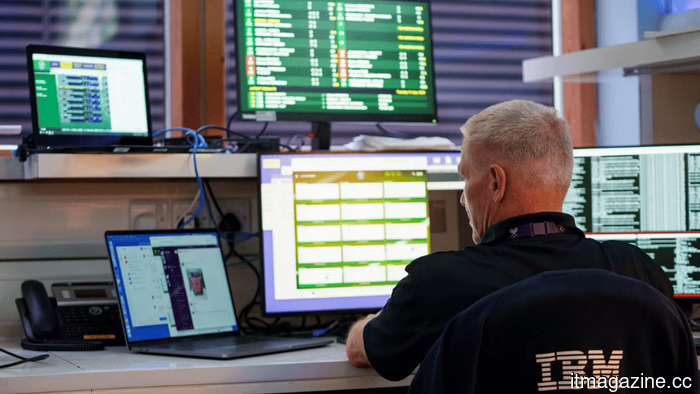 Inside Wimbledon’s concealed 'Court 19' at IBM
Under Wimbledon’s 18th court, IBM's 'Court 19' processes 2.7 million data points during each tournament, showcasing artificial intelligence at the Championships.
Inside Wimbledon’s concealed 'Court 19' at IBM
Under Wimbledon’s 18th court, IBM's 'Court 19' processes 2.7 million data points during each tournament, showcasing artificial intelligence at the Championships.
 Xiaomi has created an SUV that also functions as a camping tent, and its range specifications are just as impressive.
Xiaomi has introduced its new sub-brand, Sky Nomad, which launches with a 5.3-meter family EREV SUV featuring a retractable camper-tent roof in one of its trims.
Xiaomi has created an SUV that also functions as a camping tent, and its range specifications are just as impressive.
Xiaomi has introduced its new sub-brand, Sky Nomad, which launches with a 5.3-meter family EREV SUV featuring a retractable camper-tent roof in one of its trims.
 Jack Dorsey’s Block resolves Cash App fraud allegations with 46 states for $45 million.
Block will disburse $45 million to 46 U.S. states concerning the management of fraud on Cash App, as state regulators step in to fill the void left by the diminished CFPB.
Jack Dorsey’s Block resolves Cash App fraud allegations with 46 states for $45 million.
Block will disburse $45 million to 46 U.S. states concerning the management of fraud on Cash App, as state regulators step in to fill the void left by the diminished CFPB.
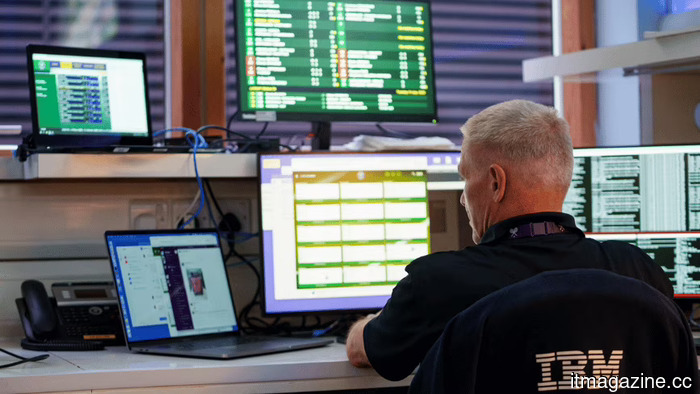 Inside the secretive 'Court 19' at Wimbledon operated by IBM
Underneath Wimbledon's 18th court, IBM's 'Court 19' processes 2.7 million data points per tournament, transforming the Championships into a showcase for AI.
Inside the secretive 'Court 19' at Wimbledon operated by IBM
Underneath Wimbledon's 18th court, IBM's 'Court 19' processes 2.7 million data points per tournament, transforming the Championships into a showcase for AI.
Databento secures $97 million to compete with Bloomberg's terminal.
Market data startup Databento has secured $97 million in a Series B financing round led by NEA, expanding its challenge to the Bloomberg terminal into Europe, APAC, and AI research laboratories.