

Just 6% of managers in the UK believe that Gen Z is prepared for the workforce.
Young employees and their employers have differing perceptions. Nearly half (45 percent) of those aged 18 to 24 believe they enter the workforce equipped with the necessary skills for success. In contrast, only 6 percent of UK managers share this sentiment, according to the Chartered Management Institute.
The organization surveyed over 1,000 managers and 514 young individuals for the report, which was released during Youth Employment Week. This comes as AI transforms the initial phase of employment and the broader discussion about job availability continues.
What employers observe
Sixty-one percent of managers believe that younger employees are more likely than older workers to lack resilience, professionalism, and effective communication, and they often struggle to respond to feedback. More than 91 percent acknowledge that this gap negatively impacts their team's performance, while only 12 percent feel that young recruits progress as anticipated.
When new employees struggle or do not pass probation, managers attribute this to a lack of motivation (40 percent), resilience (38 percent), poor workplace etiquette (34 percent), and unreliable timekeeping (32 percent).
The other side of the issue
The report does not solely focus on Generation Z; it also highlights the shortcomings of their managers. Previous CMI research showed that 82 percent of UK managers are "accidental managers," having been promoted without receiving formal training. Therefore, those tasked with guiding young employees often lack coaching themselves.
Addressing the issue requires effort from both sides. Almost 86 percent of young workers desire line managers to receive training to better support their early careers. Furthermore, 89 percent of managers who did undergo training report that it enhanced their ability to develop junior staff. Investments in training generally yield positive results.
Not lacking in ambition
The data counters the stereotype that young people lack interest. Nearly 64 percent aspire to attain management or leadership roles. Over 83 percent believe that having a mentor or association would significantly boost their confidence. Additionally, 78 percent feel their education emphasized theory over practical skills. Nonetheless, they are entering a contracting entry-level job market, as companies primarily utilizing AI are hiring fewer juniors.
The significance of this issue
The timing amplifies the urgency. AI has already diminished the number of entry-level job postings, and some caution that reducing the junior tier is a mistake. “It’s time we started asking whether work is ready for young people,” stated CMI chief Ann Francke. If companies continue to reduce entry-level positions without properly training their managers, the skills gap is likely to widen. The talent is ready and willing, but evidence suggests the workplace has not yet adapted.
Other articles
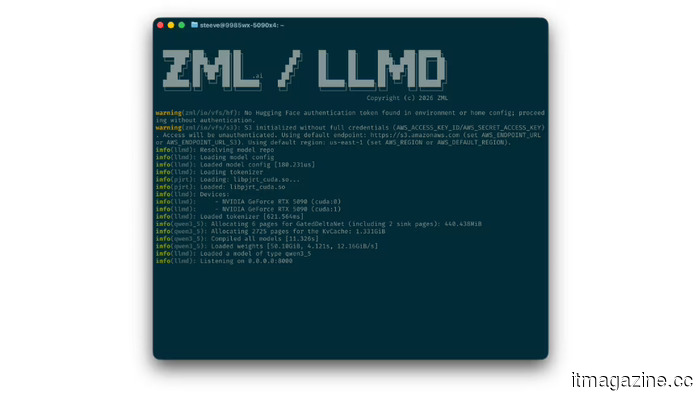 ZML's complimentary AI server operates on any leading chip.
France's ZML has launched ZML/LLMD, a free inference server that operates open-source AI at high speed on Nvidia, AMD, Google, Intel, and Apple processors.
ZML's complimentary AI server operates on any leading chip.
France's ZML has launched ZML/LLMD, a free inference server that operates open-source AI at high speed on Nvidia, AMD, Google, Intel, and Apple processors.
 Gartner has found that customers favor ChatGPT over company chatbots.
According to Gartner, customers are three times more likely to utilize third-party generative AI such as ChatGPT for support compared to company chatbots, as the returns on AI investments are slower than the expenditures.
Gartner has found that customers favor ChatGPT over company chatbots.
According to Gartner, customers are three times more likely to utilize third-party generative AI such as ChatGPT for support compared to company chatbots, as the returns on AI investments are slower than the expenditures.
 Cloudflare and OpenAI are collaborating on a project to enhance the freshness of AI search results.
Cloudflare is collaborating with OpenAI to integrate real-time network signals into ChatGPT's search, marking a shift for a company that was founded on preventing AI crawlers.
Cloudflare and OpenAI are collaborating on a project to enhance the freshness of AI search results.
Cloudflare is collaborating with OpenAI to integrate real-time network signals into ChatGPT's search, marking a shift for a company that was founded on preventing AI crawlers.
 Perplexity is discreetly developing a coding tool powered by AI.
Perplexity has developed an internal coding tool referred to as "Teammate," which may compete with Cursor and Claude Code, according to Business Insider. The launch has not yet been confirmed.
Perplexity is discreetly developing a coding tool powered by AI.
Perplexity has developed an internal coding tool referred to as "Teammate," which may compete with Cursor and Claude Code, according to Business Insider. The launch has not yet been confirmed.
 NATO selects Accenture and Leonardo for a €200 million secure cloud project.
NATO has finalized a seven-year contract worth approximately €200 million with Accenture and Leonardo to create a secure cloud infrastructure known as the Protected Business Network for the Alliance.
OpenAI's GPT-Live: A voice-enabled ChatGPT that can listen and respond.
OpenAI has introduced GPT-Live, a full-duplex voice version of ChatGPT that can listen and speak simultaneously, featuring live translation. This is being made available to all users, including those with free accounts.
NATO selects Accenture and Leonardo for a €200 million secure cloud project.
NATO has finalized a seven-year contract worth approximately €200 million with Accenture and Leonardo to create a secure cloud infrastructure known as the Protected Business Network for the Alliance.
OpenAI's GPT-Live: A voice-enabled ChatGPT that can listen and respond.
OpenAI has introduced GPT-Live, a full-duplex voice version of ChatGPT that can listen and speak simultaneously, featuring live translation. This is being made available to all users, including those with free accounts.
Just 6% of managers in the UK believe that Gen Z is prepared for the workforce.
A CMI report reveals that 45% of UK Gen Z believe they are prepared for work, yet only 6% of managers concur, and among those managers, 82% were elevated to their positions without any training.