
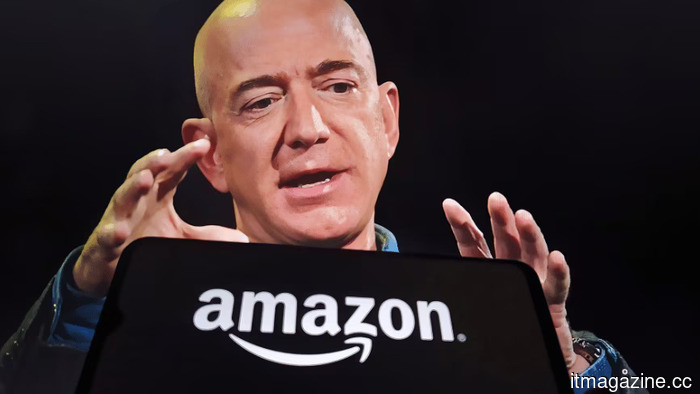
Amazon is re-entering the bond market, seeking at least $25 billion to support its AI development efforts.
Amazon has returned to the debt markets with a bond sale of at least $25 billion, marking its largest offering of the year and clearly indicating how much the company is willing to borrow in the race for artificial intelligence. This issuance is divided into eight tranches, with maturities ranging from 2029 to 2066.
The funds raised are designated for expenses that are draining cash across the industry, including data centers, custom silicon, and the essential infrastructure required by AI. This move follows a pattern established by Amazon's record Canadian dollar bond issued earlier this year, being part of a borrowing spree that has now surpassed $70 billion since the beginning of 2025 across dollar, euro, and Swiss franc transactions.
A significant portion of this investment is funneled through Amazon Web Services, where the company is rapidly expanding its capacity to support customers training and deploying large models. An increasing amount is also allocated to its own Trainium chips, which Amazon markets as a more cost-effective option compared to acquiring large-scale Nvidia hardware.
Investor interest was present, though it waned as the offering terms were finalized. Initial orders peaked around $62 billion before the managing banks curtailed the spread, resulting in a final book size of approximately $41 billion, or about 1.6 times the size of the issuance.
Amazon informed underwriters that it does not intend to issue additional debt this year, which reassures a market observing the sector's increasing leverage. This kind of guidance is significant as investors assess how much more debt may enter the market.
The reasoning behind this borrowing is apparent on the balance sheet. Amazon has projected around $200 billion in capital expenditures for 2026, the highest among hyperscalers, causing a substantial reduction in its free cash flow compared to a year ago.
The company is not alone in seeking debt to fill the gap. The four largest tech firms in the U.S. have collectively estimated more than $650 billion in AI capital expenditures this year, a figure that increasingly exceeds what their considerable operating cash flows can sustain.
However, not everyone sees this demand as insatiable. Analysts observed that demand for this particular sale appeared subdued compared to previous offerings, suggesting that bond investors are becoming more selective as AI-related debt inundates the market.
This caution is also evident in other areas of financing. Issues such as Cipher’s junk bonds, aimed at funding an Amazon data center in Texas, are testing how far investors are willing to go to support growth in the riskier segments.
Amazon structured this offering with a combination of fixed and floating-rate notes, allowing flexibility across a curve reaching out four decades. The longest tranche, maturing in 2066, is typically the type of long-duration bond reserved for the most creditworthy entities.
Amazon continues to secure borrowing at favorable terms due to its status as one of the highest-rated corporate issuers, keeping its funding costs low even as the total amounts increase. The disparity between what Amazon pays for debt and what smaller competitors pay is now part of the narrative concerning who can afford ongoing investment.
This sale occurs in a market already saturated with AI-related bonds from companies like Meta, Oracle, and various data-center developers. Each new offering raises the same question: how much additional debt are investors willing to take on before they demand a higher yield?
For now, this sale provides Amazon with a new financial buffer as it faces a period of substantial spending with no signs of relief. The key question now is whether the market will remain this receptive during future offerings, a concern that looms over the entire sector.
Other articles
 A Telstra service disruption halted Australian train services and prevented taxi payments from processing.
A Telstra outage affecting the entire country disrupted phone services, stopped regional trains, and caused card payments to freeze throughout Australia. Telstra attributed the issue to a fault in their network timing.
A Telstra service disruption halted Australian train services and prevented taxi payments from processing.
A Telstra outage affecting the entire country disrupted phone services, stopped regional trains, and caused card payments to freeze throughout Australia. Telstra attributed the issue to a fault in their network timing.
 A Telstra outage disrupted Australian trains and halted taxi transactions.
A nationwide outage at Telstra disrupted phone services, stopped regional trains, and caused card payment failures throughout Australia. Telstra attributed the issue to a network timing error.
A Telstra outage disrupted Australian trains and halted taxi transactions.
A nationwide outage at Telstra disrupted phone services, stopped regional trains, and caused card payment failures throughout Australia. Telstra attributed the issue to a network timing error.
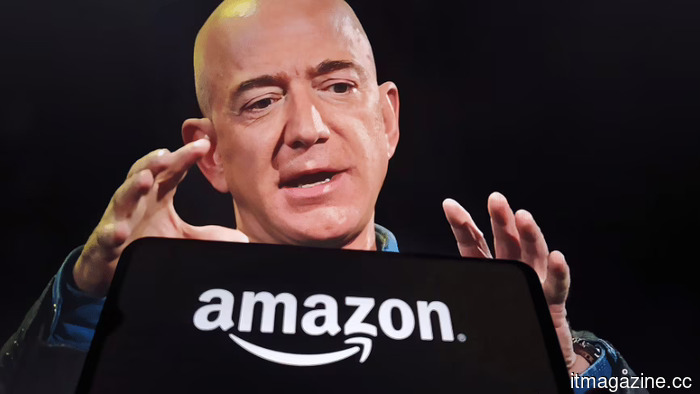 Amazon is re-entering the bond market to raise at least $25 billion to support its AI development.
Amazon is conducting an eight-part bond sale to raise a minimum of $25 billion, marking its largest sale of the year, to fund a $200 billion initiative for AI infrastructure.
Amazon is re-entering the bond market to raise at least $25 billion to support its AI development.
Amazon is conducting an eight-part bond sale to raise a minimum of $25 billion, marking its largest sale of the year, to fund a $200 billion initiative for AI infrastructure.
 Perplexity registers for Nvidia’s Vera CPU as the chip manufacturer advances beyond AI accelerators.
Perplexity has announced that it will operate its AI agent workloads on Nvidia's new Vera CPU, marking an initial success for Nvidia's efforts in general-purpose computing.
Perplexity registers for Nvidia’s Vera CPU as the chip manufacturer advances beyond AI accelerators.
Perplexity has announced that it will operate its AI agent workloads on Nvidia's new Vera CPU, marking an initial success for Nvidia's efforts in general-purpose computing.
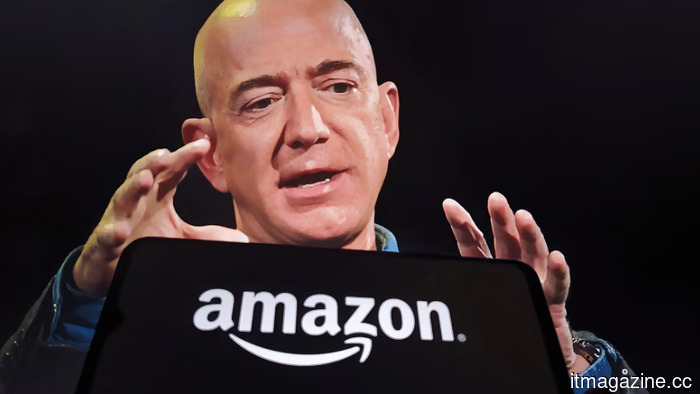 Amazon reenters the bond market seeking at least $25 billion to support its AI expansion.
Amazon is undertaking an eight-part bond sale to raise a minimum of $25 billion, marking its largest sale this year, in order to finance a $200 billion investment in AI infrastructure.
Amazon reenters the bond market seeking at least $25 billion to support its AI expansion.
Amazon is undertaking an eight-part bond sale to raise a minimum of $25 billion, marking its largest sale this year, in order to finance a $200 billion investment in AI infrastructure.
 Perplexity has registered for Nvidia's Vera CPU as the chip manufacturer moves beyond AI accelerators.
Perplexity has announced that it will utilize Nvidia's new Vera CPU for its AI agent workloads, marking an initial success for Nvidia's efforts in general-purpose computing.
Perplexity has registered for Nvidia's Vera CPU as the chip manufacturer moves beyond AI accelerators.
Perplexity has announced that it will utilize Nvidia's new Vera CPU for its AI agent workloads, marking an initial success for Nvidia's efforts in general-purpose computing.
Amazon is re-entering the bond market, seeking at least $25 billion to support its AI development efforts.
Amazon is conducting an eight-part bond sale to raise a minimum of $25 billion, marking its largest such sale of the year, to finance a $200 billion investment in AI infrastructure.