

Nobel laureate Christopher Pissarides states that AI will not bring back a period of swift economic expansion.
A Nobel Prize-winning economist has dampened enthusiasm about the potential for artificial intelligence to propel Western economies back to a period of rapid productivity growth, cautioning that those high-growth years might be permanently behind us. Christopher Pissarides, who was awarded the 2010 Nobel Memorial Prize in economics and teaches at the London School of Economics, told Bloomberg News that there has been little evidence of a productivity boost from AI so far.
His skepticism stands in contrast to much of the tech industry and policy-making circles, where discussions often highlight the anticipated productivity benefits of the technology in settings ranging from central bank meetings to corporate projections. Pissarides, an expert on the effects of automation on labor, estimates that up to 40% of jobs in the US and UK will remain largely unaffected by AI. He specifically pointed to fields such as nursing and hospitality, where he argues the technology is unlikely to deliver the significant gains its proponents claim.
“There could be up to 40%, or at least a substantial number of jobs in the UK, that are not exposed to AI, meaning they won’t experience productivity improvements due to it,” he stated. He expressed similar caution regarding the overall impact of AI in other sectors. The last significant leap he noted was during the personal computing boom of the late 20th century, a time recognized for a notable, though temporary, rise in productivity.
“I doubt there will be a comparable computing boom akin to what we witnessed in the 1980s and 1990s,” said Pissarides, adding, “based on what we currently understand and observe, I don’t expect productivity growth to reach those levels.” He emphasized the uncertainty surrounding the future development of this technology.
This perspective contrasts with views from leaders like Nvidia’s CEO Jensen Huang and OpenAI’s Sam Altman, who argue that AI will significantly transform work and output. During a speech on July 6 at the Royal Economic Society conference in Newcastle, Pissarides elaborated that for the optimistic growth rates predicted, sectors most affected by AI, such as finance, would need to demonstrate substantial productivity improvements—a prospect he considers unlikely.
“It’s simply not feasible to expect high productivity growth,” he commented at the conference. “We must come to terms with the reality that the era of fast productivity growth has ended, regardless of our efforts.”
The implications are significant, as technology companies and governments have staked their hopes on AI to revitalize growth rates that have notably declined in recent decades. Slow economic output in the West, particularly in Europe, has limited options for policymakers and left real wages stagnant, a situation that has intensified political tensions and complicated difficult decisions. Therefore, it’s no surprise that the prospects of a productivity surge from AI have been eagerly embraced.
However, not everyone shares Pissarides’s pessimism. Bank of England Governor Andrew Bailey has described AI as a potentially transformative force for growth, noting that while it may take time to reflect in the statistics, it “may well ride to the rescue.”
This disagreement reflects a broader debate regarding whether the soaring valuations of AI are well-founded. Skeptics have likened the current situation to the dot-com bubble, warning that the technology might produce as much corporate “workslop” as it does actual output, with many companies yet to realize substantial returns on their investments.
Nevertheless, Pissarides is not an automatic detractor of AI. He has previously suggested that the technology could facilitate a four-day workweek by increasing productivity during working hours. His current assertion is narrower: while AI may be beneficial, it is unlikely to restore the growth levels of the late 20th century.
Other articles
 Google supports the 'crisis actor' video in Australia.
A Google manager informed an Australian inquiry that a YouTube video discrediting a Sydney shooting survivor as a 'crisis actor' complied with their guidelines and would remain available.
Google supports the 'crisis actor' video in Australia.
A Google manager informed an Australian inquiry that a YouTube video discrediting a Sydney shooting survivor as a 'crisis actor' complied with their guidelines and would remain available.
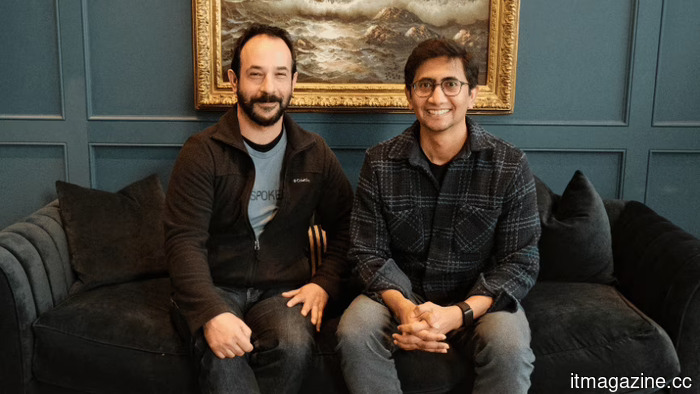 Bespoke Labs secures $40 million to develop dependable AI agents.
Bespoke Labs has secured $40 million in funding from Wing VC, 8VC, and insiders from Anthropic, OpenAI, and Meta to develop the environments used for training and testing AI agents.
Bespoke Labs secures $40 million to develop dependable AI agents.
Bespoke Labs has secured $40 million in funding from Wing VC, 8VC, and insiders from Anthropic, OpenAI, and Meta to develop the environments used for training and testing AI agents.
 Premium for 20 thousand. Dreame crossed a vacuum cleaner with a mop.
It seems that home appliance manufacturers have finally come to the conclusion that the modern person is lazy and wants to see a minimum number of devices in the house. Just as we got used to the idea that a robot vacuum cleaner is a person's friend, new vertical monsters are stepping onto the stage, trying to replace the mop, broom, and dustpan all at once.
Premium for 20 thousand. Dreame crossed a vacuum cleaner with a mop.
It seems that home appliance manufacturers have finally come to the conclusion that the modern person is lazy and wants to see a minimum number of devices in the house. Just as we got used to the idea that a robot vacuum cleaner is a person's friend, new vertical monsters are stepping onto the stage, trying to replace the mop, broom, and dustpan all at once.
 I was doubtful about clip-style open earbuds. However, after using my first pair, I don’t want to switch back.
I no longer evaluate earbuds solely based on sound quality, and the ear-clip design is a significant factor in this shift in perspective. They are incredibly lightweight, comfortable for long periods, and convenient to use. I've recently come across this style, and I'm really enjoying it.
I was doubtful about clip-style open earbuds. However, after using my first pair, I don’t want to switch back.
I no longer evaluate earbuds solely based on sound quality, and the ear-clip design is a significant factor in this shift in perspective. They are incredibly lightweight, comfortable for long periods, and convenient to use. I've recently come across this style, and I'm really enjoying it.
 AI data centers are increasing electricity costs for factories in America's Rust Belt.
Capacity charges have increased significantly throughout the PJM grid, and manufacturers from Ohio to Pennsylvania are bearing the costs of the AI surge.
AI data centers are increasing electricity costs for factories in America's Rust Belt.
Capacity charges have increased significantly throughout the PJM grid, and manufacturers from Ohio to Pennsylvania are bearing the costs of the AI surge.
 Automotive requirements management in 2026: A comparison of 7 solutions
An evaluation of seven automotive requirements management platforms for 2026, assessing Jama Connect, Visure, Codebeamer, Polarion, IBM DOORS, Valispace, and ReqView in terms of ISO 26262 compliance, ASPICE readiness, ReqIF exchange capabilities, and multi-OEM supply chain traceability.
Automotive requirements management in 2026: A comparison of 7 solutions
An evaluation of seven automotive requirements management platforms for 2026, assessing Jama Connect, Visure, Codebeamer, Polarion, IBM DOORS, Valispace, and ReqView in terms of ISO 26262 compliance, ASPICE readiness, ReqIF exchange capabilities, and multi-OEM supply chain traceability.
Nobel laureate Christopher Pissarides states that AI will not bring back a period of swift economic expansion.
Nobel laureate economist Christopher Pissarides states that AI will not restore rapid productivity growth, as up to 40% of jobs in the UK and US remain largely unaffected.