

Automotive requirements management in 2026: A comparison of 7 solutions
**60-second summary**
- **Jama Connect** – Optimal for exchanging supplier-OEM requirements and ensuring live traceability within the automotive supply chain.
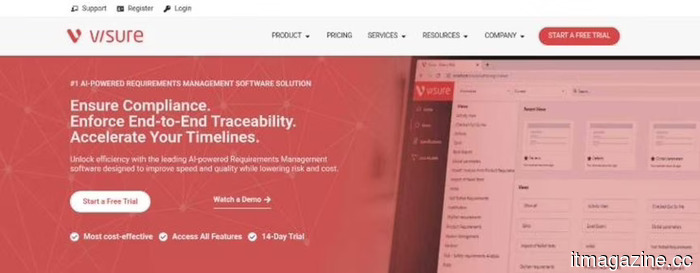
- **Visure** – Ideal for mid-sized suppliers requiring compliance templates on a limited budget.
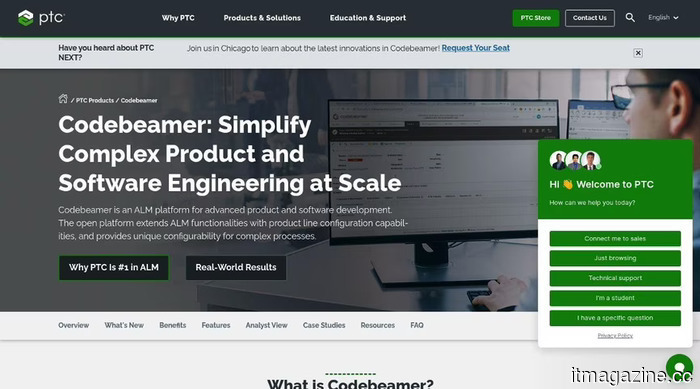
- **Codebeamer** – Best suited for software-centric application lifecycle management (ALM) with ASPICE-compliant templates.
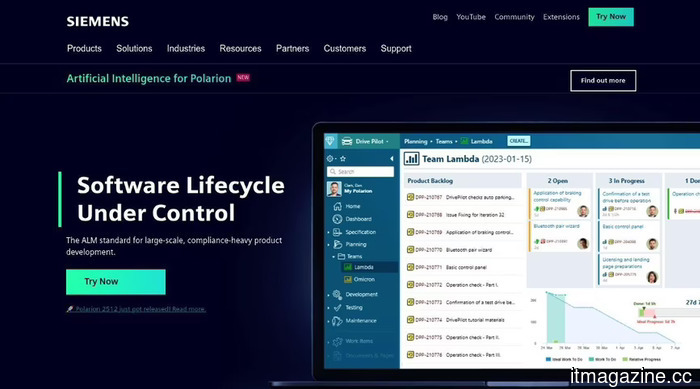
- **Polarion** – Most effective for teams integrated into the Siemens PLM ecosystem.
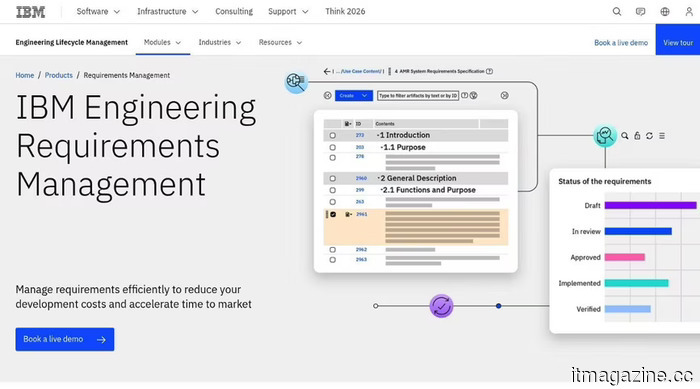
- **IBM DOORS** – Perfect for suppliers already committed to DOORS-based OEM programs.
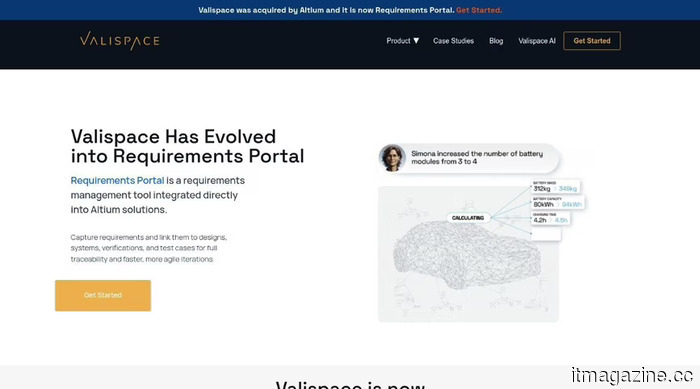
- **Valispace** – Best for engineering teams in early phases linking requirements with design parameters.
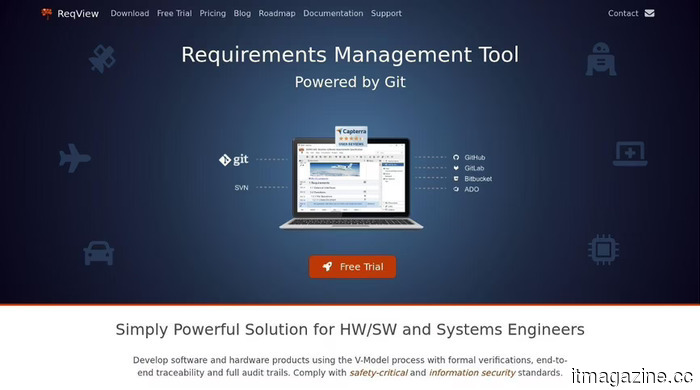
- **ReqView** – Most suitable for small supplier teams needing lightweight ReqIF exchange.
**What are requirements management tools for automotive?**
Requirements management tools in the automotive sector are platforms that assist OEMs, Tier 1 suppliers, and their extended supply chains in capturing, structuring, tracing, and validating the requirements essential for vehicle development. They help teams track what needs to be constructed, tested, and verified for safety-critical systems including braking, steering, ADAS, and powertrain electronics.
What distinguishes automotive requirements management from general RM is the regulatory and supply chain complexity. Every safety-sensitive function requires traceability from system-level requirements to hardware and software specifications, verification plans, and test results, as mandated by ISO 26262 and audited under ASPICE. OEM customers expect suppliers to provide this evidence upon request.
The supply chain aspect adds complexity, as a typical Tier 1 supplier manages requirements from three, four, or even six OEM customers simultaneously. Each OEM utilizes a different toolchain, requirements format, and has distinct expectations for delivering traceability evidence. One might use IBM DOORS, another could utilize Polarion, while a third might expect submissions via Excel spreadsheets with ReqIF exports in return. Suppliers find themselves navigating the challenge of maintaining a single source of truth while interfacing with these varied systems.
This is precisely what these tools address: maintaining traceability, compliance, and the exchange of requirements across a fragmented supply chain where customer systems differ.
**7 best requirements tools for automotive suppliers and OEM teams**
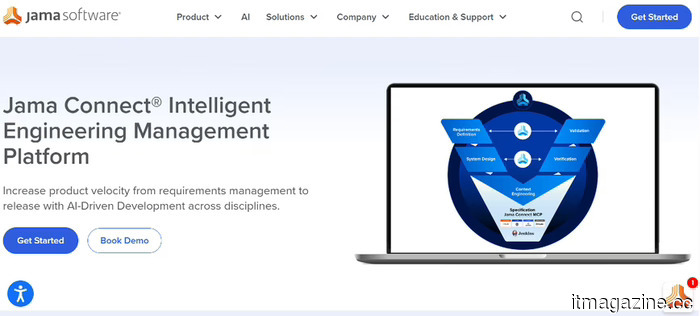
1. **Jama Connect**
If you’re a supplier managing requirements from multiple OEMs, Jama Connect is a purpose-built platform tailored for such environments. It is designed for complex, regulated vehicle development programs and is trusted by notable companies in sectors such as aerospace and semiconductors. It boasts the top position on the G2 Requirements Management grid for over seven quarters, generating annual revenues between $200 million and $250 million.
The platform addresses a significant operational challenge: managing varied requirements from multiple OEMs with differing toolchains. Jama Connect Interchange leverages the ReqIF standard for seamless import and export of requirements and traceability data, allowing suppliers to consolidate requirements from various customers into a single system while maintaining full visibility and delivering complete traceability evidence in the format expected by each OEM. This eliminates tedious manual work, version conflicts, and data loss.
At its core is Live Traceability, which provides a real-time view of relationships across system requirements, software and hardware specifications, test cases, risk analyses, and verification evidence. Unlike conventional tools that rely on static reports, Live Traceability keeps coverage visible at all times. Trace Scores offer quantifiable metrics on completeness and verification status, equipping program managers and safety teams with clear, auditable answers regarding ASPICE readiness or ISO 26262 compliance. Users frequently report faster defect detection and fewer test failures than manual methods.
Jama Connect also includes ready-to-use Traceability Information Models (TIMs) configured for ISO 26262, ASPICE, ISO/SAE 21434, and SOTIF. These models adhere to the hierarchies and verification stages auditors expect, simplifying setup for safety-critical programs.
Moreover, Jama Connect Advisor employs advanced natural language processing and generative AI to enhance requirement quality, identifying ambiguous or incomplete language early in the process. Newer AI features facilitate requirements refinement, test case generation, glossary creation, and risk detection, enabling teams to reduce rework and hasten verification activities.
Scalability is another strength of Jama Connect, accommodating large, complex programs with flexible deployment options (AWS cloud or on-premises) that can evolve with organizational needs. With robust security measures highly valued by automotive and aerospace customers, Jama Connect is SOC 2 Type 2 certified, TISAX Level 2 compliant, TUV SUD validated for safety-related development, and built on OWASP best practices.
Additional benefits include unlimited free reviewer seats for cross-supply-chain collaboration, no hosting or API usage fees, and native integrations with various tools commonly used by automotive teams, such as MATLAB/Simulink, Jira, Azure DevOps, Enterprise Architect, Windchill, Teamcenter, GitHub, GitLab, and Jenkins.
**Key Features**
- Live Traceability with Trace Scores for real
Other articles
 Nobel laureate Christopher Pissarides states that AI will not bring back a period of fast growth.
Nobel laureate economist Christopher Pissarides argues that AI will not lead to a resurgence in rapid productivity growth, as up to 40% of jobs in the UK and US are mostly unaffected.
Nobel laureate Christopher Pissarides states that AI will not bring back a period of fast growth.
Nobel laureate economist Christopher Pissarides argues that AI will not lead to a resurgence in rapid productivity growth, as up to 40% of jobs in the UK and US are mostly unaffected.
 iOS 27 beta 3 simplifies the process of adjusting the intensity of Adaptive Audio on your AirPods.
iOS 27 beta 3 introduces a faster method for adjusting the intensity of AirPods Adaptive Audio, placing the control directly on the main AirPods settings page.
iOS 27 beta 3 simplifies the process of adjusting the intensity of Adaptive Audio on your AirPods.
iOS 27 beta 3 introduces a faster method for adjusting the intensity of AirPods Adaptive Audio, placing the control directly on the main AirPods settings page.
 Premium for 20 thousand. Dreame crossed a vacuum cleaner with a mop.
It seems that home appliance manufacturers have finally come to the conclusion that the modern person is lazy and wants to see a minimum number of devices in the house. Just as we got used to the idea that a robot vacuum cleaner is a person's friend, new vertical monsters are stepping onto the stage, trying to replace the mop, broom, and dustpan all at once.
Premium for 20 thousand. Dreame crossed a vacuum cleaner with a mop.
It seems that home appliance manufacturers have finally come to the conclusion that the modern person is lazy and wants to see a minimum number of devices in the house. Just as we got used to the idea that a robot vacuum cleaner is a person's friend, new vertical monsters are stepping onto the stage, trying to replace the mop, broom, and dustpan all at once.
 iOS 27 beta 3 simplifies the process of modifying the intensity of your AirPods' Adaptive Audio.
iOS 27 beta 3 introduces a faster method to modify the intensity of AirPods Adaptive Audio, placing the control directly in the primary AirPods settings page.
iOS 27 beta 3 simplifies the process of modifying the intensity of your AirPods' Adaptive Audio.
iOS 27 beta 3 introduces a faster method to modify the intensity of AirPods Adaptive Audio, placing the control directly in the primary AirPods settings page.
 DeepSeek is said to be developing its own AI chip to circumvent US restrictions.
According to Reuters, DeepSeek is developing its own AI inference chip, which is reportedly being manufactured at SMIC. The information comes from anonymous sources, so here's what is substantiated.
DeepSeek is said to be developing its own AI chip to circumvent US restrictions.
According to Reuters, DeepSeek is developing its own AI inference chip, which is reportedly being manufactured at SMIC. The information comes from anonymous sources, so here's what is substantiated.
 Nobel laureate Christopher Pissarides states that AI will not bring back a period of swift economic expansion.
Nobel laureate economist Christopher Pissarides states that AI will not restore rapid productivity growth, as up to 40% of jobs in the UK and US remain largely unaffected.
Nobel laureate Christopher Pissarides states that AI will not bring back a period of swift economic expansion.
Nobel laureate economist Christopher Pissarides states that AI will not restore rapid productivity growth, as up to 40% of jobs in the UK and US remain largely unaffected.
Automotive requirements management in 2026: A comparison of 7 solutions
An evaluation of seven automotive requirements management platforms for 2026, assessing Jama Connect, Visure, Codebeamer, Polarion, IBM DOORS, Valispace, and ReqView in terms of ISO 26262 compliance, ASPICE readiness, ReqIF exchange capabilities, and multi-OEM supply chain traceability.