

General AI expertise might not suffice anymore as organizations seek more specialized skills.
The generative AI surge that began in late 2022 captivated business executives and team leaders worldwide with its potential. Many quickly recognized the opportunities that this new technology presented and began to explore its applications.
This led to a significant hiring boom, as companies sought to find individuals skilled in AI. Given the nascent state of this technology sector, even those without advanced expertise were soon overwhelmed with job offers. Just basic knowledge of prompt engineering or a slight understanding of copying an API key was often sufficient to attract interest and earn the title of “AI expert.”
Fast forward over three years, and hiring managers today are much more discerning about their requirements, as data from Fiverr Pro shows. The generic AI skills that were once sought after are now significantly less valuable. Managers have understood that surface-level familiarity with LLMs is insufficient, as it fails to provide the necessary value.
Today's AI engineers typically possess a mix of software engineering, machine learning, and AI systems knowledge, including expertise in Python development, LLM and agent-based application design, RAG architectures, vector databases, cloud infrastructure, MLOps, data pipelines, model deployment, AI evaluation, and practical experience with solutions like Claude Code, TensorFlow, PyTorch, AWS, and Hugging Face.
For executives aiming for substantial productivity improvements, the demand has now shifted toward individuals with specialized technical skills capable of building customized AI systems at an enterprise scale.
The evolving AI talent landscape is characterized by business leaders seeking ways to progress beyond flashy AI prototypes. This is a primary factor behind the growing need for AI specialists.
Recent years have shown that traditional consulting methods, often involving significant investment, may not provide the in-depth knowledge, speed, or flexibility required to transition from prototypes to actual implementation. The impressive demos and proofs of concept may seem appealing initially, but when it comes to reliability and deep integration of workflows at scale, these AI systems frequently fall short.
The underlying issue is straightforward: there is a significant lack of qualified professionals with essential skills in areas like backend integration and model-specific architectures. AI specialists are crucial for execution, and due to their limited availability, many companies are turning away from traditional long-term hires in favor of more flexible and readily available contractors from freelancer platforms like Fiverr Pro, where candidates are pre-screened for their specific skills and can be counted on to meet tight deadlines.
Instead of relying on lengthy hiring processes for broadly skilled AI personnel, many firms are starting to explore on-demand talent models that can provide more tailored support as their needs change. When a new project requires expertise in Claude Code deployment or verified knowledge of n8n workflows, Fiverr Pro has emerged as an efficient way to locate those candidates.
While broad AI expertise was critical in the early stages of the AI boom as companies experimented with the technology's capabilities, the focus is now shifting from exploration to execution, resulting in a higher demand for on-demand specialists who can apply AI to meet specific business requirements.
Recent data from Fiverr Pro shows that enterprise clients are now more targeted in their searches and increasingly interested in individuals with niche engineering skills.
When enterprises first ventured into AI, many believed that AI models were largely interchangeable, with benchmark performance and operational costs being the main factors. However, the necessity to comprehend different AI architectures has become clearer, requiring the right engineer for each specific model.
This is exemplified by the rapid rise of Anthropic’s Claude, a model noted for its reliability in software creation. Fiverr Pro's data comparing searches from November 2025 to April 2026 with those from May 2025 to October 2025 indicates that inquiries for "Claude" and "Claude Code" surged by over 700%.
Almost all enterprises are now seeking developers familiar with Claude, regarded as one of the leading models for code writing, primarily due to its excellent capabilities for codebase reasoning.
To effectively employ Claude’s features and produce functional software, organizations need to find developers who possess more than a generalized understanding of AI. Candidates with insight into the model's specific characteristics, including its agentic command line interface, and the ability to manage autonomous AI coding agents through more complex development tasks, are crucial.
Without this expertise, productivity may significantly decrease, as code generated by Claude’s agents might require thorough review and refinement before deployment.
Jasmin Sarwan, VP of Business Management at Fiverr Pro, noted the noticeable shift in how enterprises approach hiring AI personnel. They have a clear vision of what they wish to create and have identified the specific tools needed but recognize that utilizing these tools demands familiarity with their unique intricacies that can only be gained through extensive experience.
From chatbots to autonomous enterprise automation, while an LLM may excel at creative tasks like poetry and image generation, it will not know the reasons behind last month’s customer churn. The truth is that even the strongest AI models are nearly ineffective without a robust data infrastructure to support them, which necessitates significant expertise.
To utilize autonomous agents for automating tedious processes that consume hundreds of hours each week, organizations must
Other articles
 Workers at Samsung's appliance division are organizing a rally to protest the bonuses awarded to chip division employees.
Samsung employees in the phone, TV, and appliance divisions will gather in Suwon to protest a bonus agreement that awards chip workers up to 600 million won, while they receive only 6 million won.
Workers at Samsung's appliance division are organizing a rally to protest the bonuses awarded to chip division employees.
Samsung employees in the phone, TV, and appliance divisions will gather in Suwon to protest a bonus agreement that awards chip workers up to 600 million won, while they receive only 6 million won.
 Novartis acquires UK biotech Myricx for as much as $1.5 billion to pursue a new class of cancer drugs.
Novartis will provide an initial payment of $1.1 billion and potential milestone payments of up to $400 million for Myricx Bio, a UK-based company working on an innovative payload for antibody-drug conjugates.
Novartis acquires UK biotech Myricx for as much as $1.5 billion to pursue a new class of cancer drugs.
Novartis will provide an initial payment of $1.1 billion and potential milestone payments of up to $400 million for Myricx Bio, a UK-based company working on an innovative payload for antibody-drug conjugates.
 The energy consumption of AI was already troubling. Studies indicate that AI agents are over a hundred times more energy-intensive.
A study conducted by KAIST indicates that AI agents use significantly more energy compared to traditional AI, underscoring an increasing issue for data centers and the future of AI infrastructure.
The energy consumption of AI was already troubling. Studies indicate that AI agents are over a hundred times more energy-intensive.
A study conducted by KAIST indicates that AI agents use significantly more energy compared to traditional AI, underscoring an increasing issue for data centers and the future of AI infrastructure.
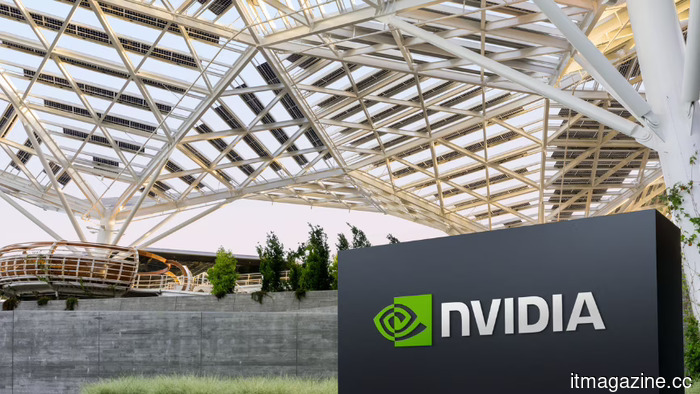 Nvidia's Kyber AI rack has been postponed until 2028.
According to SemiAnalysis, Nvidia's Kyber rack for its 2027 Rubin Ultra chips has been delayed to 2028 due to difficulties in constructing the circuit board, which presents an opportunity for competitors.
Nvidia's Kyber AI rack has been postponed until 2028.
According to SemiAnalysis, Nvidia's Kyber rack for its 2027 Rubin Ultra chips has been delayed to 2028 due to difficulties in constructing the circuit board, which presents an opportunity for competitors.
 The UN states that AI is advancing more rapidly than regulations, and it has a report to back this claim.
As a UN discussion on AI governance begins in Geneva, António Guterres cautions that AI is progressing more swiftly than governments can assess or regulate it.
The UN states that AI is advancing more rapidly than regulations, and it has a report to back this claim.
As a UN discussion on AI governance begins in Geneva, António Guterres cautions that AI is progressing more swiftly than governments can assess or regulate it.
 Is the ‘SaaSpocalypse’ just a myth? The actual expenses of AI-generated software.
AI has greatly simplified and reduced the cost of developing software in-house, leading many executives to re-evaluate SaaS subscriptions primarily from a cost-reduction perspective.
Is the ‘SaaSpocalypse’ just a myth? The actual expenses of AI-generated software.
AI has greatly simplified and reduced the cost of developing software in-house, leading many executives to re-evaluate SaaS subscriptions primarily from a cost-reduction perspective.
General AI expertise might not suffice anymore as organizations seek more specialized skills.
As the generative AI surge began in late 2022, business executives and team leaders worldwide found themselves intrigued by its possibilities. Numerous leaders in the corporate sector swiftly acknowledged the promise of this new technology and started exploring its applications. This led to a significant recruitment frenzy, with companies actively seeking talent...