

Denmark enters an EU court battle regarding the obligations of platforms to publishers.
Denmark has taken a stance in one of the less publicized but significant legal conflicts regarding how the internet compensates journalism. The Danish government has submitted a formal intervention to the Court of Justice of the European Union, supporting Belgium in a case initiated by a group of tech companies that challenge Belgium's enforcement of the press publishers’ right, as reported by Reuters.
This right is at the heart of several recent European decisions, including a case where Meta lost against an Italian publisher in the EU’s highest court. The controversy centers around Article 15 of the 2019 Copyright in the Digital Single Market Directive, which grants press publishers the right to receive payment when platforms reuse their content. The platforms are contesting Belgium’s method of applying this right, arguing that the national regulations exceed what EU law allows. Conversely, Denmark is asserting the opposite.
The companies involved in this case are significant players. According to Reuters, the challenge was filed against the Belgian government in 2023 by a group that includes Streamz, Google, Meta, Spotify, and Sony, which argue that Belgium’s way of implementing the directive undermines rather than upholds EU copyright law. The oral hearing is scheduled for July 6 and 7, and Denmark plans to participate actively rather than merely submit documents.
Copenhagen's rationale for intervening is distinctly protective. The government stated that it chose to support Belgium due to concerns about the potential impact of the case on Danish media organizations and to help ensure that Meta and other major platforms pay for newspaper articles and other content shared on their services. This reflects national industrial interests being articulated in a legal setting, and Denmark is open about it.
There is also a local context to this interest. Danish publishers have been particularly organized in demanding payments from platforms, creating a collective management organization to negotiate on their behalf. After negotiations stalled, they even took legal action against OpenAI earlier this year for the use of their material. The government’s intervention in Luxembourg acts as a diplomatic layer on top of this domestic effort.
The implications extend well beyond Belgium. Since the CJEU interprets EU law for all member states, a ruling on the compatibility of Belgium's enforcement with the directive will essentially determine how far any country can go in compelling platforms to negotiate. A victory for the companies would reduce that scope, while a success for Belgium—and Denmark—would expand it.
Recent case law has leaned in favor of publishers, with the CJEU already stating that member states may mandate fair remuneration and data-sharing between platforms and press publishers, which provides national regulators with significant leverage.
The platforms’ challenge to Belgium is partly an attempt to curb this momentum before it solidifies, following years of tension over Google's utilization of news content in Europe. Furthermore, the situation reflects a new concern, as the debate surrounding snippets and search results is now intertwined with AI, since the same news archives utilized by platforms for search are also the resources that large language models are trained on.
Publishers, who spent years negotiating compensation for links, are now increasingly focusing on payment for training data, and the principles debated in Luxembourg will influence both areas. Denmark's choice to participate in person instead of merely submitting a document underscores the significance it attributes to the case's outcome. While government interventions in EU cases are common, active participation in oral hearings positions Copenhagen distinctly alongside Brussels against some of the world's largest technology firms.
However, the resolution of this case will not be determined at the hearing. Oral arguments are just one stage in a lengthy process, with an advocate general’s opinion and a final ruling expected months later, and the court might narrow the issues more than either party wishes. What Denmark's intervention signifies is that another government has deemed the battle over news compensation critical enough to engage directly, rather than observe passively.
Other articles
 Even Realities reaches $1 billion with smart glasses that do not require a camera.
Shenzhen's Even Realities has secured $150 million from Meituan and Tencent, achieving a valuation of $1 billion for its camera-free smart glasses, which are positioned to compete with Meta.
Even Realities reaches $1 billion with smart glasses that do not require a camera.
Shenzhen's Even Realities has secured $150 million from Meituan and Tencent, achieving a valuation of $1 billion for its camera-free smart glasses, which are positioned to compete with Meta.
 A Google executive has transferred Command & Conquer Generals: Zero Hour to iPhone and Mac utilizing Claude.
A Google executive utilized Claude Fable 5 to convert Command & Conquer Generals Zero Hour for iPhone, iPad, and Mac without the need for an emulator.
A Google executive has transferred Command & Conquer Generals: Zero Hour to iPhone and Mac utilizing Claude.
A Google executive utilized Claude Fable 5 to convert Command & Conquer Generals Zero Hour for iPhone, iPad, and Mac without the need for an emulator.
 Worldmodeldata secures £7M to develop AI training using video games.
The Cambridge-based startup Worldmodeldata has secured £7 million in seed funding, led by Iona Star Capital, to convert licensed video game data into training datasets for AI world models.
Worldmodeldata secures £7M to develop AI training using video games.
The Cambridge-based startup Worldmodeldata has secured £7 million in seed funding, led by Iona Star Capital, to convert licensed video game data into training datasets for AI world models.
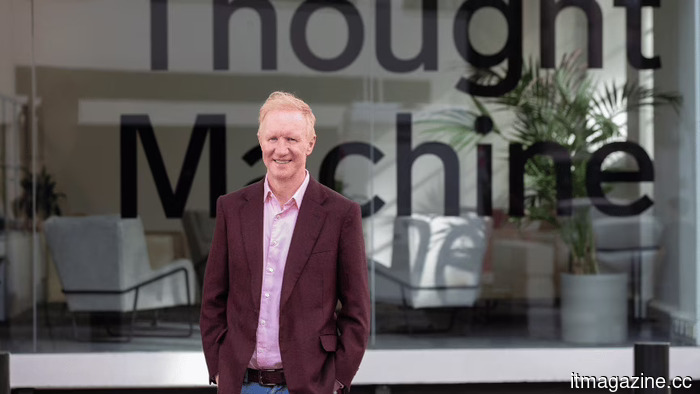 Thought Machine reaches $100 million in revenue, postpones IPO until 2028.
UK core-banking company Thought Machine has surpassed $100 million in revenue and annual recurring revenue (ARR), secured £30 million from a banking client, and postponed its stock market listing to 2028.
Thought Machine reaches $100 million in revenue, postpones IPO until 2028.
UK core-banking company Thought Machine has surpassed $100 million in revenue and annual recurring revenue (ARR), secured £30 million from a banking client, and postponed its stock market listing to 2028.
 Hedge funds offloaded chip stocks for the fourth consecutive week, but continued to invest in AI stocks.
Data from Goldman Sachs indicates that semiconductors have been the US sector with the highest net sales for the fourth consecutive week, while hedge funds maintain their AI positions at nearly record levels.
Hedge funds offloaded chip stocks for the fourth consecutive week, but continued to invest in AI stocks.
Data from Goldman Sachs indicates that semiconductors have been the US sector with the highest net sales for the fourth consecutive week, while hedge funds maintain their AI positions at nearly record levels.
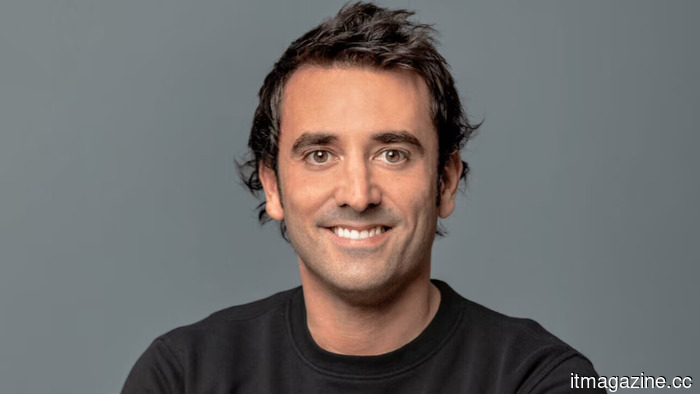 Spain's Sherpa.ai secures $18 million for data-sovereign artificial intelligence.
The Basque startup Sherpa.ai has secured $18 million in funding from the US investor Forgepoint for its federated-learning AI, which develops models without the need to share sensitive information.
Spain's Sherpa.ai secures $18 million for data-sovereign artificial intelligence.
The Basque startup Sherpa.ai has secured $18 million in funding from the US investor Forgepoint for its federated-learning AI, which develops models without the need to share sensitive information.
Denmark enters an EU court battle regarding the obligations of platforms to publishers.
Denmark has submitted a written intervention in support of Belgium in a CJEU case concerning the manner in which platforms contest the enforcement of press publishers’ rights by the country.