

UK parents cautioned about the risk of AI-generated child abuse images.
**TL;DR:** The UK’s National Crime Agency and the Internet Watch Foundation have advised parents against publicly sharing images of their children due to the rise of AI-generated abusive imagery. In 2025, the IWF discovered 8,029 AI-generated abusive videos and images, marking a 14% increase, especially in videos, which surged from 13 to 3,440 within a year. New guidance encourages parents to enhance privacy settings and review previous posts.
Parents are urged to refrain from posting their children's images online because of the increase in AI-generated abusive content, according to a warning from the UK’s National Crime Agency. This advice comes from both the agency and the Internet Watch Foundation, a charity focused on identifying and eliminating child sexual abuse material online.
In 2025, the IWF reported finding 8,029 AI-generated images and videos depicting realistic child sexual abuse, a 14% increase compared to the previous year. The rise in AI-generated abuse videos is particularly concerning, jumping from 13 in 2024 to 3,440 the following year. Under UK law, this type of imagery is considered child sexual abuse material, regardless of its method of creation. Tim Wright, a senior manager at the NCA, emphasized the importance of prevention alongside law enforcement efforts.
The joint guidance encourages parents to check and tighten privacy settings and share posts only with trusted groups, like close friends. It also advises reviewing older posts for identifiable information, such as a child’s face or school uniforms, and reassessing the consent provided to schools and clubs that take children’s photographs.
Concerns about “sharenting”—a term added to the Collins English Dictionary in 2016—have been prevalent for years, focusing on issues of identity theft and privacy. However, the rise of AI tools capable of manipulating photos has intensified these concerns. The IWF previously reported a case where a criminal gang harvested student photos from a school website and used AI to generate over 100 sexual images of those children. Their data also indicates a gender disparity in harm, with 98% of recognized AI abuse images in 2024 involving girls in sexual contexts.
Children are aware of the risks, with UNICEF research showing that a quarter of them worry about their images being used to create explicit deepfakes. Advocates have long called for stronger European regulations against nonconsensual deepfake content.
In response, the UK government has moved to prohibit nudification apps and altered laws to allow AI companies to test for potential abuses involving such materials. The IWF has labeled these apps as unnecessary products. Ofcom is enforcing the Online Safety Act and has opened a child safety investigation into Telegram following inquiries into X and Grok. Additionally, ministers are considering a ban on social media for those under 16.
The broader awareness surrounding deepfakes, affecting both celebrities and schoolchildren, has compelled lawmakers to act more swiftly than originally intended. The NCA’s guidance underscores the urgency for families to manage their photo sharing. “These are not hypothetical threats; they are real,” said IWF CEO Kerry Smith, emphasizing that the goal is to ensure informed sharing with trusted individuals rather than complete cessation of sharing. Ultimately, the advice promotes reducing the availability of exploitable material rather than invoking panic.
Other articles
 South Korea intends to create a future fund utilizing the revenue from the chip tax.
According to Yonhap, Seoul aims to utilize the record profits from Samsung and SK Hynix to finance AI investments and address inequality through a new "future response fund."
South Korea intends to create a future fund utilizing the revenue from the chip tax.
According to Yonhap, Seoul aims to utilize the record profits from Samsung and SK Hynix to finance AI investments and address inequality through a new "future response fund."
 Here’s a list of all the games available for download on Xbox next week.
The release calendar for Xbox next week features 24 games, ranging from AAA pre-orders such as Assassin's Creed Black Flag Resynced to the highly anticipated 1.0 launch of Palworld on Game Pass.
Here’s a list of all the games available for download on Xbox next week.
The release calendar for Xbox next week features 24 games, ranging from AAA pre-orders such as Assassin's Creed Black Flag Resynced to the highly anticipated 1.0 launch of Palworld on Game Pass.
 As AI accelerates digital exploitation, UK agencies are advising parents to restrict access to children's photos shared online.
The UK's NCA and IWF are calling on parents to enhance privacy settings on social media, as AI tools have simplified the process of transforming regular images into abusive material.
As AI accelerates digital exploitation, UK agencies are advising parents to restrict access to children's photos shared online.
The UK's NCA and IWF are calling on parents to enhance privacy settings on social media, as AI tools have simplified the process of transforming regular images into abusive material.
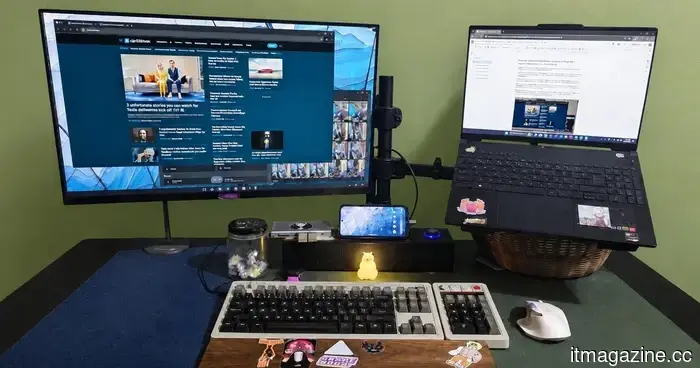 The Android desktop mode made me long for my laptop in no time at all.
The Android desktop mode can transform a phone into a fairly functional workstation; however, after spending a workday using WordPress, browser tools, and numerous accessories, the laptop seemed refreshingly straightforward.
The Android desktop mode made me long for my laptop in no time at all.
The Android desktop mode can transform a phone into a fairly functional workstation; however, after spending a workday using WordPress, browser tools, and numerous accessories, the laptop seemed refreshingly straightforward.
 Citi's CEO: Two AI competitions will shape the future of banking.
Jane Fraser emphasizes that banks need to quickly monetize AI while safeguarding the financial system and acknowledges that job displacements are already occurring.
Citi's CEO: Two AI competitions will shape the future of banking.
Jane Fraser emphasizes that banks need to quickly monetize AI while safeguarding the financial system and acknowledges that job displacements are already occurring.
 I’ve allowed the Radial menu to take control of my Mac, and I have no intention of reverting.
I dedicated a week to testing Radial, a Mac application that places your shortcuts, scripts, and automations directly at your cursor, and it has already transformed my usage of the Mac.
I’ve allowed the Radial menu to take control of my Mac, and I have no intention of reverting.
I dedicated a week to testing Radial, a Mac application that places your shortcuts, scripts, and automations directly at your cursor, and it has already transformed my usage of the Mac.
UK parents cautioned about the risk of AI-generated child abuse images.
The NCA and IWF urge parents to cease publicly sharing photos of their children, as the number of AI-generated abuse videos skyrocketed from 13 to 3,440 within a year.