
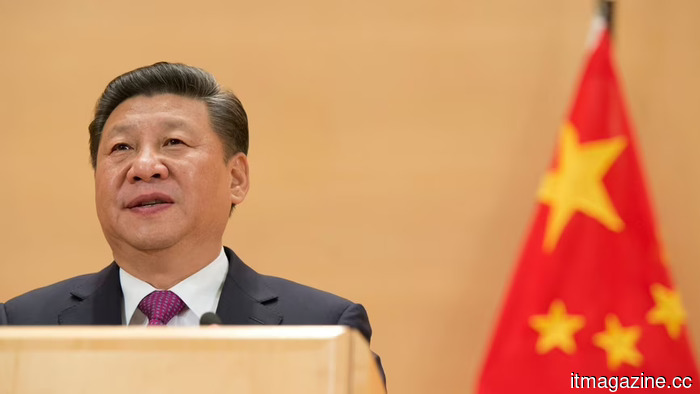
China amends e-commerce legislation to oversee and protect platforms.
**TL;DR:** China has released draft amendments to its e-commerce law aiming to enhance domestic platform regulation and introduce legal "countermeasures" to protect companies such as Temu and Shein from tariffs and fines abroad. The 20 provisions are available for public consultation until August 4.
On Saturday, China published draft amendments to its e-commerce law, which includes 20 proposed provisions aimed at broadening the law's scope beyond just platforms and merchants, encompassing a wider variety of participants in the digital economy. Jointly issued by the State Administration for Market Regulation and the Ministry of Commerce, the proposal is open for public feedback until August 4.
The timing is strategic, as China's e-commerce giants are currently under the most stringent domestic regulatory scrutiny in years while also facing growing challenges in their key export markets.
**Changes Proposed by the Amendments**
The original e-commerce law, which came into effect in January 2019, primarily addressed platform operators and the merchants utilizing their services. The draft amendments would extend regulatory authority to all entities defined under Beijing's “platform economy,” which now encompasses AI-driven shopping agents, logistics providers, payment processors, and the data infrastructure that links them.
Furthermore, the amendments would introduce new regulatory tools beyond the existing measures of fixed fines and business suspensions. The proposal suggests implementing “routine oversight” mechanisms and fostering better coordination among government departments, including consistent enforcement for both online and offline businesses.
**Domestic Context**
These draft amendments arise from China's 15th Five-Year Plan for 2026 to 2030, which calls for increased oversight of platform companies concerning data, algorithms, traffic rules, and operational practices. In April, SAMR penalized Alibaba, JD.com, PDD Holdings, Meituan, and ByteDance’s Douyin with a combined fine of 3.6 billion yuan ($528 million) for not preventing unqualified food delivery vendors.
Additionally, Beijing has called in several internet companies over aggressive pricing practices as part of its “anti-involution” campaign, targeting detrimental price wars that hamper profit while not fostering innovation. The amendments to the e-commerce law would provide a formal legal foundation for interventions that regulators are already performing informally.
**International Protections**
The most innovative provisions of the draft relate to international collaboration and the so-called “countermeasures” intended to safeguard the “lawful rights and interests” of Chinese enterprises abroad. Though the language is broadly defined, the targets are clear.
The EU recently fined Temu €200 million under the Digital Services Act for offering unsafe products to European customers. Additionally, as of July 1, the EU ended the €150 de minimis exemption that previously allowed Temu, Shein, and AliExpress to ship low-value goods into Europe without tariffs.
In the U.S., the impact has been more substantial, as the Trump administration eliminated the $800 de minimis exemption for Chinese imports in May 2025, imposing a 54% tariff or a flat $100 fee on items that used to enter duty-free. Temu has reportedly seen a decline of over 50% in its daily U.S. users since these measures were enacted.
The draft amendments would formalize what prior regulations hinted at; China is developing data governance frameworks meant to accompany its digital infrastructure abroad. A revised Foreign Trade Law that took effect in March also expanded provisions for trade countermeasures and national security.
**Dual Goals for the Platform Economy**
The amendments aim to achieve two objectives simultaneously. Domestically, they seek to integrate more of the platform economy under formal regulatory oversight, addressing loopholes that permit companies to operate in ambiguous legal spaces.
Internationally, they indicate that Beijing plans to employ legal mechanisms to support its platforms’ expansion overseas, even while those platforms confront increasing regulatory challenges in Europe and trade barriers in the United States. The draft's provisions on ensuring "compatibility" between Chinese and international e-commerce standards imply that Beijing wishes to influence global norms rather than just adhering to them.
The unresolved tension remains whether a law intended to strengthen control at home can also serve as a protective measure abroad. The public consultation period lasts for 30 days, and the final version may differ significantly from the draft presented on Saturday.
Другие статьи
 India has called upon Meta regarding Instagram advertisements that promote child sexual abuse content.
India's IT ministry has called upon Meta executives following a BBC investigation that revealed Instagram was running paid advertisements promoting CSAM, directing users to Telegram.
India has called upon Meta regarding Instagram advertisements that promote child sexual abuse content.
India's IT ministry has called upon Meta executives following a BBC investigation that revealed Instagram was running paid advertisements promoting CSAM, directing users to Telegram.
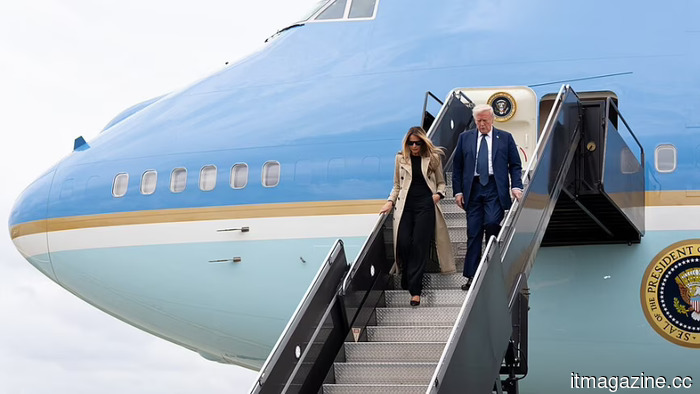 The Trump memecoin resulted in a $3.8 billion loss for investors, while the president made $636 million.
Nansen data indicates that 988,905 buyers of the $TRUMP token experienced losses totaling $3.81 billion, whereas Trump made $636 million in royalties. His financial disclosure for 2025 reports $1.4 billion in cryptocurrency income.
The Trump memecoin resulted in a $3.8 billion loss for investors, while the president made $636 million.
Nansen data indicates that 988,905 buyers of the $TRUMP token experienced losses totaling $3.81 billion, whereas Trump made $636 million in royalties. His financial disclosure for 2025 reports $1.4 billion in cryptocurrency income.
 Amazon discreetly enhances its Fire HD 10 tablet by adding an impressive 1GB of RAM.
Amazon has upgraded the Fire HD 10 by adding an additional gigabyte of RAM, thus prolonging the lifespan of its flagship tablet instead of introducing a completely new model.
Amazon discreetly enhances its Fire HD 10 tablet by adding an impressive 1GB of RAM.
Amazon has upgraded the Fire HD 10 by adding an additional gigabyte of RAM, thus prolonging the lifespan of its flagship tablet instead of introducing a completely new model.
 India calls on Meta regarding Instagram advertisements that endorse child sexual abuse content.
India's IT ministry has called in Meta executives following a BBC investigation which revealed that Instagram had been running paid advertisements promoting CSAM and directing users to Telegram.
India calls on Meta regarding Instagram advertisements that endorse child sexual abuse content.
India's IT ministry has called in Meta executives following a BBC investigation which revealed that Instagram had been running paid advertisements promoting CSAM and directing users to Telegram.
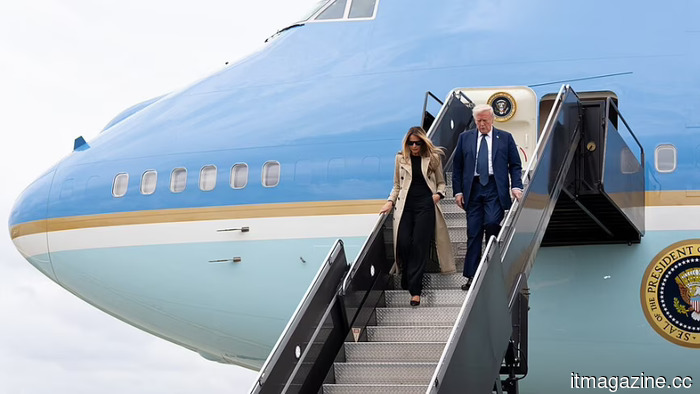 The Trump memecoin resulted in a loss of $3.8 billion for investors while the president made $636 million.
Data from Nansen indicates that 988,905 buyers of the $TRUMP token incurred losses totaling $3.81 billion, while Trump earned $636 million in royalties. His financial disclosure for 2025 reports $1.4 billion in earnings from cryptocurrency.
China aims for cinemas to offer not only tickets but also karaoke and coffee.
Chinese regulators are encouraging cinemas to incorporate AI agents, karaoke booths, and coffee shops as ticket sales have dropped by 40% in the first half of 2026.
The Trump memecoin resulted in a loss of $3.8 billion for investors while the president made $636 million.
Data from Nansen indicates that 988,905 buyers of the $TRUMP token incurred losses totaling $3.81 billion, while Trump earned $636 million in royalties. His financial disclosure for 2025 reports $1.4 billion in earnings from cryptocurrency.
China aims for cinemas to offer not only tickets but also karaoke and coffee.
Chinese regulators are encouraging cinemas to incorporate AI agents, karaoke booths, and coffee shops as ticket sales have dropped by 40% in the first half of 2026.
China amends e-commerce legislation to oversee and protect platforms.
China's proposed amendments to its e-commerce law introduce oversight for domestic platforms and international countermeasures, as Temu and Shein encounter tariffs and penalties in the US and EU.