
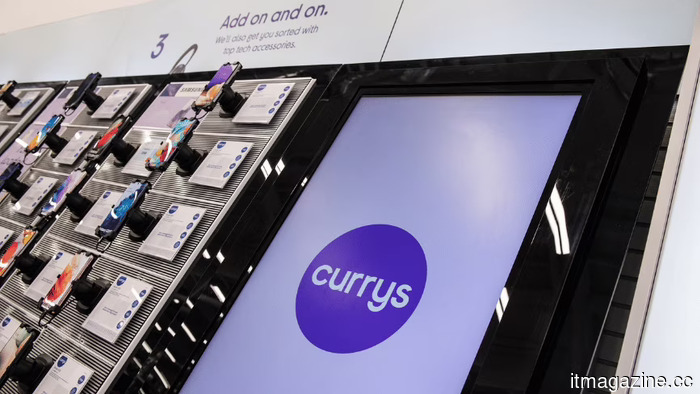
Currys alerts that a shortage of memory will lead to an increase in gadget prices.
The AI memory crunch has been a significant topic in the industry for months and is now set to impact consumers. Currys, the largest consumer electronics retailer in Britain, has warned that the prices of phones, laptops, and TVs will increase later this year.
Chief executive Alex Baldock issued this alert to journalists following the company's annual results, as reported by Reuters. He noted that AI and data centers are consuming a large portion of the world's silicon supply, which will ultimately affect shoppers.
Currys serves as a useful indicator of market trends. Similar to Best Buy in the US, it has locations throughout the UK, Ireland, and the Nordics, allowing it to accurately gauge the direction of consumer prices. Unfortunately, the outlook is not positive.
“There’s less availability for mobile phones and laptops,” Baldock stated, adding that this situation “will inevitably lead to availability challenges and some cost price inflation later this year.” He refrained from specifying the amounts of the proposed increases, claiming it is too early for that.
Currys is not powerless in this situation. Baldock mentioned that they intend to leverage their position as market leader to secure stock and mitigate price hikes. They have also made early purchases to ensure supplies. “We’ve ensured that we’ve bought ahead, securing a good supply of computing and mobile products until at least September,” he explained.
However, that security will diminish in the fall, leading to shortages. Currys is merely the latest company to raise concerns. Apple has already increased its prices, and Xbox consoles have also seen hikes. Analysts anticipate that the situation will worsen before it improves.
The underlying issue is clear: memory manufacturers have redirected their production towards wealthy AI hyperscalers like Meta, Google, and Amazon, leaving device manufacturers to compete for what’s left. This demand has impacted even longstanding chip standards and has contributed to pushing Micron to a trillion-dollar valuation. While cheaper Chinese DRAM may eventually offer some relief, it isn’t available at scale just yet.
This warning from Currys coincided with an inconvenient day for Europe, as a separate EU-funded report warned that Chinese export controls, a heavy dependence on US technology, and structural weaknesses could jeopardize the region’s chip industry. The report suggested that fast-tracking the development of domestic supply is essential. Currys’ price warning reflects the consumer-facing aspect of this broader issue.
Despite the challenges, the company’s financial results were robust, posting an adjusted pre-tax profit of £191 million on a 6 per cent revenue increase to £9.25 billion. Like-for-like sales rose 3 per cent in the UK and Ireland and 6 per cent in the Nordics, with sales of large TVs tripling due to the football World Cup and increased demand for fans and air conditioning during the summer heatwave.
Investors, however, reacted by marking down the shares by 3.3 per cent, which reduced the year’s gains to 25.6 per cent. There is also a leadership transition on the horizon, as Baldock, who has been pivotal in the retailer's turnaround, will depart on 31 August to lead Boots. Fredrik Tønnesen, head of the Nordics division, will take over, facing a memory crisis that is imminent for consumers throughout Europe.
Other articles
 SAP halts hiring and travel to support its AI initiative.
An internal memo reveals that SAP is halting most hiring, pausing non-AI travel, and reducing supplier expenditures to support a "substantial" initiative in AI.
SAP halts hiring and travel to support its AI initiative.
An internal memo reveals that SAP is halting most hiring, pausing non-AI travel, and reducing supplier expenditures to support a "substantial" initiative in AI.
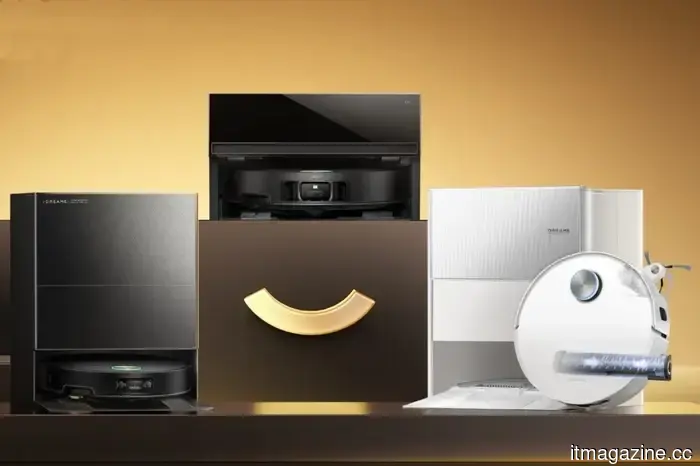 Whoever did not hide from Dreame, we are not to blame.
Dreame, for those who are not aware, has now officially topped the vacuum cleaner sales volumes on the planet. According to IDC, in the first quarter of 2026, the brand surpassed everyone in sales volume and revenue in the robot vacuum category. And this is no joke, but figures that make competitors nervously recalculate their market shares.
Whoever did not hide from Dreame, we are not to blame.
Dreame, for those who are not aware, has now officially topped the vacuum cleaner sales volumes on the planet. According to IDC, in the first quarter of 2026, the brand surpassed everyone in sales volume and revenue in the robot vacuum category. And this is no joke, but figures that make competitors nervously recalculate their market shares.
 Anthropic – Pentagon emails expose the true conflict.
Emails released by the court, exchanged between Dario Amodei of Anthropic and Pentagon undersecretary Emil Michael, reveal that the dispute centered around AI regulations rather than access.
Anthropic – Pentagon emails expose the true conflict.
Emails released by the court, exchanged between Dario Amodei of Anthropic and Pentagon undersecretary Emil Michael, reveal that the dispute centered around AI regulations rather than access.
 Investors are filing a lawsuit against Oracle regarding its $300 billion deal with OpenAI.
A pension fund from Michigan is filing a lawsuit against Oracle, claiming that the company concealed risks related to its $300 billion deal with OpenAI prior to a $25 billion note sale, as part of a class action under the Securities Act.
Investors are filing a lawsuit against Oracle regarding its $300 billion deal with OpenAI.
A pension fund from Michigan is filing a lawsuit against Oracle, claiming that the company concealed risks related to its $300 billion deal with OpenAI prior to a $25 billion note sale, as part of a class action under the Securities Act.
 Investors file a lawsuit against Oracle regarding its $300 billion agreement with OpenAI.
A pension fund from Michigan is suing Oracle, claiming that the company concealed risks associated with its $300 billion deal with OpenAI prior to a $25 billion note sale, in a class action under the Securities Act.
Investors file a lawsuit against Oracle regarding its $300 billion agreement with OpenAI.
A pension fund from Michigan is suing Oracle, claiming that the company concealed risks associated with its $300 billion deal with OpenAI prior to a $25 billion note sale, in a class action under the Securities Act.
 Weave Robotics Isaac 1: a home robot priced at $7,999
Weave Robotics' Isaac 1 is a fingerless, wheeled home robot priced at $7,999, designed to fold laundry and clean up, offering a more affordable option compared to humanoid competitors like 1X's Neo.
Weave Robotics Isaac 1: a home robot priced at $7,999
Weave Robotics' Isaac 1 is a fingerless, wheeled home robot priced at $7,999, designed to fold laundry and clean up, offering a more affordable option compared to humanoid competitors like 1X's Neo.
Currys alerts that a shortage of memory will lead to an increase in gadget prices.
Currys, the largest electrical retailer in Britain, has cautioned that the prices of phones, laptops, and TVs are set to increase in 2026 due to AI data centers consuming a significant amount of memory chips.