

An inexpensive Chinese AI model is catching up to Anthropic and OpenAI.
A Chinese startup's new AI model has achieved the fourth position in one of the industry’s most monitored intelligence rankings, and it is priced significantly lower than comparable offerings from Anthropic or OpenAI. GLM-5.2, launched last month by Z.ai, based in Beijing, has generated considerable buzz in Silicon Valley due to its coding and agentic capabilities that approach those of top American systems, drawing comparisons to DeepSeek’s impactful market entry in 2025.
As per Artificial Analysis, GLM-5.2 received a score of 51 on the Intelligence Index v4.1, ranking fourth overall and first among all open-weight models, outperforming MiniMax-M3, DeepSeek V4 Pro, and Kimi K2.6. On Code Arena’s coding leaderboard, the model's Max tier occupies second place, surpassing Anthropic’s Claude Opus versions.
The pricing aspect has caused concern among competitors. Z.ai sets the rate at $1.40 for every million input tokens and $4.40 for every million output tokens on its first-party API, with third-party providers offering it at even lower rates. Various sources estimate that this pricing is between one-fifth and one-seventh of the cost per output token for Claude Opus or GPT-5.5, though the exact comparison depends on the provider and tier. Regardless, it significantly undercuts the American offerings.
David Sacks, who previously served as the White House's AI czar under Donald Trump before returning to private industry, stated that the model is “as good as the currently available models from OpenAI and Anthropic,” suggesting it is just below Anthropic’s Opus 4.8 and approximately on par with OpenAI’s GPT-5.5. This assertion is noteworthy considering that only weeks prior, he estimated the U.S. advantage over Chinese labs to be six to nine months, rather than acknowledging any direct equivalence.
In addition to its leading intelligence score, GLM-5.2 also excels in Artificial Analysis’s GDPval-AA v2 metric, which assesses practical agentic work as opposed to mere abstract reasoning. It scored 1,524, ahead of MiniMax-M3 and DeepSeek V4 Pro, and it is close enough to GPT-5.5 at its highest reasoning setting that the two can be seen as effectively tied.
Analysts have pointed out one significant trade-off: the model requires noticeably more output tokens per task compared to its open-weight counterparts, which diminishes some of its cost advantage in practical application, even though its base price remains relatively low.
GLM-5.2 also comes with an important detail beyond benchmark scores: it was trained and operates on Chinese-made silicon, specifically a cluster of approximately 100,000 Huawei Ascend 910B processors, without any involvement from Nvidia, AMD, or Intel hardware throughout the process. This development is a direct response to U.S. chip restrictions aimed at hindering Chinese AI advancement by limiting access to the most cutting-edge processors.
The model’s weights are made available under an unrestricted MIT license, allowing any company to download, modify, and operate it locally for the cost of electricity alone.
The timing has been favorable for Z.ai's position. The U.S. government's order causing Anthropic to halt Fable 5 and Mythos 5 for foreign users, coupled with the Trump administration's request for OpenAI to stagger the launch of its own future model, has created a market gap that a free, efficient, downloadable alternative is well-positioned to fill.
This context is part of the larger narrative surrounding tightening U.S. export controls on advanced chips, which Chinese labs have been navigating for the past two years rather than passively enduring. Z.ai’s publicly listed entity has felt the impact directly. Shares of the Hong Kong-listed company have surged significantly since its market debut in January, with trading spikes following the release of GLM-5.2 boosting the stock several times its IPO price. A subsequent model, GLM-5.5, is anticipated in August, though Z.ai has not confirmed a specific release date.
Other articles
 Samsung might discontinue restricting the Galaxy S26 Ultra’s anti-peeking display to the Galaxy S27 series.
A recent leak suggests that Samsung might introduce its Flex Magic Pixel privacy display technology across all models of the Galaxy S27 lineup, which encompasses the base, Plus, Pro, and Ultra versions.
Samsung might discontinue restricting the Galaxy S26 Ultra’s anti-peeking display to the Galaxy S27 series.
A recent leak suggests that Samsung might introduce its Flex Magic Pixel privacy display technology across all models of the Galaxy S27 lineup, which encompasses the base, Plus, Pro, and Ultra versions.
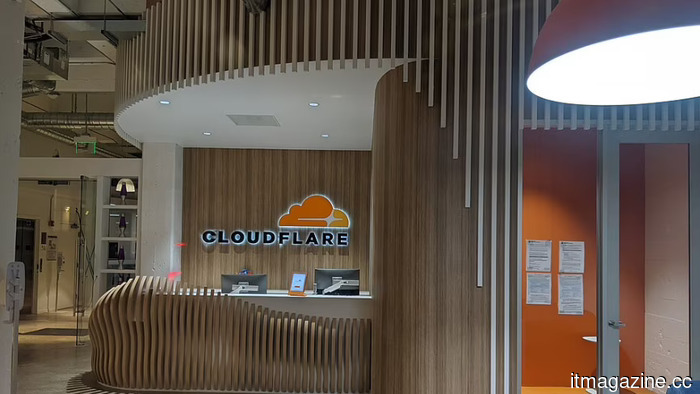 Cloudflare sets a September deadline for AI crawlers to make payments.
Starting 15 September, Cloudflare will automatically prevent AI training bots from accessing ad-supported pages and will compensate publishers when their content contributes to an AI response.
Cloudflare sets a September deadline for AI crawlers to make payments.
Starting 15 September, Cloudflare will automatically prevent AI training bots from accessing ad-supported pages and will compensate publishers when their content contributes to an AI response.
 Opera’s new Paste Protect feature prevents clipboard attacks that your antivirus may not detect.
Opera's new Paste Protect feature natively prevents ClickFix attacks in its desktop browser, positioning it as the first major browser to tackle a threat that antivirus software is not equipped to handle.
Opera’s new Paste Protect feature prevents clipboard attacks that your antivirus may not detect.
Opera's new Paste Protect feature natively prevents ClickFix attacks in its desktop browser, positioning it as the first major browser to tackle a threat that antivirus software is not equipped to handle.
 Samsung is openly revealing that a more spacious, pocket-friendly foldable phone is on the way.
Samsung's recent teasers are subtly hinting at the upcoming Galaxy Z Fold 8 series. Using imagery like pizza slices and inventive visual techniques, the indications suggest that a more compact and user-friendly foldable device is on the way.
Samsung is openly revealing that a more spacious, pocket-friendly foldable phone is on the way.
Samsung's recent teasers are subtly hinting at the upcoming Galaxy Z Fold 8 series. Using imagery like pizza slices and inventive visual techniques, the indications suggest that a more compact and user-friendly foldable device is on the way.
 The upcoming advancement in AI video involves training avatars to perceive sight and sound.
Interactive avatar models are progressing beyond mere accuracy, shifting towards real-time interactivity. A three-tiered framework, encompassing talking, listening, and seeing, delineates the journey from unilateral generation to fully interactive conversational video agents.
The upcoming advancement in AI video involves training avatars to perceive sight and sound.
Interactive avatar models are progressing beyond mere accuracy, shifting towards real-time interactivity. A three-tiered framework, encompassing talking, listening, and seeing, delineates the journey from unilateral generation to fully interactive conversational video agents.
 Getty abandons $3.7 billion merger with Shutterstock due to UK requirements.
Getty Images is ending its $3.7 billion merger with Shutterstock following the UK's CMA's insistence on a sale that Getty will not agree to, even though it has received antitrust approval in the US.
Getty abandons $3.7 billion merger with Shutterstock due to UK requirements.
Getty Images is ending its $3.7 billion merger with Shutterstock following the UK's CMA's insistence on a sale that Getty will not agree to, even though it has received antitrust approval in the US.
An inexpensive Chinese AI model is catching up to Anthropic and OpenAI.
Z.ai's open-weight GLM-5.2 achieves a fourth-place ranking on a prominent benchmark and is significantly cheaper than Claude or GPT-5.5, as U.S. export restrictions alter the landscape of the AI competition.