

A Swedish court has ruled that Google must pay Klarna almost $2 billion in damages related to antitrust issues.
TL;DRA A Swedish court has mandated that Google pay Klarna’s PriceRunner unit nearly two billion dollars for preferentially promoting its own shopping service over competitors.
A Swedish court has ruled that Google must disburse over 14 billion kronor to Klarna's PriceRunner subsidiary due to illegal favoritism toward its own comparison shopping service in search results. The ruling, delivered on Tuesday by the Patent and Market Court in Stockholm, stands as the largest competition damages award in Swedish history. Presiding judge Linda Kullberg stated that it is the most significant competition damages award ever issued in a Swedish case.
Klarna has estimated the total award to amount to nearly two billion dollars when interest is factored in. PriceRunner initially filed a lawsuit in 2022, aiming for approximately two billion euros in compensation for lost earnings in the UK, Sweden, and Denmark. The claim escalated to around 78 billion kronor with added interest, though the court dismissed most of that amount.
The case is grounded in the European Commission’s 2017 conclusion that Google exploited its search dominance by systematically favoring its own Google Shopping service over independent price-comparison websites. PriceRunner claimed it experienced a decline in traffic and revenue in the UK starting in 2008, and in Sweden and Denmark from 2013, when Google began directing users to its own results. The trial took place from October to December 2025.
Google expressed disagreement with the decision and indicated it would “consider its legal options.” An appeal is anticipated. Pontus Scherp, a lawyer for Klarna, informed Reuters that the appeals process might take “over a year and likely years,” thus delaying any payment.
Market reactions were immediate. Klarna’s shares increased by more than seven percent following the news, while Alphabet’s stock fell by less than half a percent. If the award withstands appeal, Klarna has informed investors that the net amount will be decreased due to arrangements with former PriceRunner shareholders and the external litigation funder that financed the lawsuit, in addition to applicable taxes.
This Swedish ruling is part of a rapidly growing landscape of antitrust expenses for Google throughout Europe. Earlier this year, a German court ordered Google to pay €465 million to Idealo and €107 million to Producto for similar self-preferential behavior. In the UK, claims are ongoing from Kelkoo and Foundem, while in Italy, Moltiply Group is pursuing nearly three billion euros for what it alleges to be the same type of misconduct.
These private damages claims add to regulatory fines that already exceed nine billion euros. The European Commission fined Google roughly two and a half billion euros for Google Shopping in 2017, a penalty upheld by the EU’s highest court in 2024. Two additional EU antitrust cases regarding Android and AdSense further increased the total amount.
Klarna acquired PriceRunner in 2022 and has since expanded its price-comparison database to over 100 million products across 13 markets. The company went public on the New York Stock Exchange last year and has incorporated PriceRunner’s data into its shopping app. Dan Greaves, Klarna’s head of communications and policy, remarked that the ruling supports what he considers a healthier and more competitive market for comparing products and services.
For Google, the trend is evident. Courts and regulators across various continents are arriving at the same conclusion: directing users toward its own services incurs costs, and these costs are continually escalating.
Other articles
 Meta aims to lease its excess AI computing capacity, and Wall Street is supportive of this concept.
According to Bloomberg, Meta is developing a cloud business aimed at selling surplus AI computing power, which would place it in competition with AWS, Google, and Azure.
Meta aims to lease its excess AI computing capacity, and Wall Street is supportive of this concept.
According to Bloomberg, Meta is developing a cloud business aimed at selling surplus AI computing power, which would place it in competition with AWS, Google, and Azure.
 UiPath's stock prices recover as Wall Street shows optimism towards its shift towards AI agents.
UiPath's stock has recovered from a sharp decline in 2026 following the automation company reporting its first GAAP profit and realigning its focus towards AI agents.
UiPath's stock prices recover as Wall Street shows optimism towards its shift towards AI agents.
UiPath's stock has recovered from a sharp decline in 2026 following the automation company reporting its first GAAP profit and realigning its focus towards AI agents.
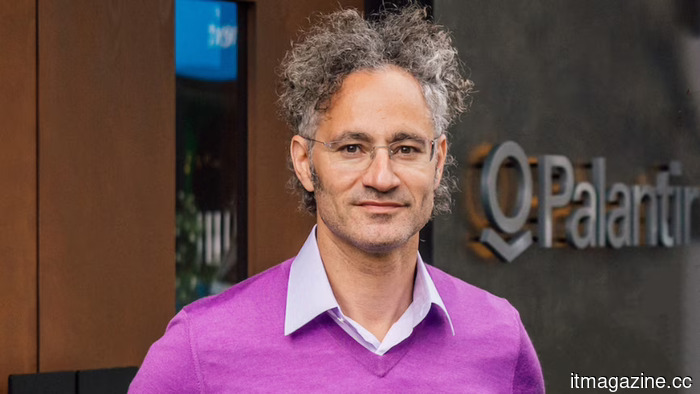 Palantir's manifesto on 'AI sovereignty' targets the laboratories.
Palantir's 9-point post on 'AI sovereignty' advises institutions to take control of their data and models, urging them to move away from 'tokenmaxxing'—a principle that effectively promotes Palantir's offerings.
Palantir's manifesto on 'AI sovereignty' targets the laboratories.
Palantir's 9-point post on 'AI sovereignty' advises institutions to take control of their data and models, urging them to move away from 'tokenmaxxing'—a principle that effectively promotes Palantir's offerings.
 Meta intends to lease its excess AI computing power, and Wall Street is in favor of the concept.
According to Bloomberg, Meta is developing a cloud business to market surplus AI computing resources, a strategy that would put it in competition with AWS, Google, and Azure.
Meta intends to lease its excess AI computing power, and Wall Street is in favor of the concept.
According to Bloomberg, Meta is developing a cloud business to market surplus AI computing resources, a strategy that would put it in competition with AWS, Google, and Azure.
 Portugal has released Amália, its inaugural national AI model, as an open-source initiative focused on European Portuguese.
Portugal has introduced Amália, its inaugural open-source national AI model designed for European Portuguese, contributing to Europe's efforts for AI sovereignty.
Portugal has released Amália, its inaugural national AI model, as an open-source initiative focused on European Portuguese.
Portugal has introduced Amália, its inaugural open-source national AI model designed for European Portuguese, contributing to Europe's efforts for AI sovereignty.
 UiPath's stock prices increase as Wall Street shows a positive response to its shift towards AI agents.
UiPath's shares have recovered from a significant decline in 2026 following the automation company's announcement of its first GAAP profit and its shift towards AI agents.
UiPath's stock prices increase as Wall Street shows a positive response to its shift towards AI agents.
UiPath's shares have recovered from a significant decline in 2026 following the automation company's announcement of its first GAAP profit and its shift towards AI agents.
A Swedish court has ruled that Google must pay Klarna almost $2 billion in damages related to antitrust issues.
A court in Stockholm has granted Klarna's PriceRunner over 14 billion kronor in antitrust damages due to Google's unlawful favoring of its own services in search results.