

Anthropic has introduced Claude Sonnet 5, an economical agent model.
Anthropic has introduced Claude Sonnet 5, its most advanced mid-tier model to date. It performs similarly to the leading Opus 4.8 on various tasks but is priced at less than half the cost.
On June 30, 2026, Anthropic announced that Sonnet 5 is now available with every plan. The model is designed not just for answering questions but for taking action. It can plan, operate browsers and terminals, and function independently for extended periods—capabilities that previously required larger and more expensive models just a few months ago.
The selling point is straightforward: Sonnet 5 provides nearly flagship performance at a mid-tier price. It competes closely with Opus 4.8, Anthropic's most advanced model, in reasoning, tool utilization, coding, and knowledge work. It surpasses its predecessor, Sonnet 4.6, and operates at a significantly lower cost than Opus.
Affordability is central to this launch, as Sonnet 5 is priced at $2 per million input tokens and $10 per million output tokens. This introductory pricing remains effective until August 31, 2026, after which it will adjust to $3 and $15. In contrast, Opus 4.8 is priced at $5 and $25. TechCrunch characterized the model as a cost-effective solution for running agents, which aligns with its intended purpose.
Timing is important. Many companies rushed to implement AI agents, only to be shocked by the expenses. Agents quickly consume tokens through looping and tool calls. A model that approaches Opus's quality at a significantly reduced cost addresses this issue directly and caters to a market seeking cost reductions following inflated enterprise AI expenditures.
However, there is a caveat to note. Sonnet 5 employs a new tokenizer, which means the same text could translate into up to 1.35 times more tokens than before. Anthropic set the introductory prices to ensure that this transition remains mostly cost-neutral, so while the advertised rates seem low, the token usage may increase.
In terms of performance, Sonnet 5 clearly outperforms 4.6 according to Anthropic’s benchmarks, though it falls short of Opus. In an agentic coding assessment, it achieved a score of 63.2%, compared to 69.2% for Opus 4.8 and 58.1% for Sonnet 4.6. On one knowledge-work benchmark, it slightly surpassed Opus. Anthropic also provides an "effort" dial, allowing developers to adjust cost versus accuracy between the two models.
Initial testers reported that the model successfully completes complex tasks that earlier versions struggled with and has the ability to validate its own outputs autonomously. These assertions stem from the company’s promotional materials and should be viewed with appropriate skepticism; independent evaluations will reveal the true capabilities.
Regarding safety, Anthropic claims that Sonnet 5 demonstrates better behavior than 4.6. It declines malicious requests more frequently and is more resistant to prompt-injection attacks, which attempt to manipulate agent operations. It also exhibits fewer hallucinations and instances of flattery. In an automated review of misaligned behavior, it performed better than 4.6, though still not as well as Opus 4.8 and the Mythos preview.
Security is a noteworthy concern. Anthropic did not train Sonnet 5 for cybersecurity tasks, and it did not perform well in creating software exploits. In a joint test with Mozilla on the Firefox browser, the model failed to generate a functional exploit. Nevertheless, Anthropic equipped it with real-time cybersecurity safeguards enabled by default, the same protections used for Opus 4.7 and 4.8. These safeguards are less restrictive than those surrounding Fable 5, the company's locked-down public model.
The low pricing strategy is not philanthropic. Anthropic is competing with rivals to attract developers, and an efficient, budget-friendly agent model is key to capturing this audience. The company also utilizes Claude for a significant portion of its own coding, so a superior and more affordable Sonnet will benefit its engineers as well. Moreover, it is moving towards a planned public offering, where both revenue growth and developer outreach are crucial.
In a broader context, cost is a primary concern. Operating agents continuously can lead to substantial expenses, and Anthropic has set ambitious revenue goals to support its model development. Sonnet 5 is designed to tackle both challenges by making high functionality more affordable, encouraging developers to remain within its ecosystem, and allowing the effort dial to manage costs.
Claude Sonnet 5 is currently available across Claude’s applications, Claude Code, and the API, offering increased rate limits all around. For many developers, the issue is no longer whether the model possesses sufficient intelligence, but rather whether its operating costs are low enough for continuous use. Anthropic is banking on the belief that the answer is indeed affirmative.
Other articles
 TikTok resolves its second addiction lawsuit, leaving Meta and Snap to stand trial by themselves.
TikTok has arrived at a confidential agreement with a Florida teenager prior to a July trial, following YouTube in the second bellwether addiction lawsuit.
TikTok resolves its second addiction lawsuit, leaving Meta and Snap to stand trial by themselves.
TikTok has arrived at a confidential agreement with a Florida teenager prior to a July trial, following YouTube in the second bellwether addiction lawsuit.
 Another study demonstrates that injury advice found on TikTok is simply poor.
A recent study revealed that TikTok videos on ACL rehabilitation exercises were generally subpar, sparking new worries about teenagers relying on viral content for guidance on injury recovery.
Another study demonstrates that injury advice found on TikTok is simply poor.
A recent study revealed that TikTok videos on ACL rehabilitation exercises were generally subpar, sparking new worries about teenagers relying on viral content for guidance on injury recovery.
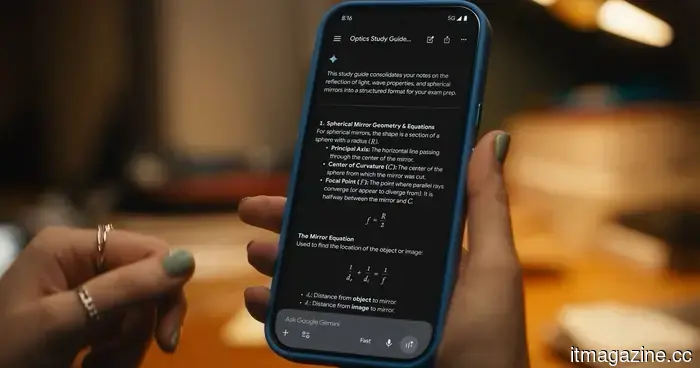 You can now create images using Gemini's memory at no cost.
Gemini's most personal image generator is now available without a subscription. If you're in the U.S., you can now create AI art much more easily and at no cost.
You can now create images using Gemini's memory at no cost.
Gemini's most personal image generator is now available without a subscription. If you're in the U.S., you can now create AI art much more easily and at no cost.
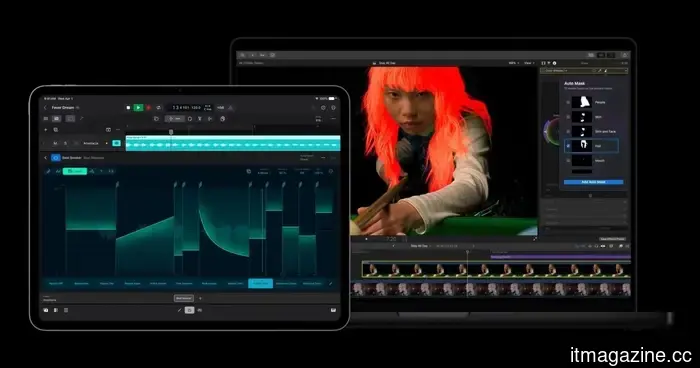 Apple's Creator Studio incorporates AI features into Final Cut Pro, Logic Pro, and Pixelmator Pro.
Apple Creator Studio has been significantly updated with AI features, including automatic captions, edit detection, Auto Mask, image generation, and more streamlined workflows among Apple’s creative applications.
Apple's Creator Studio incorporates AI features into Final Cut Pro, Logic Pro, and Pixelmator Pro.
Apple Creator Studio has been significantly updated with AI features, including automatic captions, edit detection, Auto Mask, image generation, and more streamlined workflows among Apple’s creative applications.
 AI browsers such as Perplexity Comet can be deceived into revealing your password via the BioShocking exploit.
A recently discovered exploit named BioShocking tricks AI browsers into thinking they are engaged in a game, subsequently leading them to surrender your personal information.
AI browsers such as Perplexity Comet can be deceived into revealing your password via the BioShocking exploit.
A recently discovered exploit named BioShocking tricks AI browsers into thinking they are engaged in a game, subsequently leading them to surrender your personal information.
 Motorola's upcoming Edge smartphone may bring a more affordable MagSafe experience to Android compared to what Google offered.
The Motorola Edge 70 Max has been spotted with Qi2.2.1 certification, suggesting it includes built-in magnets, supports 25W wireless charging, and is compatible with Android accessories similar to MagSafe.
Motorola's upcoming Edge smartphone may bring a more affordable MagSafe experience to Android compared to what Google offered.
The Motorola Edge 70 Max has been spotted with Qi2.2.1 certification, suggesting it includes built-in magnets, supports 25W wireless charging, and is compatible with Android accessories similar to MagSafe.
Anthropic has introduced Claude Sonnet 5, an economical agent model.
Claude Sonnet 5 offers performance similar to Opus 4.8 at a mid-range price, starting at $2/$10 per million tokens until August 31. Here are the new updates.