
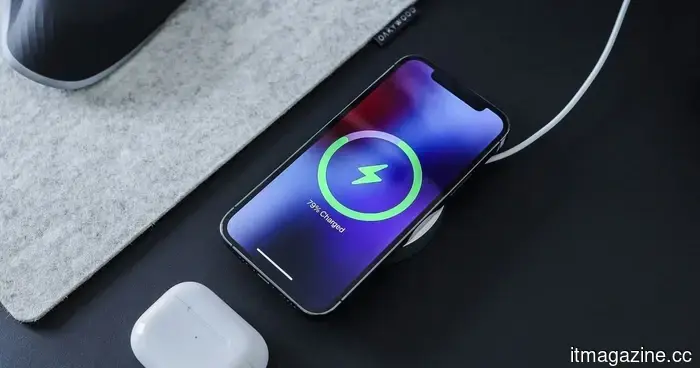
Apple and Google participated in talks to enable 50W wireless charging for smartphones.
The next significant advancement in wireless charging might not arise from a high-profile smartphone release, but rather from behind the scenes, where some of the most prominent names in technology are collaborating, as reported by ITHome.
Recently, Apple, Google, Xiaomi, and other major tech companies convened in Beijing for the Wireless Power Consortium’s (WPC) Qi Off-cycle Meeting. The focus of the four-day event, hosted by Xiaomi, was on refining technical specifications for the forthcoming Qi 50W wireless charging standard, testing prototype hardware, and ensuring interoperability among devices from various brands.
This meeting is notable as it's the first Off-cycle Meeting that the WPC has held in Beijing, marking a key milestone in the evolution of the next-generation Qi standard, which aims to provide faster, safer, and more dependable wireless charging.
Apple, Google, Xiaomi, and others are contributing to the development of the new Qi standard.
The Wireless Power Consortium oversees the Qi wireless charging standard utilized by numerous smartphones, earbuds, and accessories globally. With over 300 member companies and more than 13,000 Qi-certified products available, the consortium is vital for ensuring compatibility across brands.
The recent gathering included more than 20 companies from every segment of the wireless charging landscape. Participants encompassed Apple, Google, Xiaomi, OPPO, Huawei, Honor, vivo, Anker, Panasonic Automotive Systems, Philips, NXP, Dolby Laboratories, Renesas, along with various semiconductor and component suppliers.
According to Xiaomi, the focus of discussions included three primary areas: finalizing the technical direction of the Qi 50W specification, testing prototype hardware, and confirming interoperability between devices from different manufacturers.
Xiaomi is also promoting its “small inductance, low voltage, high power” architecture for inclusion in the new standard. The company claims this approach can minimize energy losses, enhance thermal performance, boost charging efficiency, and facilitate slimmer smartphone designs.
The Qi 50W specification is still in development and is projected to be finalized by 2028.
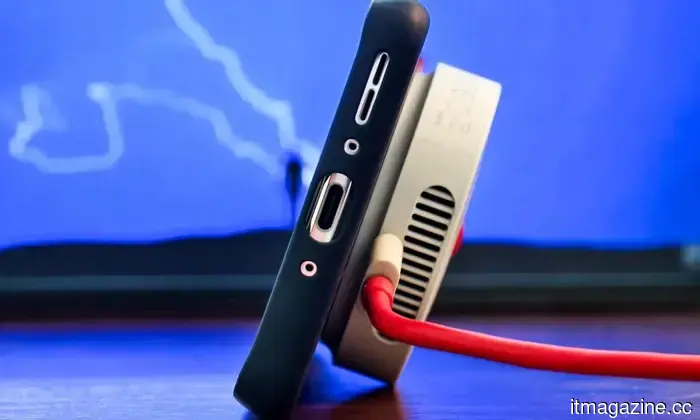
Smartphone manufacturers have already surpassed 50W.
Interestingly, the Qi specification is now trying to keep pace with proprietary charging technologies that have already gone beyond the 50W threshold. OnePlus has launched 50W AirVOOC wireless charging on its flagship smartphones, while OPPO offers similar technology on its premium models. Additionally, Xiaomi has commercially introduced 50W wireless charging and has showcased experimental systems that can exceed 80W.
The drawback, however, is that these solutions remain proprietary. Users generally need compatible chargers and accessories from the same brand to achieve the claimed charging speeds. This is where the Qi 50W standard could make a significant impact. Instead of merely enhancing charging power, the aim is to establish a universal solution that operates reliably across brands while ensuring high safety standards and compatibility.
If Apple, Google, Xiaomi, and the other members of the WPC can agree on a unified specification, future smartphones may provide much quicker wireless charging without confining users to a single ecosystem. For consumers, this could ultimately be more beneficial than pursuing ever-increasing charging speeds. A universal 50W standard would allow people to purchase one compatible charger that works effectively across various devices, regardless of the brand logo on their phones.
Other articles
 Irish court instructs regulator to reassess the ban on TikTok's data transfer to China.
Ireland's High Court confirmed TikTok's GDPR liability along with its €530 million fine, while directing the Data Protection Commission (DPC) to reevaluate the decision to suspend data transfers to China.
Irish court instructs regulator to reassess the ban on TikTok's data transfer to China.
Ireland's High Court confirmed TikTok's GDPR liability along with its €530 million fine, while directing the Data Protection Commission (DPC) to reevaluate the decision to suspend data transfers to China.
 Jon and Mindy Gray wagered $55 million on AI to detect cancer in its early stages.
The president of Blackstone and his spouse are sponsoring a new Penn institute that employs AI and biomarkers to detect hereditary cancers at their earliest stages.
Jon and Mindy Gray wagered $55 million on AI to detect cancer in its early stages.
The president of Blackstone and his spouse are sponsoring a new Penn institute that employs AI and biomarkers to detect hereditary cancers at their earliest stages.
 Jon and Mindy Gray wagered $55 million on AI to detect cancer in its early stages.
The president of Blackstone and his wife are supporting a new institute at Penn that employs AI and biomarkers to detect hereditary cancers in their initial stages.
Jon and Mindy Gray wagered $55 million on AI to detect cancer in its early stages.
The president of Blackstone and his wife are supporting a new institute at Penn that employs AI and biomarkers to detect hereditary cancers in their initial stages.
 Marc Andreessen becomes a member of the Pentagon’s board, causing the traditional boundaries to blur.
Marc Andreessen holds a position on the Defense Policy Board. His firm has billions at stake based on the decisions influenced by that board. The disclosure remains confidential.
Marc Andreessen becomes a member of the Pentagon’s board, causing the traditional boundaries to blur.
Marc Andreessen holds a position on the Defense Policy Board. His firm has billions at stake based on the decisions influenced by that board. The disclosure remains confidential.
 Peacock Premium Plus enters the fray alongside YouTube as the competition for streaming bundles intensifies.
Peacock Premium Plus can now be accessed via YouTube Primetime Channels for a monthly fee of $16.99. However, current Peacock subscribers are advised to review their account and billing information before making the switch.
Peacock Premium Plus enters the fray alongside YouTube as the competition for streaming bundles intensifies.
Peacock Premium Plus can now be accessed via YouTube Primetime Channels for a monthly fee of $16.99. However, current Peacock subscribers are advised to review their account and billing information before making the switch.
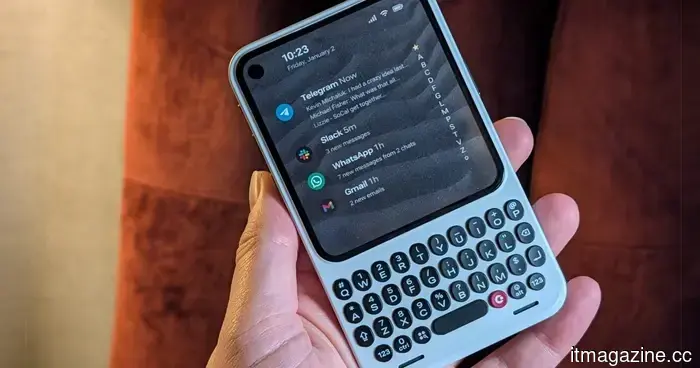 The Clicks Communicator has just revealed its software, and it does appear to be quite promising.
Clicks has finally unveiled the functional Communicator software, and for those who long for physical keyboards, this initial glimpse is packed with innovative features that are truly exciting.
The Clicks Communicator has just revealed its software, and it does appear to be quite promising.
Clicks has finally unveiled the functional Communicator software, and for those who long for physical keyboards, this initial glimpse is packed with innovative features that are truly exciting.
Apple and Google participated in talks to enable 50W wireless charging for smartphones.
The next significant advancement in wireless charging might not be sparked by an eye-catching smartphone release, but rather from private collaborations among prominent players in the tech sector, as per a report by ITHome. Recently, Apple, Google, Xiaomi, and a number of other top technology firms convened in Beijing for the Wireless Power […]