
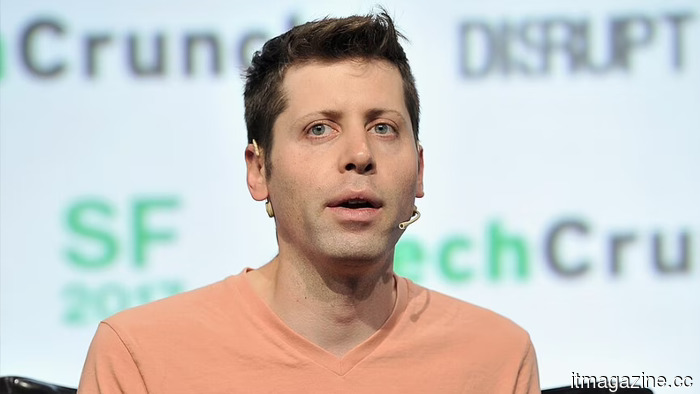
OpenAI appoints the chief of Uber India as its inaugural managing director for the nation.
OpenAI has appointed Prabhjeet Singh, the former president of Uber India and South Asia, as its inaugural managing director for India, effective September. Singh will report to Kiran Mani, OpenAI’s managing director for Asia Pacific, and will be responsible for driving consumer growth, enterprise adoption, partnerships, regulatory engagement, and operations in what OpenAI has identified as its second-largest market after the U.S.
Having spent almost 11 years at Uber, Singh started as head of strategy in August 2015 and became president in June 2020. Prior to his time at Uber, he worked as an associate partner at McKinsey, advising clients in the financial services, telecom, and consumer technology sectors. Singh holds degrees from IIT Kharagpur and IIM Ahmedabad.
This appointment is part of a series of investments OpenAI has made in India this past year. The company opened its first office in New Delhi last August and announced plans to establish additional offices in Mumbai and Bengaluru earlier this year. In 2024, OpenAI brought in Pragya Misra, a former executive from Truecaller and Meta, to oversee public policy and partnerships, later expanding her role to include strategy and global affairs.
Additionally, OpenAI hired former Twitter India head Rishi Jaitly as a senior adviser to guide its interactions with the Indian government on AI policy. Kiran Mani, who previously led JioStar and spent over a decade at Google, was appointed to lead the Asia Pacific region in March.
The significance of India to OpenAI is underscored by statistics. CEO Sam Altman highlighted in February that India has 100 million weekly active ChatGPT users, with nearly half of all messages originating from users aged 18 to 24. OpenAI has formed partnerships in higher education, enterprise payments with Pine Labs, web streaming with Reliance’s JioHotStar, and data center capacity with Tata Group.
This appointment comes at a time when India's AI landscape is becoming increasingly competitive. Rival company Anthropic established its office in Bengaluru in late 2025, appointing former Microsoft India managing director Irina Ghose to head operations in the country in January. Major players like Google, Amazon, and local startups such as Sarvam, which recently achieved unicorn status with a $234 million funding round, are all vying for developers and enterprise customers in a market boasting over a billion internet users.
The competitive landscape has geopolitical implications. A June order from the U.S. government to suspend Anthropic’s most powerful models for non-U.S. users sparked a debate over sovereignty in India, leading to proposed measures for a $5 billion annual fund to enhance domestic AI capabilities. By placing an experienced local leader in charge, OpenAI signals its commitment to addressing the risks of being perceived as a foreign dependency.
Singh faces a mandate that encompasses both political and commercial challenges. The Indian government has recognized AI as a national priority, with Prime Minister Narendra Modi hosting leaders from OpenAI, Anthropic, and Google at the AI Impact Summit in February. However, the Anthropic suspension underscored the potential for sudden access restrictions, prompting Indian policymakers to consider the extent of their reliance on American providers.
Simultaneously, OpenAI is increasing its workforce in India, with various roles available, including AI deployment engineers, developer experience engineers, a developer marketing lead, a partner director, and solutions engineers. Uber has not yet announced who will succeed Singh but is anticipated to share its leadership transition plans shortly.
Other articles
 Trustpilot is integrating its reviews within Shopify stores as artificial intelligence transforms the online shopping experience.
Trustpilot collaborated with Shopify to enable merchants to showcase and manage reviews directly within their stores, as AI-driven clicks increased by 1,490 percent.
Trustpilot is integrating its reviews within Shopify stores as artificial intelligence transforms the online shopping experience.
Trustpilot collaborated with Shopify to enable merchants to showcase and manage reviews directly within their stores, as AI-driven clicks increased by 1,490 percent.
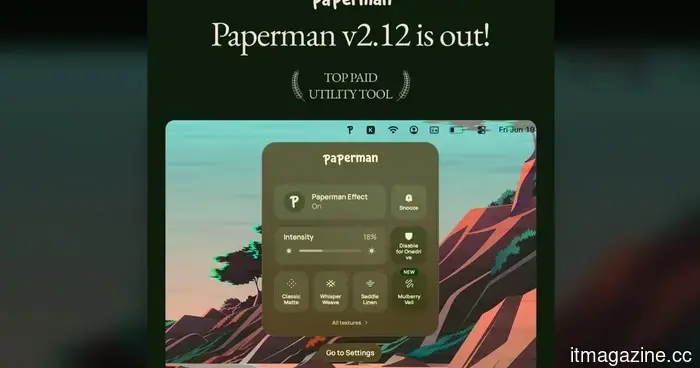 If you long for the sensation of paper in the digital era, this app provides a textured appearance to your Mac’s screen.
Paperman is a desktop application for Mac and Windows that applies paper-like textures to your screen, helping to soften contrast and diminish the shiny appearance of contemporary displays.
If you long for the sensation of paper in the digital era, this app provides a textured appearance to your Mac’s screen.
Paperman is a desktop application for Mac and Windows that applies paper-like textures to your screen, helping to soften contrast and diminish the shiny appearance of contemporary displays.
 Silicon Valley invested to eliminate AI regulation, and now it seeks to reinstate the rules.
Executives in the AI sector who supported Trump's deregulation efforts are now stating that his improvised enforcement actions are more severe than anything proposed by Biden, according to Politico.
Silicon Valley invested to eliminate AI regulation, and now it seeks to reinstate the rules.
Executives in the AI sector who supported Trump's deregulation efforts are now stating that his improvised enforcement actions are more severe than anything proposed by Biden, according to Politico.
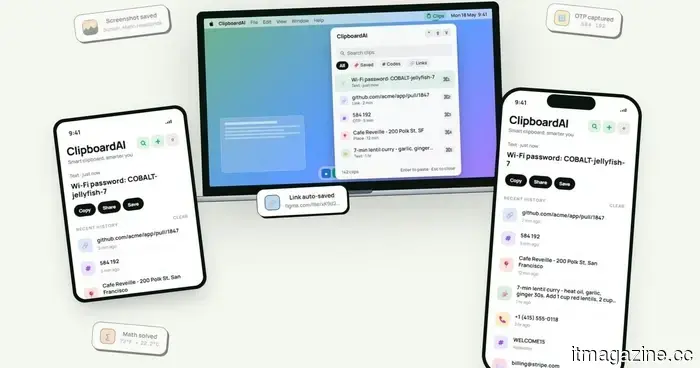 This clipboard app that works across devices resolves the copy-paste issues I frequently encounter on my Mac.
ClipboardAI stores copied text, links, code, images, and more in a searchable history available on iPhone, iPad, and Mac.
This clipboard app that works across devices resolves the copy-paste issues I frequently encounter on my Mac.
ClipboardAI stores copied text, links, code, images, and more in a searchable history available on iPhone, iPad, and Mac.
 Not everything is running smoothly with DuckDuckGo and its AI.
DuckDuckGo's AI search assistant was misled into reiterating a false narrative, underscoring how organized misinformation can deceive contemporary AI technologies.
Not everything is running smoothly with DuckDuckGo and its AI.
DuckDuckGo's AI search assistant was misled into reiterating a false narrative, underscoring how organized misinformation can deceive contemporary AI technologies.
 Cloudflare's engineering staff increased by 45% following the reduction of 1,100 positions, and its CEO has established a criterion for determining who will thrive in the AI landscape.
Cloudflare's CEO Matthew Prince states that AI removes "measurers," while those who build and sell continue to thrive, as data from BNP Paribas indicates a 45 percent increase in engineering activities.
Cloudflare's engineering staff increased by 45% following the reduction of 1,100 positions, and its CEO has established a criterion for determining who will thrive in the AI landscape.
Cloudflare's CEO Matthew Prince states that AI removes "measurers," while those who build and sell continue to thrive, as data from BNP Paribas indicates a 45 percent increase in engineering activities.
OpenAI appoints the chief of Uber India as its inaugural managing director for the nation.
OpenAI has named Prabhjeet Singh, the departing president of Uber India, as its inaugural managing director for India, which is its second-largest market.