
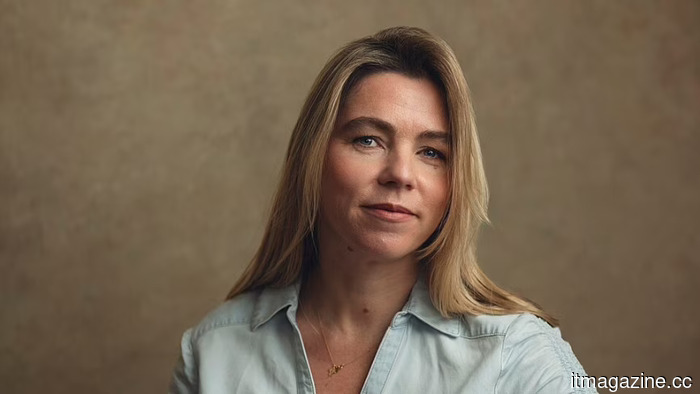
Sarah Wynn-Williams files a lawsuit against Meta for attempts to silence her.
For over a year, the legal battle surrounding Sarah Wynn-Williams primarily involved Meta against its former executive. This situation has now changed direction.
Sarah Wynn-Williams, who wrote the Meta memoir Careless People, is suing the company for its attempts to silence her, as reported by The Wall Street Journal. The individual Meta had sought to keep quiet is now the one initiating legal action.
The context involves a gag order that has garnered its own attention. On the publication day of Careless People in March 2025, Meta submitted an arbitration request, claiming the book violated a non-disparagement agreement Wynn-Williams had signed upon her departure from the company.
An emergency arbitrator concurred, temporarily instructing her to cease promoting the book and to refrain from making any “disparaging, critical or otherwise harmful” comments about Meta. This order included significant penalties, with fines up to $50,000 for each violation.
The imposed restrictions created one of the more memorable moments in recent tech publishing history. During the Hay Festival in late May, Wynn-Williams remained silent on stage for a full hour, seated between journalist Carole Cadwalladr and Columbia law professor Tim Wu, after her legal team cautioned that any public statement regarding Meta could incur the fines.
This silence attracted more attention than a speech might have, resulting in increased sales; the book had already launched at number one on the New York Times nonfiction list and continued to sell well.
The memoir presents various allegations; however, it remains her perspective rather than an established fact. The book includes accusations of misconduct and sexual harassment against senior executives at the company and claims that Meta was willing to collaborate with Chinese censorship tactics as part of its efforts to penetrate that market—claims that Meta rejects.
Furthermore, she has filed a whistleblower complaint with the US Securities and Exchange Commission regarding the company's interactions with China.
Throughout the dispute, Meta has maintained a contractual stance, asserting that Wynn-Williams agreed to a severance contract in 2017 that included a non-disparagement clause, which the company is merely enforcing. It has described her exit as a termination due to poor performance and what it termed toxic behavior. In contrast, Wynn-Williams asserts that her 2017 dismissal was retaliation for reporting sexual harassment by a senior executive, Joel Kaplan, who currently serves as Meta’s chief global affairs officer—a characterization that both Kaplan and the company deny.
The conflict has attracted political scrutiny on both sides of the Atlantic. Senator Chuck Grassley, the Republican chair of the Senate Judiciary Committee, reached out to Mark Zuckerberg regarding the allegations that Meta attempted to silence her, while a UK politician contended that she was being driven toward financial ruin by the accumulating arbitration costs.
This financial strain adds significance to the new lawsuit: the individual potentially facing $50,000 penalties for each breach is now the plaintiff.
What is already evident is the trajectory of this situation. A non-disparagement clause intended to facilitate a quiet resolution has instead given rise to a bestseller, a letter from the Senate, a silent appearance at a festival, and now a lawsuit. Meta sought to halt the narrative but has instead found itself in a renewed chapter.
Other articles
 Microsoft increases Xbox prices for the third time in 13 months, with the Series X now costing $800 due to memory shortages.
Starting August 1, Xbox consoles will see a price increase of $100 to $150, bringing the cost of the Series X to $800. Microsoft attributes this rise to the more than doubling of memory expenses.
Microsoft increases Xbox prices for the third time in 13 months, with the Series X now costing $800 due to memory shortages.
Starting August 1, Xbox consoles will see a price increase of $100 to $150, bringing the cost of the Series X to $800. Microsoft attributes this rise to the more than doubling of memory expenses.
 Claude is attracting paying customers in a market that ChatGPT has dominated, according to credit card data.
Claude's consumer base has increased by 75% since January, according to credit card data from Indagari, while DataCamp reports that Claude is now the most searched term.
Claude is attracting paying customers in a market that ChatGPT has dominated, according to credit card data.
Claude's consumer base has increased by 75% since January, according to credit card data from Indagari, while DataCamp reports that Claude is now the most searched term.
 The Trump administration prevents Polestar from launching new electric vehicles in the US due to the Connected Vehicle Rule.
The Commerce Department rejected Polestar's request for authorization under the Connected Vehicle Rule, despite the fact that its Polestar 3 is manufactured in South Carolina.
The Trump administration prevents Polestar from launching new electric vehicles in the US due to the Connected Vehicle Rule.
The Commerce Department rejected Polestar's request for authorization under the Connected Vehicle Rule, despite the fact that its Polestar 3 is manufactured in South Carolina.
 Google Finance leaves beta with the launch of a dedicated Android app, portfolio management features, and AI-enhanced scheduled updates.
Google Finance has exited beta with the launch of a new Android app, portfolio dashboards, an AI research tool, and scheduled market briefings that utilize Gemini.
Google Finance leaves beta with the launch of a dedicated Android app, portfolio management features, and AI-enhanced scheduled updates.
Google Finance has exited beta with the launch of a new Android app, portfolio dashboards, an AI research tool, and scheduled market briefings that utilize Gemini.
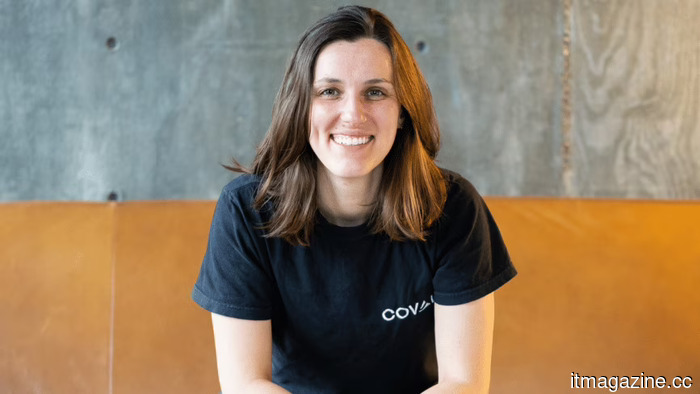 Coval secures $28 million to evaluate the performance of AI voice agents under pressure.
Coval has secured $28 million in funding, led by Norwest, to replicate and evaluate enterprise AI voice agents prior to their performance in actual customer calls.
Coval secures $28 million to evaluate the performance of AI voice agents under pressure.
Coval has secured $28 million in funding, led by Norwest, to replicate and evaluate enterprise AI voice agents prior to their performance in actual customer calls.
 Microsoft increases Xbox prices for the third time in 13 months, as the memory shortage pushes the cost of the Series X to $800.
Starting August 1, Xbox consoles will see a price increase of $100 to $150, raising the Series X’s price to $800. Microsoft attributes this hike to the more than doubled costs of memory.
Microsoft increases Xbox prices for the third time in 13 months, as the memory shortage pushes the cost of the Series X to $800.
Starting August 1, Xbox consoles will see a price increase of $100 to $150, raising the Series X’s price to $800. Microsoft attributes this hike to the more than doubled costs of memory.
Sarah Wynn-Williams files a lawsuit against Meta for attempts to silence her.
Whistleblower Sarah Wynn-Williams has initiated a lawsuit against Meta in response to its attempts to silence her, following a gag order that imposed a $50,000 fine for each instance of public criticism directed at the company.