
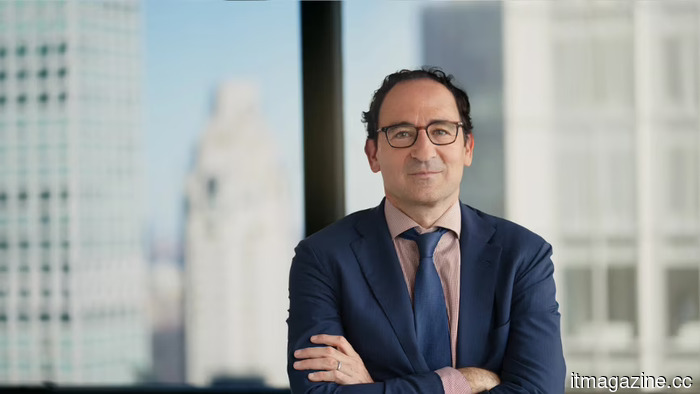
Blackstone intends to invest $30 billion in AI data centers in Japan and remains unfazed by discussions about a potential bubble.
Blackstone aims to invest approximately $30 billion in artificial intelligence data centers in Japan over the next three to five years, as stated by the firm's president and chief operating officer, Jonathan Gray, in an interview with Nikkei published on Monday. The world’s leading alternative asset manager is currently in talks to create facilities with a total capacity exceeding one gigawatt, positioning its Japanese initiative among the larger national developments globally. Gray emphasized that this commitment is based on anticipated demand rather than speculation. When questioned about concerns that AI infrastructure investments have outpaced the revenue that justifies them, he contended that the risk of insufficient computing capacity is greater than that of excess capacity. This reflects a viewpoint from a company that believes the cost of entering the market early is less than the cost of being left out.
The Japan initiative is not standalone, as Gray noted that Blackstone also plans to expedite its private equity investments in the country, where it has become increasingly active. Earlier this month, the firm successfully raised $13.1 billion for its latest Asia private equity fund, surpassing its original target and marking the largest fundraise in the region's history for the firm. According to Gray, both the capital and the data center initiative stem from a shared conviction that Asia, particularly Japan, is where future investment should be directed.
Japan has emerged as a competitive market for AI infrastructure due to tightening constraints in other regions. Factors such as power supply, land availability, and grid capacity have become significant hurdles for data center development, while Japan offers a stable grid, a government eager to attract investments, and proximity to the wider Asian computing market. SoftBank’s domestic expansion, covering everything from chip manufacturing to battery production, has already positioned Japan as a viable location for the kind of vertically integrated infrastructure necessary for large-scale AI operations.
The one-gigawatt benchmark can be a helpful gauge of the scale Gray is referring to, as it roughly equals the output of a large power plant and is the unit most ambitious projects are measured in today. Blackstone has been pursuing this strategy for some time, having established a data center platform that ranks among the largest owned by any private investor, notably through its acquisition of QTS in 2021. The Japanese facilities would build on this footprint in a market where few foreign investors have made similar commitments.
While Gray did not entirely dismiss concerns about a market bubble, he acknowledged the ongoing debates regarding whether AI valuations and capital expenditures have become disconnected from fundamental principles. As the figures involved have grown, discussions have intensified about potential parallels to the dot-com boom. This year, hyperscaler capital expenditures are approaching $660 billion to $690 billion, and a significant portion of institutional investors now identify an AI valuation collapse as the biggest risk to markets.
Gray's perspective is fundamentally structural: the demand for computing resources will persist, with the only question being who possesses that capacity. This line of reasoning has competitors, such as China’s proposed $295 billion plan to integrate its computing facilities into a unified national grid, which operates on the same principle that controlling infrastructure equates to controlling influence, but is funded through state debt instead of private investment. American hyperscalers are spending at a rate that renders even Blackstone’s $30 billion investment seem cautious; for instance, Meta’s Hyperion campus in Louisiana alone is projected to cost over $200 billion.
Blackstone did not reveal specific locations, partners, or financing details for the Japanese facilities, and Gray described the projects as still in the discussion phase rather than finalized. The gigawatt-plus capacity figure refers to ongoing negotiations, not construction plans. What remains clear is the strategic direction: a firm that has spent recent years building one of the largest privately owned data center portfolios has now identified Japan as its next development focus, confidently asserting the demand it anticipates meeting.
Other articles
 YouTube reaches a settlement before California's second trial concerning social media addiction.
YouTube, owned by Google, has reached a settlement with a teenage plaintiff just weeks prior to a second pivotal trial in California, while Meta, Snap, and TikTok are set to face the jury.
YouTube reaches a settlement before California's second trial concerning social media addiction.
YouTube, owned by Google, has reached a settlement with a teenage plaintiff just weeks prior to a second pivotal trial in California, while Meta, Snap, and TikTok are set to face the jury.
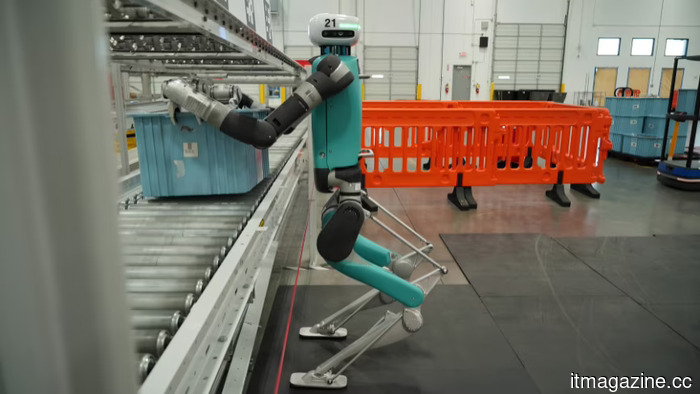 Agility Robotics is said to be going public through a SPAC transaction valued at $2.5 billion.
The creator of the Digit humanoid robot is said to be in discussions to become publicly traded via a SPAC merger that would value the company at approximately $2.5 billion, according to a report by the WSJ.
Agility Robotics is said to be going public through a SPAC transaction valued at $2.5 billion.
The creator of the Digit humanoid robot is said to be in discussions to become publicly traded via a SPAC merger that would value the company at approximately $2.5 billion, according to a report by the WSJ.
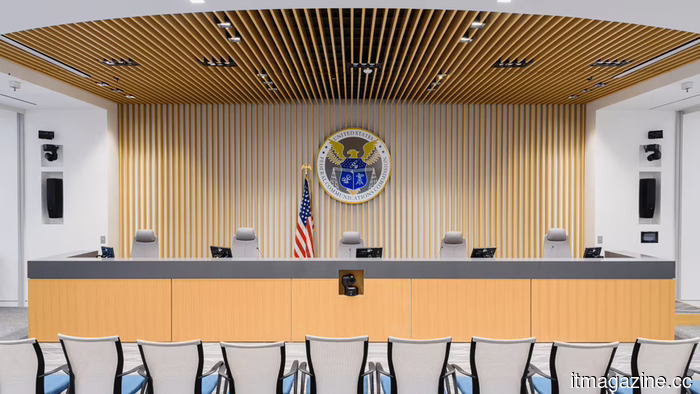 A US spectrum auction recently generated $3.5 billion to fund the removal of Huawei equipment.
The AWS-3 auction conducted by the FCC generated approximately $3.5 billion, with around $3.3 billion allocated to repay the Treasury loan related to the rip-and-replace initiative.
A US spectrum auction recently generated $3.5 billion to fund the removal of Huawei equipment.
The AWS-3 auction conducted by the FCC generated approximately $3.5 billion, with around $3.3 billion allocated to repay the Treasury loan related to the rip-and-replace initiative.
 The US is urging Meta to permit a review of its AI, and Meta is the final remaining holdout.
According to the NYT, the Trump administration is urging Meta, the only major US developer that has not done so, to present its AI for federal evaluation.
The US is urging Meta to permit a review of its AI, and Meta is the final remaining holdout.
According to the NYT, the Trump administration is urging Meta, the only major US developer that has not done so, to present its AI for federal evaluation.
 Meta's $399 Kylie Jenner glasses will respond in her voice.
Meta's Starfire glasses, created in collaboration with Kylie Jenner and priced at $399, feature Meta AI speaking in her voice and showcase their new line of branded products.
Meta's $399 Kylie Jenner glasses will respond in her voice.
Meta's Starfire glasses, created in collaboration with Kylie Jenner and priced at $399, feature Meta AI speaking in her voice and showcase their new line of branded products.
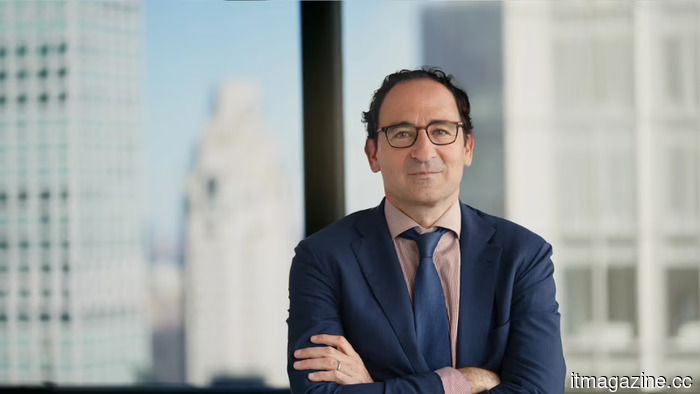 Blackstone intends to invest $30 billion in AI data centers in Japan and is not concerned about discussions surrounding a bubble.
Jonathan Gray informed Nikkei that Blackstone plans to invest $30 billion in AI data centers in Japan over the next three to five years, focusing on facilities with capacities exceeding one gigawatt.
Blackstone intends to invest $30 billion in AI data centers in Japan and is not concerned about discussions surrounding a bubble.
Jonathan Gray informed Nikkei that Blackstone plans to invest $30 billion in AI data centers in Japan over the next three to five years, focusing on facilities with capacities exceeding one gigawatt.
Blackstone intends to invest $30 billion in AI data centers in Japan and remains unfazed by discussions about a potential bubble.
Jonathan Gray informed Nikkei that Blackstone plans to invest $30 billion in Japanese AI data centers over a period of three to five years, targeting facilities with capacities exceeding one gigawatt.