

Oracle's workforce decreased by approximately 13% as it invests in its AI development.
Oracle concluded its 2026 fiscal year with approximately 21,000 fewer employees compared to the beginning, marking a reduction of about 13%, one of the most significant in the company’s history. This figure, outlined in the company's annual report, highlights a situation that employees had been experiencing since spring, when termination emails began arriving in inboxes in the US, India, Canada, and Mexico before the workday had officially begun.
As of May 31, 2026, Oracle’s workforce stood at 141,000, down from around 162,000 a year prior. The company characterized these layoffs, as it had throughout the year, as a reallocation rather than a retreat: funds were being diverted from legacy operations towards cloud and artificial intelligence infrastructure.
This infrastructure requires substantial investment, and the magnitude of that spending is the main story behind the workforce reduction. Oracle's capital expenditure for the fiscal year reached about $50 billion, and its remaining performance obligations—essentially contracted but unbilled revenue—grew to over half a trillion dollars, largely propelled by significant AI contracts. Building the data centers to fulfill these contracts necessitates cash that the balance sheet alone cannot generate.
Thus, payroll became one of the tools used in this strategy. Analysts at TD Cowen projected that these cuts would free up approximately $8 billion to $10 billion annually in cash flow, which would largely be directed towards the construction of data centers that Oracle plans to rely on over the next decade.
The math is straightforward: a decrease in salaried staff in older divisions translates to an increase in concrete and silicon for the AI infrastructure.
The layoffs were not uniform. Employees on Reddit and the professional networking platform Blind reported that entire teams were reduced in areas such as Revenue, Health Sciences, and the SaaS and Virtual Operations Services group, with some indicating reductions of at least 30% within their departments. The notifications, which arrived via early-morning emails, left many employees learning about their situation before their managers could contact them.
The financial arrangements supporting this expansion have also come under scrutiny. Earlier this year, a $16.3 billion data center financing required the bond manager PIMCO to back approximately $10 billion of the deal after US banks withdrew, indicating the significant capital consumption of the program and how cautiously lenders are evaluating the associated risks.
Oracle is not the only company transforming headcount into AI capabilities. This trend has been observed across the technology sector throughout 2026, with payrolls being converted into capital expenditures in numerous major tech firms, each betting that computing power will outweigh the need for the staff they are replacing.
For Oracle, this gamble is now explicitly documented. The company has informed investors that the investment will prove beneficial as the contracted backlog transitions into billed revenue in the upcoming years.
Whether the employee count of 141,000 serves as a bottom line or a transitional point will become clearer with the next results, when the expenses of the construction and the anticipated revenue are reported together.
Other articles
 Valve's Steam Machine is not a traditional console, which accounts for both its advantages and drawbacks.
Valve states that the Steam Machine is built on an open PC ecosystem instead of the subsidized, restricted pricing model typically employed by conventional consoles.
Valve's Steam Machine is not a traditional console, which accounts for both its advantages and drawbacks.
Valve states that the Steam Machine is built on an open PC ecosystem instead of the subsidized, restricted pricing model typically employed by conventional consoles.
 Trump signs directives aimed at achieving a robust quantum computer by 2028.
Trump signed two executive orders related to quantum computing, aiming for a research-grade machine by 2028 and allocating $2 billion in grants to nine companies for government investment.
Trump signs directives aimed at achieving a robust quantum computer by 2028.
Trump signed two executive orders related to quantum computing, aiming for a research-grade machine by 2028 and allocating $2 billion in grants to nine companies for government investment.
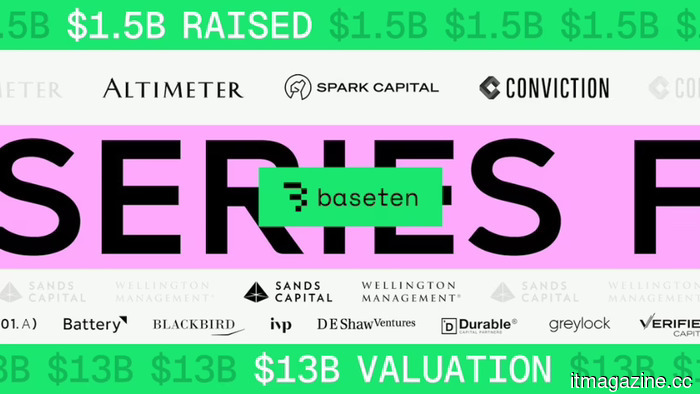 AI infrastructure startup Baseten secures $1.5 billion in funding, reaching a valuation of up to $13 billion.
AI startup Baseten secured $1.5 billion, achieving a valuation of as much as $13 billion, with Sands Capital and Wellington leading the round, while Blackbird VC made its largest investment to date.
AI infrastructure startup Baseten secures $1.5 billion in funding, reaching a valuation of up to $13 billion.
AI startup Baseten secured $1.5 billion, achieving a valuation of as much as $13 billion, with Sands Capital and Wellington leading the round, while Blackbird VC made its largest investment to date.
 Oracle's employee count decreased by approximately 13% as it funds its AI development.
Oracle concluded fiscal 2026 with approximately 21,000 fewer employees, representing around 13% of its workforce, as it directs funds towards the construction of an AI data center.
Oracle's employee count decreased by approximately 13% as it funds its AI development.
Oracle concluded fiscal 2026 with approximately 21,000 fewer employees, representing around 13% of its workforce, as it directs funds towards the construction of an AI data center.
 Valve's Steam Machine is not classified as a console, which accounts for both its advantages and its challenges.
Valve claims that the Steam Machine is built on an open PC ecosystem instead of the subsidized, restricted pricing approach employed by conventional consoles.
Valve's Steam Machine is not classified as a console, which accounts for both its advantages and its challenges.
Valve claims that the Steam Machine is built on an open PC ecosystem instead of the subsidized, restricted pricing approach employed by conventional consoles.
 Meta halts its employee mouse-tracking initiative due to concerns about data security.
Meta has halted its Model Capability Initiative, which monitored employee mouse movements and keystrokes for AI training, following an incident where sensitive data was inadvertently exposed.
Meta halts its employee mouse-tracking initiative due to concerns about data security.
Meta has halted its Model Capability Initiative, which monitored employee mouse movements and keystrokes for AI training, following an incident where sensitive data was inadvertently exposed.
Oracle's workforce decreased by approximately 13% as it invests in its AI development.
Oracle concluded fiscal 2026 with approximately 21,000 fewer employees, representing around 13% of its workforce, as it directs funds towards the construction of AI data centers.