
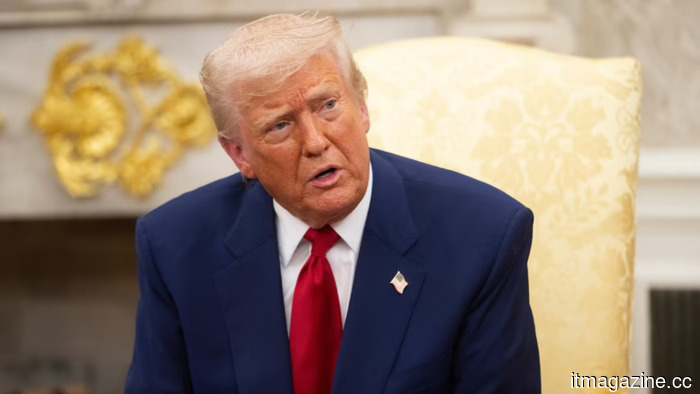
Trump signs directives aimed at achieving a robust quantum computer by 2028.
Two executive orders establish a research-grade goal, extend the deadline for post-quantum cryptography to 2031, and link $2 billion in grants to government equity stakes. On June 22, 2026, President Donald Trump signed two executive orders regarding quantum computing. The first mandates that the federal government assist in developing a quantum computer "powerful enough for scientific research" by 2028, while the second focuses on strengthening national security in relation to this technology. Together, these orders create a timeline, set a financial target, and leave at least one significant question unanswered.
The initial order, as reported by NBC News, calls for a research-grade machine to be ready in two years and for "commercially relevant" quantum computers by the end of Trump’s presidency. However, the specific definition of "powerful enough for scientific research" remains unspecified for now.
The Department of Energy will later determine the necessary criteria, meaning the primary target lacks a definitive measure until the department publishes its standards.
Funding is the quantitative aspect of the plan. The administration announced it would distribute $2 billion in grants among nine quantum companies, with the U.S. government taking equity stakes in exchange. This funding arrangement is linked to the aim of producing a commercially viable machine by 2028.
Reports related to the orders suggest that IBM would receive the largest share, approximately $1 billion, followed by GlobalFoundries with $375 million and $100 million each for several others, including D-Wave Quantum, Rigetti Computing, and Infleqtion.
These specific figures come from media coverage instead of official White House sources and should be interpreted as reported values.
Traditionally, the federal government has not funded basic research in exchange for equity; such funding usually involves grants with no expectations of profit sharing.
In this case, the government will join private investors as a shareholder, betting on the success and potential profitability of the firms it is funding. This also gives the administration a direct interest in the companies it publicly supports, a scenario that often leads to future scrutiny.
The equity-for-grants model mirrors a trend that has emerged in the chip and AI sectors this year, where financial support is exchanged for stakes rather than provided outright.
This approach aligns with significant equity investments that are reshaping ownership within the AI supply chain, now with the government included as an investor.
The second order is less obvious but arguably more significant. It prioritizes national security and, as noted by CyberScoop, hastens the government's shift to post-quantum cryptography, which is designed to withstand a quantum computer capable of breaking current encryption standards.
The new deadline for this transition is set for 2031, accelerating a process that agencies had been managing at a slower pace.
This shift is complex. Implementing post-quantum cryptography involves overhauling the algorithms that secure classified communications, financial systems, and critical infrastructure, all in anticipation of a potentially existing quantum machine within the next decade.
Additionally, this package is expected to direct intelligence agencies to protect domestic quantum research from foreign threats, reflecting concerns that the first entity to develop a functional quantum computer could gain an advantage in decryption over those still using classical encryption.
Collectively, the orders represent a dual investment strategy: that American companies can be motivated to achieve a viable quantum computer more rapidly with federal funding and ownership aspects as leverage, and that the government can fortify its systems before any external, friendly or adversary, achieves similar advancements.
This government-as-investor mindset is also visible in the broader chip-policy landscape, where the lines between strategic technology and public funding have increasingly blurred.
The next steps largely depend on the Department of Energy, which must redefine "powerful enough for scientific research" into a quantifiable standard. This determination will clarify whether the 2028 target is met, missed, or amended. Until such criteria are established, the orders outline a direction and budget while postponing the assessment of success.
Other articles
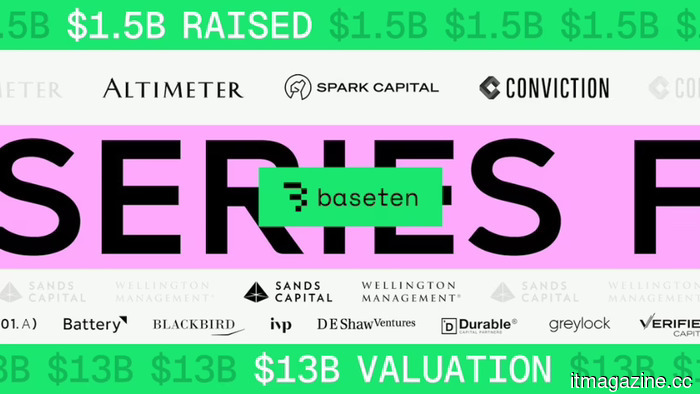 AI infrastructure startup Baseten secures $1.5 billion in funding, reaching a valuation of up to $13 billion.
AI startup Baseten secured $1.5 billion, achieving a valuation of as much as $13 billion, with Sands Capital and Wellington leading the round, while Blackbird VC made its largest investment to date.
AI infrastructure startup Baseten secures $1.5 billion in funding, reaching a valuation of up to $13 billion.
AI startup Baseten secured $1.5 billion, achieving a valuation of as much as $13 billion, with Sands Capital and Wellington leading the round, while Blackbird VC made its largest investment to date.
 Meta halts its employee mouse-tracking initiative due to concerns about data security.
Meta has halted its Model Capability Initiative, which monitored employee mouse movements and keystrokes for AI training, following an incident where sensitive data was inadvertently exposed.
Meta halts its employee mouse-tracking initiative due to concerns about data security.
Meta has halted its Model Capability Initiative, which monitored employee mouse movements and keystrokes for AI training, following an incident where sensitive data was inadvertently exposed.
 BP, Walmart, and 7-Eleven have been sued regarding petrol prices set by AI in California.
Drivers in California have filed a lawsuit against BP, Walmart, 7-Eleven, and three other companies, claiming that an AI pricing tool was utilized to synchronize increased fuel prices.
BP, Walmart, and 7-Eleven have been sued regarding petrol prices set by AI in California.
Drivers in California have filed a lawsuit against BP, Walmart, 7-Eleven, and three other companies, claiming that an AI pricing tool was utilized to synchronize increased fuel prices.
 Micron and Anthropic have entered into a multi-year agreement for the supply of AI memory.
Micron and Anthropic have entered into a multi-year agreement that includes the supply of AI memory and storage, the integration of Claude within Micron, and Micron's investment in Anthropic.
Micron and Anthropic have entered into a multi-year agreement for the supply of AI memory.
Micron and Anthropic have entered into a multi-year agreement that includes the supply of AI memory and storage, the integration of Claude within Micron, and Micron's investment in Anthropic.
 BP, Walmart, and 7-Eleven have been sued regarding petrol prices determined by AI in California.
Drivers in California have filed a lawsuit against BP, Walmart, 7-Eleven, and three additional chains, claiming that an AI pricing system was employed to coordinate increased fuel prices.
BP, Walmart, and 7-Eleven have been sued regarding petrol prices determined by AI in California.
Drivers in California have filed a lawsuit against BP, Walmart, 7-Eleven, and three additional chains, claiming that an AI pricing system was employed to coordinate increased fuel prices.
 Micron and Anthropic have entered into a multi-year agreement for the supply of AI memory.
Micron and Anthropic have entered into a multi-year contract regarding the supply of AI memory and storage, the integration of Claude within Micron, and Micron's investment in Anthropic.
Micron and Anthropic have entered into a multi-year agreement for the supply of AI memory.
Micron and Anthropic have entered into a multi-year contract regarding the supply of AI memory and storage, the integration of Claude within Micron, and Micron's investment in Anthropic.
Trump signs directives aimed at achieving a robust quantum computer by 2028.
Trump signed two executive orders related to quantum computing, aiming for a research-grade machine by 2028 and allocating $2 billion in grants to nine companies for government investment.