
Anthropic's updated privacy policy gathers biometric information from identified Claude users.
TL;DR: Anthropic has revised its privacy policy to mandate that certain Claude users provide government IDs and selfies for identity verification.
Anthropic's updated privacy policy allows the company to require some Claude users to upload government-issued identification and provide selfies or videos for verification of identity. This new policy, effective from July 8, introduces a new category of personal data collection that includes facial geometry templates, which could be classified as biometric information under state privacy laws.
TechCrunch first reported the change, which was detailed in the updated identity verification policy released on June 17. Anthropic spokesperson Thariq Shihipar explained that this requirement is aimed at a “small subset of users” whose accounts have been flagged for possible policy infractions, offering them an opportunity to appeal through the identity verification process rather than facing total account suspension.
Accepted documents for verification include passports, driver's licenses, state or provincial IDs, and national identity cards. Digital IDs, screenshots, and photocopies are not permitted. Users who provide these documents will also need to submit a photo or video selfie, which the system will use to create a facial geometry template that matches their provided ID.
Anthropic is outsourcing the verification process to Persona, a San Francisco-based identity verification platform, rather than handling it in-house. Persona, which is supported by Founders Fund—led by Peter Thiel, who also invests in Anthropic—has faced scrutiny in the past. Discord opted for Persona for its age verification system in February 2026 but retracted this decision after user concerns regarding sharing government IDs with a Thiel-affiliated company emerged. Additionally, a security incident revealed that data from Persona had been found on a US government-authorized endpoint, containing approximately 2,500 accessible files, although the extent and sensitivity of this data remain unclear.
The facial geometry data being collected by Anthropic raises legal concerns. Illinois's Biometric Information Privacy Act considers facial geometry as biometric data and enforces penalties ranging from $1,000 to $5,000 per violation for companies that collect such data without proper consent. In 2021, Facebook settled a class action related to BIPA for $650 million, setting a precedent for biometric privacy litigation in the U.S.
Shihipar mentioned that the identity verification policy is “unrelated to the Fable or Mythos rollout,” referencing the Trump administration's recent order for Anthropic to disable its most advanced AI models. However, the timing of this policy change cannot be disconnected from the ongoing tensions between the company and Washington, which have included a Pentagon supply-chain risk designation and reports that Amazon CEO Andy Jassy raised security concerns regarding Anthropic’s models with the White House.
Although Anthropic serves tens of millions of users monthly, the company asserts that this verification requirement will impact only a minor portion of them. Nevertheless, for a company that has established its reputation on safety and responsible AI usage, requesting users to submit passport scans and facial biometrics to a vendor backed by Thiel raises trust issues that may not be addressed by technical reassurances alone.
Recently, former President Trump indicated that he no longer considers Anthropic a national security threat after a G7 meeting with CEO Dario Amodei. Whether this diplomatic warming translates into alleviated regulatory pressures that might have driven stricter user verification protocols remains uncertain.
Other articles
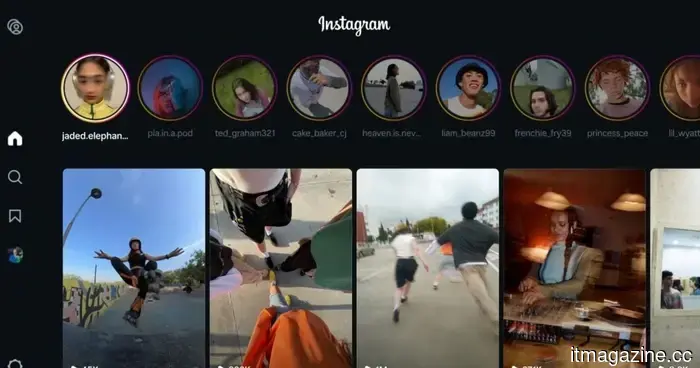 Instagram is making its debut on Samsung TVs, bringing episodic series and live TV to your screen shortly.
Meta is experimenting with channels based on user interests, casting from phone to TV, and a horizontal video hub as Instagram for TV grows beyond its initial launch on Samsung devices.
Anthropic's updated privacy policy gathers biometric data from users identified as flagged on Claude.
Anthropic revised its privacy policy, now necessitating that certain Claude users provide scans of government-issued IDs and selfies, which has raised concerns surrounding biometric data.
Instagram is making its debut on Samsung TVs, bringing episodic series and live TV to your screen shortly.
Meta is experimenting with channels based on user interests, casting from phone to TV, and a horizontal video hub as Instagram for TV grows beyond its initial launch on Samsung devices.
Anthropic's updated privacy policy gathers biometric data from users identified as flagged on Claude.
Anthropic revised its privacy policy, now necessitating that certain Claude users provide scans of government-issued IDs and selfies, which has raised concerns surrounding biometric data.
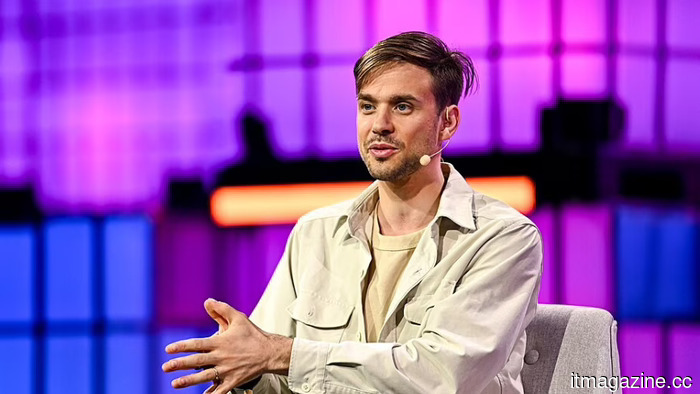 The lovable CEO states that European AI startups are facing an issue with confidence rather than a lack of talent.
Anton Osika from Lovable states that European founders can establish global AI companies without relying on Silicon Valley, using his own startup, which has a $500M ARR, as evidence.
The lovable CEO states that European AI startups are facing an issue with confidence rather than a lack of talent.
Anton Osika from Lovable states that European founders can establish global AI companies without relying on Silicon Valley, using his own startup, which has a $500M ARR, as evidence.
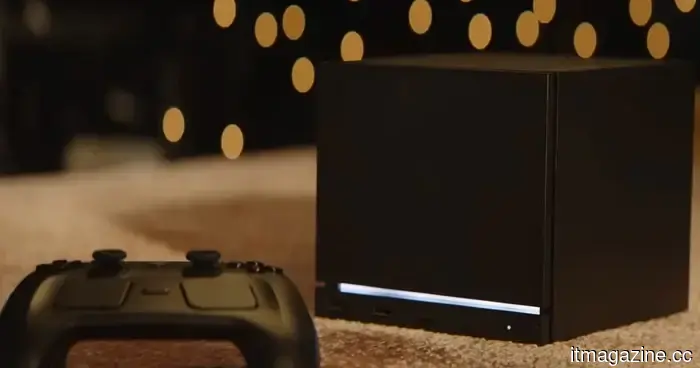 Valve clarifies the reasons behind the high cost of the Steam Machine, and the antagonist is all too recognizable.
Valve has stated that increasing costs of RAM and storage have made it unfeasible to achieve its initial pricing objective for the Steam Machines, which also restricted their availability at launch.
Valve clarifies the reasons behind the high cost of the Steam Machine, and the antagonist is all too recognizable.
Valve has stated that increasing costs of RAM and storage have made it unfeasible to achieve its initial pricing objective for the Steam Machines, which also restricted their availability at launch.
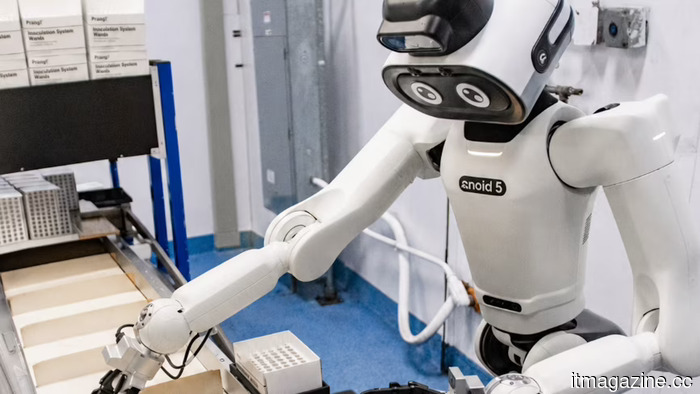 Delivery robot startup Robot.com is placing its next bet on wheeled humanoid robots designed for kitchens and warehouses.
Robot.com, previously known as Kiwibot, has introduced R-noid, a wheeled humanoid equipped with Physical Intelligence's AI, designed to pack orders and load boxes.
Delivery robot startup Robot.com is placing its next bet on wheeled humanoid robots designed for kitchens and warehouses.
Robot.com, previously known as Kiwibot, has introduced R-noid, a wheeled humanoid equipped with Physical Intelligence's AI, designed to pack orders and load boxes.
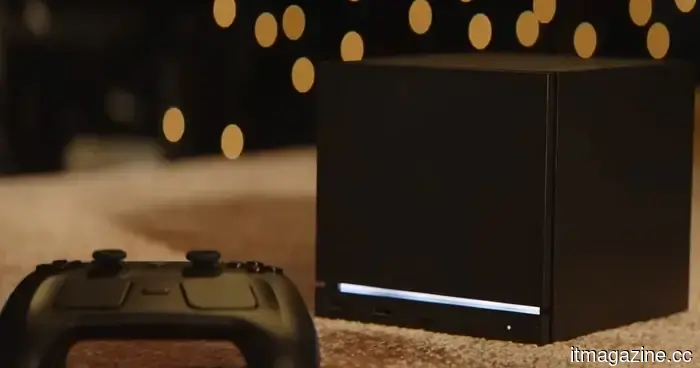 Valve clarifies the reasons behind the high cost of the Steam Machine, and the antagonist is all too recognizable.
Valve indicates that increasing costs for RAM and storage rendered its initial pricing target for Steam Machines unattainable, as well as restricted launch availability.
Valve clarifies the reasons behind the high cost of the Steam Machine, and the antagonist is all too recognizable.
Valve indicates that increasing costs for RAM and storage rendered its initial pricing target for Steam Machines unattainable, as well as restricted launch availability.
Anthropic's updated privacy policy gathers biometric information from identified Claude users.
Anthropic revised its privacy policy, necessitating certain Claude users to provide scans of government-issued IDs and selfies, which has raised concerns regarding biometric data.