

China's goal for green energy in AI data centers faces challenges with the power grid.
The cleanest method to power a data centre is also the most unpredictable. As the sun sets and the wind calms, a server room filled with AI accelerators continues its demand for consistent energy, whether it's midnight or midday. This discrepancy represents the challenge facing China's climate goals in relation to its computing aspirations, and industry professionals quoted by Reuters indicate that finding a solution is proving to be more complex than the stated targets suggest.
Beijing has clearly articulated its goal: officials aim for renewables to account for approximately 80% of the AI data centre sector's total energy usage by 2030, a significant leap from around 11% in 2023. The government's 2026 work report emphasized the need to better integrate computing infrastructure with the energy supply, and a green data centre action plan mandates that new initiatives in national computing hubs obtain the majority of their electricity from clean sources. The roadmap appears well-defined on paper.
The challenges are practical rather than political. Anticipating peak demand from AI clusters is notably challenging, as the energy consumption pattern during training sessions differs significantly from the steady operation of a traditional data centre. Grid operators are hesitant to assume the additional risk of balancing inconsistent supply with a client that cannot accommodate interruptions.
Faced with the choice between potentially unavailable clean energy and dependable energy that is guaranteed, operators often opt for reliability, which in China still relies heavily on a grid with a substantial coal foundation.
The urgency of this issue is underscored by projected power demand from Chinese data centres, which is expected to increase by 300 billion to 500 billion kilowatt-hours between 2026 and 2030, representing roughly a fifth of the country’s total electricity demand growth during that time. Installed data centre capacity is set to reach nearly 40 gigawatts by the end of this year, rising from approximately 32 gigawatts at the close of 2025, with some predictions suggesting the sector could surpass 60 gigawatts by 2030.
Regardless of the energy sources that this expansion will require, the demand will be substantial, and the growth curve is steepening at the same time that the grid is being urged to become greener.
China possesses ample clean energy resources, having added hundreds of gigawatts of solar and wind capacity in 2025 alone. It is anticipated that wind, solar, and storage will exceed coal as the predominant source of power generation before the decade concludes.
The issue lies not in the overall supply but in having that supply available in the right location at the right time, aligned with a buyer with no tolerance for fluctuations.
Thus far, a common workaround has involved the use of green electricity certificates, allowing operators to purchase the environmental benefits of clean power without a direct connection to a wind or solar installation. This approach may fulfill the metric, but whether it actually changes the electrons powering the servers is another question.
This tension is not exclusive to China; grid operators worldwide are dealing with the challenge of accommodating AI loads more quickly than they can expand infrastructure. Cases such as Denmark pausing new connections or the EU urging households to reduce consumption during peak hours, along with US utilities planning $1.4 trillion in investments to keep pace, reflect this trend.
Europe has made significant strides in connecting data centre operations with climate objectives, urging major tech companies to align their facilities with these goals or risk exclusion. China’s approach is more centrally managed, with targets that are significantly more aggressive, which is why the gap between its objectives and actual grid capabilities is particularly noteworthy.
At present, the ambition exists, but the implementation framework is still incomplete. Beijing has outlined its desired figures and possesses the manufacturing capabilities, construction pace, and centralized guidance to pursue these targets seriously. However, what is still lacking is a reliable method to ensure that intermittent energy sources can fulfill the demands of a system that operates continuously. This last challenge, more than any deficiency in solar panels or wind turbines, stands between the ambitious target and the current state of the grid.
Другие статьи
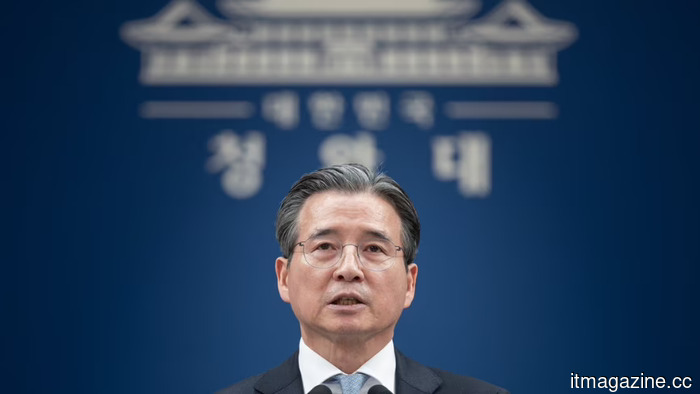 Глава политики Кореи предупреждает, что прибыль от чипов может привести к росту цен на жилье
Ким Ён-бом говорит, что богатство от бумa полупроводников в Корее рискует сосредоточиться в недвижимости, и настаивает на изменениях в налогообложении жилья.
Целевая установка Китая по зеленой энергии для центров обработки данных ИИ сталкивается с проблемами в сети.
Пекин хочет, чтобы возобновляемые источники энергии обеспечивали четыре пятых мощности его центров обработки данных ИИ к 2030 году. Прогнозирование и риски в сети мешают этому.
Глава политики Кореи предупреждает, что прибыль от чипов может привести к росту цен на жилье
Ким Ён-бом говорит, что богатство от бумa полупроводников в Корее рискует сосредоточиться в недвижимости, и настаивает на изменениях в налогообложении жилья.
Целевая установка Китая по зеленой энергии для центров обработки данных ИИ сталкивается с проблемами в сети.
Пекин хочет, чтобы возобновляемые источники энергии обеспечивали четыре пятых мощности его центров обработки данных ИИ к 2030 году. Прогнозирование и риски в сети мешают этому.
 Seedcamp привлекает 320 миллионов долларов и строит трансатлантический мост
Первоначальный инвестор первого раунда в Европе собрал 320 миллионов долларов в рамках двух фондов и расширил свою команду в США, чтобы поддерживать основателей, строящих бизнес на глобальном уровне с первого дня.
Seedcamp привлекает 320 миллионов долларов и строит трансатлантический мост
Первоначальный инвестор первого раунда в Европе собрал 320 миллионов долларов в рамках двух фондов и расширил свою команду в США, чтобы поддерживать основателей, строящих бизнес на глобальном уровне с первого дня.
 Забудьте о фильтрах RTX. Игровой монитор BenQ сам справляется с красивыми эффектами.
Игровые мониторы BenQ MOBIUZ используют интеллектуальную технологию Smart Color и Color Shuttle для автоматической настройки визуальных эффектов игр на экране, с возможностью делиться предустановками и без потери производительности на стороне GPU.
Забудьте о фильтрах RTX. Игровой монитор BenQ сам справляется с красивыми эффектами.
Игровые мониторы BenQ MOBIUZ используют интеллектуальную технологию Smart Color и Color Shuttle для автоматической настройки визуальных эффектов игр на экране, с возможностью делиться предустановками и без потери производительности на стороне GPU.
 Забудьте про фильтры RTX. Игровой монитор BenQ сам делает красивую картинку.
Игровые мониторы BenQ MOBIUZ используют технологии Smart Color и Color Shuttle на базе ИИ для автоматической настройки визуальных эффектов игр на экране, с возможностью делиться предустановками и без потери производительности со стороны GPU.
Забудьте про фильтры RTX. Игровой монитор BenQ сам делает красивую картинку.
Игровые мониторы BenQ MOBIUZ используют технологии Smart Color и Color Shuttle на базе ИИ для автоматической настройки визуальных эффектов игр на экране, с возможностью делиться предустановками и без потери производительности со стороны GPU.
 Лондонская компания Isometric привлекла 40 миллионов долларов для сертификации промышленной экономики с помощью ИИ.
Лондонская компания Isometric закрыла раунд финансирования серии A на сумму 40 миллионов долларов, возглавляемый AVP, для продвижения своей платформы сертификации ИИ в более широкую промышленную экономику.
Лондонская компания Isometric привлекла 40 миллионов долларов для сертификации промышленной экономики с помощью ИИ.
Лондонская компания Isometric закрыла раунд финансирования серии A на сумму 40 миллионов долларов, возглавляемый AVP, для продвижения своей платформы сертификации ИИ в более широкую промышленную экономику.
China's goal for green energy in AI data centers faces challenges with the power grid.
Beijing aims for renewable sources to provide 80% of the power for its AI data centres by 2030. However, challenges with forecasting and grid reliability are hindering progress.