
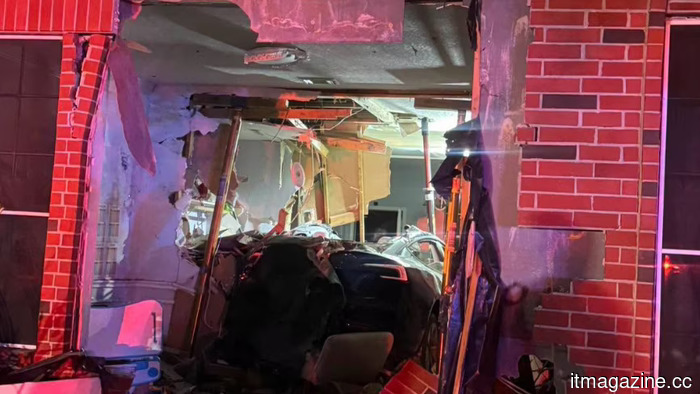
A Tesla operating on Autopilot crashed into a house in Texas. The woman inside did not make it.
TL;DR: A Tesla Model 3 operating on Autopilot crashed into a Texas home, resulting in the death of a 76-year-old woman. The NHTSA is initiating a special investigation into the accident.
A 76-year-old woman from Texas passed away on Friday after a driver of a Tesla Model 3 informed the police that he was using the Autopilot feature when he lost control and crashed into her family's house at high speed. The Harris County Sheriff’s Office confirmed that Michael Butler stated an automated driving assistance system was active during the crash in Katy, a suburb west of Houston. Authorities reported that Butler “failed to drive in a single lane, left the roadway, and struck the residence,” but they verified that he was not under the influence and is fully cooperating with the investigation.
Martha Avila was in the front room of her home, which she shared with her daughter, son-in-law, and three young grandchildren. No other individuals were harmed in the incident. Her daughter, Jennifer Barbour, told local news station KHOU that Avila was in good health and taking no medications when she unexpectedly succumbed to her injuries, expressing that she had anticipated her mother would live to be 100.
The National Highway Traffic Safety Administration (NHTSA) has communicated to Ars Technica that it is commencing a special crash investigation. This incident is part of NHTSA's ongoing engineering analysis of over three million Tesla vehicles equipped with Full Self-Driving software, a review that was intensified in March 2026 following reports of vehicles crossing into opposing lanes, running red lights, and colliding with pedestrians.
Just weeks prior, the same agency had certified the Tesla Model Y as the first vehicle to successfully complete its new driver-assistance safety tests, creating a scenario in which NHTSA is both celebrating and scrutinizing the same company's technology. Investigators have yet to determine whether Autopilot was indeed active at the time of the accident, as this assertion comes solely from the driver.
A doorbell camera clip shared by The New York Times captures the Tesla crashing into the front wall of the brick home. A neighbor who witnessed the incident estimated that the car was traveling at a speed of 60 to 70 miles per hour within the residential area, according to local news source Click2Houston.
This tragedy occurs as Tesla is urging the Trump administration to ease safety regulations for automated vehicles. The company has submitted comments in support of two proposed NHTSA rule modifications: one permitting automated vehicle manufacturers to eliminate transmission shift position displays, and another removing the requirement for windshield wipers and defogging controls on vehicles with automated driving systems. Tesla contended in its regulatory filings that cameras render human-facing controls unnecessary because the automated system does not depend on windshield visibility to function.
Advocates for Highway and Auto Safety have opposed both of these proposals, cautioning that passengers need to be aware of their surroundings to safely enter and exit vehicles, especially in emergencies. The organization described Tesla’s Autopilot as “unproven” and underscored that even one fatality like Avila’s has a “horrific ripple effect forever changing the lives of children, parents, friends, and communities.”
Tesla's promotion of Autopilot has faced criticism for creating confusion regarding the system's capabilities. The owner's manual advises drivers to keep their hands on the wheel and stay attentive, yet as recently as May, Tesla's official X account shared an advertisement depicting drivers with their hands off the wheel. Additionally, Tesla’s Austin robotaxi service has experienced 14 crashes over approximately 800,000 miles of operation, a rate about four times worse than the average for human drivers that Tesla cites on its safety page.
The broader regulatory landscape seems to favor Tesla. NHTSA Administrator Jonathan Morrison indicated in a January address that 2026 would be a significant year for autonomous vehicle regulation, criticizing the Biden administration for its excessive focus on enforcement. He stated that the Trump administration prioritizes eliminating what it identifies as unnecessary regulatory obstacles and facilitating the commercial deployment of autonomous vehicles lacking steering wheels or brake pedals.
In 2023, Tesla issued recalls for more than two million vehicles after regulators determined the company had not implemented Autopilot in a manner that ensured drivers remained attentive. Following this, Elon Musk’s Department of Government Efficiency cut positions at NHTSA, especially affecting staff with expertise in autonomous vehicle safety. A new investigation into Tesla’s Full Self-Driving was launched in October 2025 after concerning reports of the system running red lights and veering into oncoming traffic, with Tesla delaying responses to federal data requests on two occasions.
For Avila's family, the ongoing policy debate is not their primary concern. Barbour remarked that she remains unsure whether to blame the driver or the vehicle, admitting she had never seen a car move that quickly through a neighborhood.
Other articles
 Kodak Charmera is launching a new $30 keychain camera that features a flip screen for taking selfies.
Yashica’s Funtastic Keychain Camera is a compact digital camera featuring a 180-degree flip screen, a 1MP sensor, USB-C charging, and a variety of character-themed designs.
Kodak Charmera is launching a new $30 keychain camera that features a flip screen for taking selfies.
Yashica’s Funtastic Keychain Camera is a compact digital camera featuring a 180-degree flip screen, a 1MP sensor, USB-C charging, and a variety of character-themed designs.
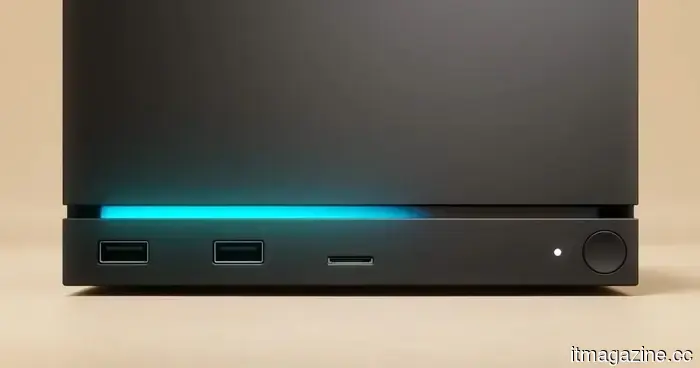 Valve discloses the pricing for Steam Machines, and it's certainly not an inexpensive gaming console.
Valve has formally announced the pricing for Steam Machines, with the new gaming PC running on SteamOS starting at $1,049, just before reservations begin this week.
Valve discloses the pricing for Steam Machines, and it's certainly not an inexpensive gaming console.
Valve has formally announced the pricing for Steam Machines, with the new gaming PC running on SteamOS starting at $1,049, just before reservations begin this week.
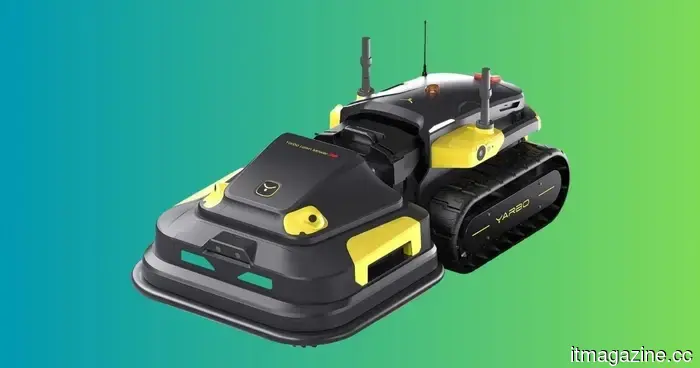 This modular robot lawn mower can manage up to 6 acres and is currently $1,000 discounted for Prime Day.
Amazon Prime Day This article is part of the Digital Trends Prime Day 2026 coverage Updated less than 4 hours ago This content is created in collaboration with YARBO. If you have been considering the cost of a robot mower for a truly expansive property, Prime Day has simplified your calculations. The YARBO Robot […]
This modular robot lawn mower can manage up to 6 acres and is currently $1,000 discounted for Prime Day.
Amazon Prime Day This article is part of the Digital Trends Prime Day 2026 coverage Updated less than 4 hours ago This content is created in collaboration with YARBO. If you have been considering the cost of a robot mower for a truly expansive property, Prime Day has simplified your calculations. The YARBO Robot […]
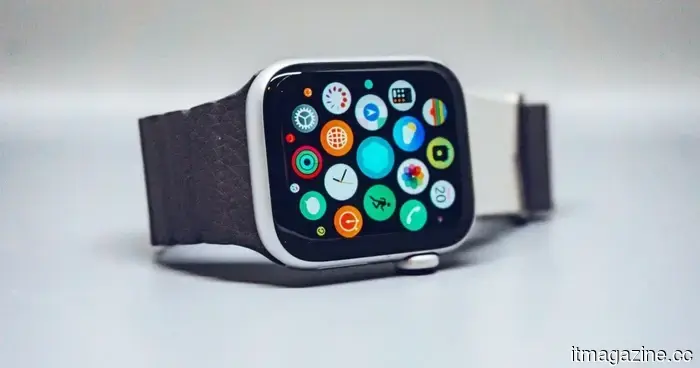 I really like Apple, but this decision regarding watchOS could be the tipping point for me.
My Apple Watch SE 2 is still functioning flawlessly. So why does it seem outdated already? Why, Apple, why?
I really like Apple, but this decision regarding watchOS could be the tipping point for me.
My Apple Watch SE 2 is still functioning flawlessly. So why does it seem outdated already? Why, Apple, why?
 32 Prime Day Enhancements You Should Consider Adding to Your Cart - Digital Trends
This gift guide includes some sponsored content. Why should you trust us? Presented by Prime Day, this guide offers numerous chances to enhance your everyday products. These standout selections provide practical advantages, clever design, and excellent value—making them top deals that are definitely worth adding to your cart. Sponsored Beatbot AquaSense 2 Pro […]
32 Prime Day Enhancements You Should Consider Adding to Your Cart - Digital Trends
This gift guide includes some sponsored content. Why should you trust us? Presented by Prime Day, this guide offers numerous chances to enhance your everyday products. These standout selections provide practical advantages, clever design, and excellent value—making them top deals that are definitely worth adding to your cart. Sponsored Beatbot AquaSense 2 Pro […]
 Two wireless massagers designed for those who work at a desk: Available at a discount for Prime Day.
This post is sponsored by SKG. If you’ve ever purchased a gadget that was ultimately neglected in a drawer, these two items are designed to prevent that outcome. The SKG W9 Ultra 2.0 Lower Back Massager and G7 Pro Fold 3.0 Neck Massager are currently available on sale on Amazon, and both are crafted to […]
Two wireless massagers designed for those who work at a desk: Available at a discount for Prime Day.
This post is sponsored by SKG. If you’ve ever purchased a gadget that was ultimately neglected in a drawer, these two items are designed to prevent that outcome. The SKG W9 Ultra 2.0 Lower Back Massager and G7 Pro Fold 3.0 Neck Massager are currently available on sale on Amazon, and both are crafted to […]
A Tesla operating on Autopilot crashed into a house in Texas. The woman inside did not make it.
A 76-year-old woman from Texas passed away after a Tesla Model 3, operated on Autopilot, collided with her house. The NHTSA is initiating a special investigation into the crash.