

macOS 27 signifies the conclusion of the Hackintosh Era, but is there still a demand for one?
While the tech community was preoccupied with Liquid Glass, advanced Apple Intelligence features, and the flashy updates coming with the release of macOS 27 Golden Gate, Apple quietly made another announcement at WWDC 2026 that went largely unnoticed. Hidden within the compatibility list was an important detail: Intel Macs are no longer supported. For millions, this might seem like just another software update requirement. However, for a dedicated segment of the internet that has spent nearly two decades manipulating technology to their advantage, this marks a significant moment. It signifies the conclusion of the traditional Hackintosh era.
If the term Hackintosh is unfamiliar, here's a brief explanation. A Hackintosh refers to a standard PC modified to run macOS instead of Windows or Linux. Enthusiasts utilized community-developed bootloaders like OpenCore and carefully chosen components to trick Apple's operating system into believing it was running on a legitimate Mac. The process wasn’t simple, but for many, that complexity became part of the enjoyment.
Initially, macOS 27 appears to be the software update that definitively ends the Hackintosh. However, upon closer inspection, another question arises: did Apple truly end the Hackintosh movement, or did it gradually become irrelevant years ago?
To grasp the origins of Hackintoshes, it helps to look back around a decade. Back then, purchasing a Mac often meant paying a significant premium. High-end Macs were pricey, upgrade options were limited, and power users frequently wished Apple would allow them to construct their own machines. Instead, many took it upon themselves to do just that.
Developers, video editors, music producers, and hardware aficionados started building custom PCs with Intel processors and compatible components, subsequently installing macOS through meticulously configured bootloaders. The outcome often yielded machines that delivered Mac Pro-level performance at a fraction of the cost.
Moreover, it wasn't solely about saving money. Hackintoshes embodied freedom. Users could select their own motherboards, upgrade storage whenever they wished, swap out graphics cards, overclock CPUs, and create systems tailored to their specific needs while still enjoying macOS, Final Cut Pro, Logic Pro, Xcode, AirDrop, and the entirety of Apple’s software ecosystem.
Entire online communities formed around this movement. Compatibility databases, troubleshooting guides, and OpenCore configurations became collective knowledge. Successfully booting macOS on unsupported hardware felt less like an installation process and more like completing a puzzle.
It’s tempting to assert that macOS 27 marks the end of the Hackintosh movement, but that's not entirely accurate. The countdown actually began in 2020 with the introduction of Apple Silicon and the original M1 chip.
Initially, many perceived this change as yet another architectural transition expected to take years to settle. Instead, Apple delivered processors that combined remarkable performance with exceptional efficiency, establishing new standards for battery life and thermals while consistently improving with each generation. As Apple Silicon matured, macOS increasingly adapted around Apple’s hardware.
The demise of Hackintosh wasn’t abrupt; it unfolded over six years.
Meanwhile, Intel-based Hackintosh projects continued to function but gradually became outdated. The community adapted remarkably, yet each new macOS release created a greater divide between Apple’s integrated ecosystem and the generic PC hardware it once successfully emulated. macOS 26 effectively became the last usable version for traditional x86 Hackintoshes. macOS 27 merely formalizes this reality. Rather than shutting the door abruptly, Apple has gently stepped into an era where its operating system is designed solely for its own silicon.
One often-overlooked detail is that Hackintoshes didn’t just offer a cheaper alternative to Macs; they frequently outperformed them. It was common for creators to build impressive workstations equipped with desktop Core i9 processors, Xeons, multiple GPUs, and large amounts of RAM, far exceeding Apple's own offerings. For years, constructing a Hackintosh was not merely about escaping what was referred to as the "Apple Tax," but about obtaining superior hardware while still being able to utilize macOS. Fast forward to 2026, and the narrative has dramatically shifted.
The Hackintosh subreddit is filled with farewell posts and images of new M4 Mac minis. Five years ago, I was assembling PCs to run macOS because Mac hardware was inadequate. Now, people seek Apple’s hardware for running Windows and Linux because it is so impressive. How the tides have turned—Quinn Nelson (@SnazzyLabs) January 1, 2025.
Apple Silicon has revolutionized Macs into some of the most efficient computers available. The performance-per-watt ratio has become a significant competitive advantage, unified memory has shown remarkable capabilities for various professional workloads, and Apple’s notebooks continue to impress with their battery life. Ironically, one major reason for the decline of Hackintosh construction is that Apple’s hardware has become genuinely hard to surpass.
If someone suggested this ten years ago, they might have been laughed at. Yet here we find ourselves. One prevailing reason for Hackintosh's existence


Other articles
 A concerning experiment reveals that Claude AI is more effective at fundraising for humans than humans themselves.
A recent study revealed that Claude Opus 4.6 surpassed professional fundraisers and top debaters in tasks related to persuasion, raising new worries about the impact of AI.
A concerning experiment reveals that Claude AI is more effective at fundraising for humans than humans themselves.
A recent study revealed that Claude Opus 4.6 surpassed professional fundraisers and top debaters in tasks related to persuasion, raising new worries about the impact of AI.
 Are you aware that your iPhone displays on-screen fireworks when you make a call to someone on their birthday?
Your iPhone now marks birthdays with on-screen fireworks during phone calls, making it one of the top hidden features of iOS 27.
Are you aware that your iPhone displays on-screen fireworks when you make a call to someone on their birthday?
Your iPhone now marks birthdays with on-screen fireworks during phone calls, making it one of the top hidden features of iOS 27.
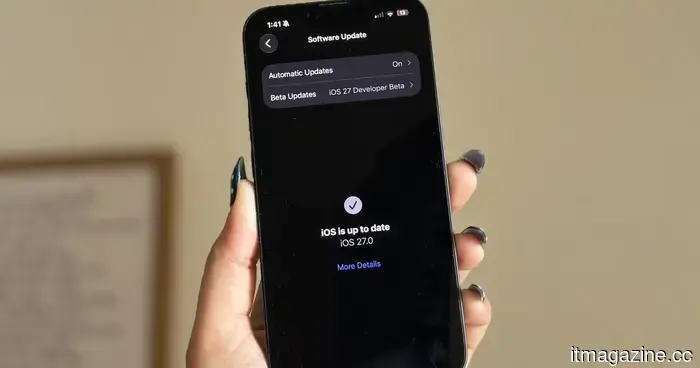 I've tested almost all the features of iOS 27, and these three are the reasons I'm still enthusiastic about the update.
I've dedicated a week to testing iOS 27, and here are the three features that significantly improved my daily iPhone experience.
I've tested almost all the features of iOS 27, and these three are the reasons I'm still enthusiastic about the update.
I've dedicated a week to testing iOS 27, and here are the three features that significantly improved my daily iPhone experience.
 How Beatbot's AI-Driven Pool Robots Are Transforming Pool Maintenance This Prime Day
Prime Day offers substantial discounts throughout Beatbot's AI-driven pool-care system, including the main AquaSense X and AquaSense 2 Ultra models, as well as the Sora Series and iSkim range.
How Beatbot's AI-Driven Pool Robots Are Transforming Pool Maintenance This Prime Day
Prime Day offers substantial discounts throughout Beatbot's AI-driven pool-care system, including the main AquaSense X and AquaSense 2 Ultra models, as well as the Sora Series and iSkim range.
 Instacart is experimenting with AI shopping carts equipped with camera capabilities that may seem convenient, yet also quite unsettling.
Instacart's Caper Carts offer quick checkout, discounts, and loyalty benefits at Weis stores, yet their cameras, location tracking, and in-aisle advertisements give the grocery cart an impression of being a data collection device.
Instacart is experimenting with AI shopping carts equipped with camera capabilities that may seem convenient, yet also quite unsettling.
Instacart's Caper Carts offer quick checkout, discounts, and loyalty benefits at Weis stores, yet their cameras, location tracking, and in-aisle advertisements give the grocery cart an impression of being a data collection device.
 OpenAI aims to create a comprehensive personal AI assistant for everyone around the globe.
OpenAI is positioning personal AGI as the ultimate goal in its AI competition, but it still needs to clarify details regarding pricing, accessibility, safety measures, and how a knowledgeable assistant would benefit everyone.
OpenAI aims to create a comprehensive personal AI assistant for everyone around the globe.
OpenAI is positioning personal AGI as the ultimate goal in its AI competition, but it still needs to clarify details regarding pricing, accessibility, safety measures, and how a knowledgeable assistant would benefit everyone.
macOS 27 signifies the conclusion of the Hackintosh Era, but is there still a demand for one?
macOS 27 marks the end of the Hackintosh era, but Apple's budget-friendly Apple Silicon Macs may have rendered the DIY movement unnecessary well before the removal of Intel support.