
The heart rate sensor in the AirPods Pro 3 is almost as accurate as the Apple Watch in testing.
CNET Labs found that the heart rate sensor in AirPods Pro 3 had an average error of 1.67% compared to a Polar H10 chest strap, placing it as the second most accurate consumer heart rate device measured, following the Apple Watch's 0.98% average error.
In their tests, CNET's results indicated that the AirPods Pro 3 outperformed all smartwatches and fitness trackers, except for the Apple Watch Series 11. The testing protocol involved a four-lap track scenario using the Polar H10 as the reference standard, a method consistent with validation processes in exercise physiology labs for optical heart rate sensors.
The AirPods Pro 3 utilize a photoplethysmography (PPG) sensor that emits infrared light 256 times per second to monitor blood volume alterations in the ear canal. Apple claims this sensor was developed using data from over 50 million hours collected during the Apple Health Study and is the smallest heart rate sensor they have created.
An independent study published in PLOS Digital Health in April 2026 confirmed these accuracy claims by testing 40 adults across 16,735 heart rate measurements, concluding that the AirPods Pro 3 had an average deviation of 2.02% from a reference device. This study noted that the ear canal provides a more stable optical reading environment compared to the wrist due to reduced ambient light interference and less motion artifacts during physical activity.
However, the PLOS study did indicate greater variability in readings during high-intensity exercise, meaning that individual measurements became less reliable despite the overall average staying close to the reference. This limitation is common among all optical heart rate sensors, including those worn on the wrist, suggesting that the AirPods are more dependable for consistent activities rather than for interval training that involves rapid heart rate changes.
CNET's testing involved only two complete AirPods runs, which is a smaller sample size than usual for their smartwatch reviews. Furthermore, CNET is the primary source for the comparative ranking that places AirPods Pro 3 above other smartwatches, as other labs haven't published similar side-by-side tests using the same methodology across a wide range of devices.
While the concept of using the ear for biometric sensing is not new, Apple is the first to bring it to a mass market through a consumer audio product. The proximity of the ear canal's vasculature to the skin allows for comparable or superior accuracy with smaller sensors than those placed at the wrist. The expansion of health tracking into other body areas signifies that sensors are evolving beyond traditional locations.
At a price of $250, the AirPods Pro 3 are $150 less than the $400 Apple Watch Series 11 and primarily function as earbuds. For those seeking heart rate data during workouts without wanting a smartwatch, the accuracy difference between the two devices is minor enough to make the AirPods a viable alternative.
Apple does not market the AirPods as medical devices, and their heart rate tracking feature is not FDA-approved for clinical use, unlike the Apple Watch, which has received FDA clearance for its ECG and irregular rhythm notification features that the AirPods do not possess. The AirPods are limited to heart rate measurements and do not monitor arrhythmias, blood oxygen levels, or other clinical indicators.
The trend in health wearables is towards smaller, more varied devices. For example, Oura’s Ring 5 tracks heart rate, temperature, and respiratory rate from a finger, while Whoop offers recovery tracking via a screenless wristband, and Google’s Fitbit Air debuted at $99 featuring AI health coaching.
Apple now has reliable heart rate monitoring integrated into both a smartwatch and a pair of earbuds, providing two points for data collection from the same user. This dual-device strategy is significant because heart rate data from two different sites can enhance accuracy through cross-referencing. Although Apple hasn’t announced plans to integrate data from the AirPods and Apple Watch in real-time, the infrastructure is already in place. The Apple Health app can aggregate heart rate data from various sources, and Apple’s machine learning teams have researched multi-sensor fusion.
For competitors, the results from the AirPods set a higher benchmark. Currently, brands like Samsung, Google, and Xiaomi offer earbuds but none provide heart rate monitoring that competes with the accuracy achieved by Apple. While the PPG technology behind optical heart rate sensors is well-known, Apple’s superiority appears to stem from the volume of training data and the sensor's sampling rate rather than a fundamentally different methodology.
The potential for earbuds to completely replace smartwatches for health tracking hinges on user needs. Heart rate is just one metric; the Apple Watch also tracks blood oxygen, skin temperature, and conducts electrocardiograms, functionalities that AirPods do not provide at present. Nevertheless, for the highly desired metric of heart rate during exercise, the AirPods Pro 3 yield results that are close enough to the Apple Watch to be significant.
Other articles
 Microsoft discovers a USB worm that expropriates cryptocurrency by hijacking the clipboard and utilizing Tor.
Microsoft has found a self-replicating USB worm that has been active since February, which tracks clipboards for cryptocurrency wallets and transmits the stolen information via Tor.
Microsoft discovers a USB worm that expropriates cryptocurrency by hijacking the clipboard and utilizing Tor.
Microsoft has found a self-replicating USB worm that has been active since February, which tracks clipboards for cryptocurrency wallets and transmits the stolen information via Tor.
 Ubisoft co-founder Claude Guillemot has passed away at the age of 69 in a plane crash near La Baule.
Claude Guillemot, a co-founder of Ubisoft in 1986 and former leader of Guillemot Corp, has passed away in a crash involving a Cessna 421 in western France.
The accuracy test for the heart rate sensor on AirPods Pro 3 shows it is almost on par with that of the Apple Watch.
Testing by CNET Labs indicated that the AirPods Pro 3 had an average heart rate error of 1.67% compared to a chest strap, ranking just behind the Apple Watch Series 11, which had an error rate of 0.98%.
Ubisoft co-founder Claude Guillemot has passed away at the age of 69 in a plane crash near La Baule.
Claude Guillemot, a co-founder of Ubisoft in 1986 and former leader of Guillemot Corp, has passed away in a crash involving a Cessna 421 in western France.
The accuracy test for the heart rate sensor on AirPods Pro 3 shows it is almost on par with that of the Apple Watch.
Testing by CNET Labs indicated that the AirPods Pro 3 had an average heart rate error of 1.67% compared to a chest strap, ranking just behind the Apple Watch Series 11, which had an error rate of 0.98%.
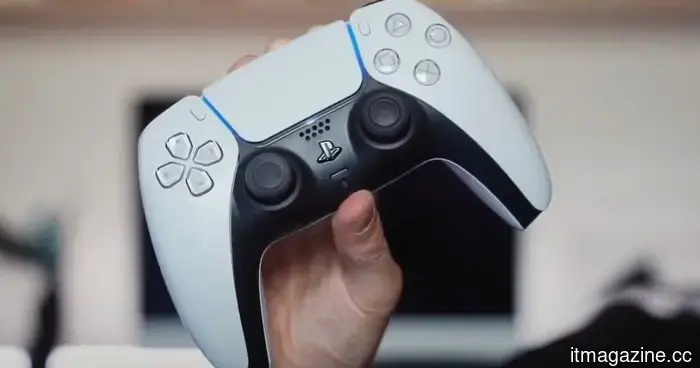 Sony's innovative PSN login patent may transform the DualSense into a security gatekeeper.
Sony's patent for PSN login might integrate the DualSense controller into the account access process, but the more significant security challenge could still be the account recovery procedure for PlayStation.
Sony's innovative PSN login patent may transform the DualSense into a security gatekeeper.
Sony's patent for PSN login might integrate the DualSense controller into the account access process, but the more significant security challenge could still be the account recovery procedure for PlayStation.
 Following the prohibition of social media, the next step might be restrictions on AI for school children.
Norway has declared a nearly complete prohibition on generative AI tools in elementary schools, citing worries about learning and development. This decision comes amidst an increasing discourse among researchers, educators, and policymakers regarding the long-term impacts of AI on learning and cognitive processes.
Following the prohibition of social media, the next step might be restrictions on AI for school children.
Norway has declared a nearly complete prohibition on generative AI tools in elementary schools, citing worries about learning and development. This decision comes amidst an increasing discourse among researchers, educators, and policymakers regarding the long-term impacts of AI on learning and cognitive processes.
 Harvard Business Review cautions that AI 'workslop' is undermining organizations from within.
HBR reports that excessive dependence on AI is leading to "knowledge decay," as subpar results undermine trust, result in wasted rework hours, and diminish the quality of decision-making.
Harvard Business Review cautions that AI 'workslop' is undermining organizations from within.
HBR reports that excessive dependence on AI is leading to "knowledge decay," as subpar results undermine trust, result in wasted rework hours, and diminish the quality of decision-making.
The heart rate sensor in the AirPods Pro 3 is almost as accurate as the Apple Watch in testing.
CNET Labs' testing revealed that the AirPods Pro 3 had an average heart rate error of 1.67% when compared to a chest strap, making it the second best after the Apple Watch Series 11, which recorded a 0.98% error.