
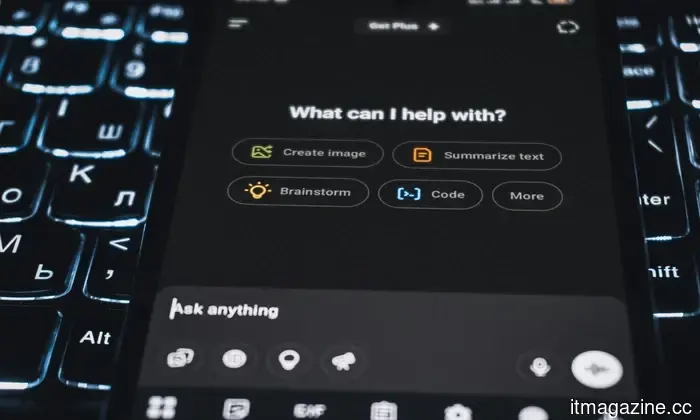
Following the prohibition of social media, the next step might be restrictions on AI for school children.
Norway is implementing restrictions on AI in schools, and other nations may follow suit.
Artificial intelligence is increasingly becoming integrated into daily life, including within educational settings. Students are utilizing tools like ChatGPT for tasks such as homework, research, writing help, and answering straightforward questions. However, a rising number of educators, researchers, and policymakers are expressing concerns about the potential detrimental effects of exposing young children to AI.
Norway appears to share these concerns. The country has declared a near-total prohibition on generative AI tools for elementary school students, arguing that it is crucial for children to cultivate essential reading, writing, and math skills independently from AI. This initiative could signal the beginning of a larger trend, especially as governments globally adopt stricter policies regarding children's technology usage.
Why is Norway imposing AI restrictions in education?
Norwegian Prime Minister Jonas Gahr Støre has stated that the administration is worried that AI could lead younger students to bypass essential stages of their education. The government maintains that reading, writing, and mathematics should continue to be the primary focus during the early stages of a child's schooling.
Nevertheless, Norway is not entirely closing the door on AI in educational settings. According to the new guidelines, students aged 6 to 13 are generally prohibited from using generative AI tools, while those aged 14 to 16 may use them under the supervision of teachers. Students in upper secondary education, aged 17 to 19, will receive instruction on how to utilize AI responsibly to prepare them for higher education and the workforce.
A recent study indicated that even brief periods of work assisted by AI could diminish independent critical thinking. Participants who depended on AI support were significantly more likely to encounter difficulties or give up once the assistance was no longer available, suggesting that excessive reliance on AI may hinder perseverance and independent thought.
The study focused on adults, which raises an important question. If mature individuals can develop a dependence on AI after only short exposure, what are the implications for children with developing minds using these tools daily? This question is becoming increasingly pressing for educators and policymakers, and Norway’s new restrictions imply that some governments are no longer willing to wait for a conclusive answer.
Are AI restrictions poised to be the next significant policy shift?
Norway’s regulations on AI are indicative of a broader movement. The country has also prohibited smartphones in schools and is considering stricter regulations on children's access to social media. Similar discussions are unfolding around the globe as governments grow more inclined to step in when new technologies are seen as potentially harmful to young users.
Not long ago, the idea of limiting children's access to social media platforms was considered far-fetched by many. Currently, laws requiring age verification, smartphone bans, and restrictions on social media are becoming more prevalent. AI may be following a similar trajectory.






Other articles
 Sony's innovative PSN login patent may transform the DualSense into a security gatekeeper.
Sony's patent for PSN login might integrate the DualSense controller into the account access process, but the more significant security challenge could still be the account recovery procedure for PlayStation.
Sony's innovative PSN login patent may transform the DualSense into a security gatekeeper.
Sony's patent for PSN login might integrate the DualSense controller into the account access process, but the more significant security challenge could still be the account recovery procedure for PlayStation.
 Hackers are widely exploiting a Gravity SMTP vulnerability to extract API keys from 100,000 WordPress websites.
Wordfence has intercepted over 17 million exploitation attempts aimed at a Gravity SMTP vulnerability that exposes API keys, OAuth tokens, and complete system reports without the need for authentication.
Hackers are widely exploiting a Gravity SMTP vulnerability to extract API keys from 100,000 WordPress websites.
Wordfence has intercepted over 17 million exploitation attempts aimed at a Gravity SMTP vulnerability that exposes API keys, OAuth tokens, and complete system reports without the need for authentication.
 Jio Platforms has submitted a request for India's largest IPO to date, planning to allocate nearly $3 billion for the repayment of debts.
Jio Platforms has submitted its Draft Red Herring Prospectus (DRHP) to SEBI for a new share issuance valued at $3.8 billion, with $2.9 billion earmarked for repaying loans to its telecom unit from ANZ, BofA, Barclays, and other financial institutions.
Jio Platforms has submitted a request for India's largest IPO to date, planning to allocate nearly $3 billion for the repayment of debts.
Jio Platforms has submitted its Draft Red Herring Prospectus (DRHP) to SEBI for a new share issuance valued at $3.8 billion, with $2.9 billion earmarked for repaying loans to its telecom unit from ANZ, BofA, Barclays, and other financial institutions.
 Harvard Business Review cautions that AI 'workslop' is undermining organizations from within.
HBR reports that excessive dependence on AI is leading to "knowledge decay," as subpar results undermine trust, result in wasted rework hours, and diminish the quality of decision-making.
The accuracy test for the heart rate sensor on AirPods Pro 3 shows it is almost on par with that of the Apple Watch.
Testing by CNET Labs indicated that the AirPods Pro 3 had an average heart rate error of 1.67% compared to a chest strap, ranking just behind the Apple Watch Series 11, which had an error rate of 0.98%.
Harvard Business Review cautions that AI 'workslop' is undermining organizations from within.
HBR reports that excessive dependence on AI is leading to "knowledge decay," as subpar results undermine trust, result in wasted rework hours, and diminish the quality of decision-making.
The accuracy test for the heart rate sensor on AirPods Pro 3 shows it is almost on par with that of the Apple Watch.
Testing by CNET Labs indicated that the AirPods Pro 3 had an average heart rate error of 1.67% compared to a chest strap, ranking just behind the Apple Watch Series 11, which had an error rate of 0.98%.
 These new Alogic displays effectively serve as a touchscreen solution for Mac users.
Mac users anticipating a touchscreen Mac now have additional third-party alternatives. Alogic's latest display series incorporates touch controls for desktop, portable, and wall-mounted screens.
These new Alogic displays effectively serve as a touchscreen solution for Mac users.
Mac users anticipating a touchscreen Mac now have additional third-party alternatives. Alogic's latest display series incorporates touch controls for desktop, portable, and wall-mounted screens.
Following the prohibition of social media, the next step might be restrictions on AI for school children.
Norway has declared a nearly complete prohibition on generative AI tools in elementary schools, citing worries about learning and development. This decision comes amidst an increasing discourse among researchers, educators, and policymakers regarding the long-term impacts of AI on learning and cognitive processes.