
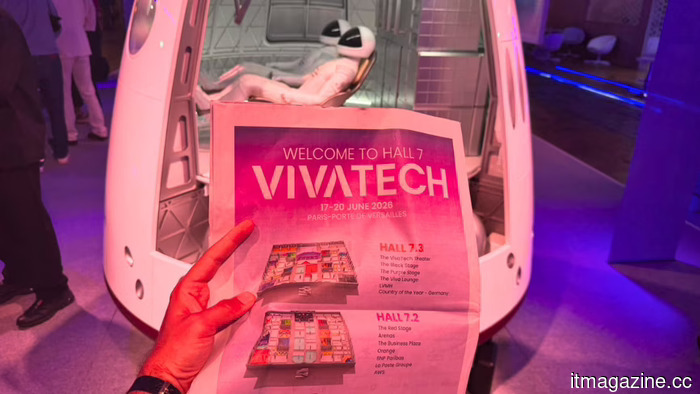
VivaTech celebrates its 10th anniversary and fully invests in AI that delivers real results.
A decade after its inception as France's response to the world's premier tech exhibitions, VivaTech has evolved into a platform where Europe presents its vision for the future, with the 2026 edition showcasing its most assured iteration to date. Every June, a part of south-west Paris transforms into a bustling hub for European technology. VivaTech, the continent's largest tech and startup festival, runs for four days at Paris Expo Porte de Versailles, bringing together founders, investors, engineers, students, and politicians all under one roof. Its purpose is straightforward yet impactful: to connect those driving innovation with those who can finance, hire, regulate, or purchase it. After ten years, this concept has solidified into a key event on the global tech calendar.
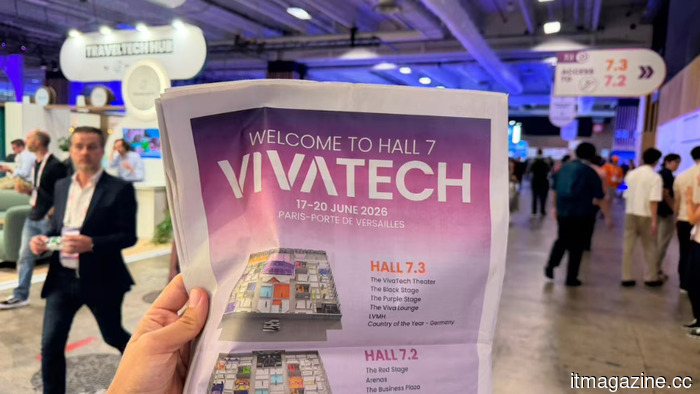
The 2026 event, which took place from June 17 to 20, marked the festival’s tenth anniversary, celebrated with impressive attendance of around 200,000 visitors, an increase from roughly 180,000 in 2025. Organizers expanded by opening a new three-floor Hall 7, which provided approximately 40% more floor space and nearly doubled the seating from the previous year. This remarkable growth reflects a 300% increase in audience size over the decade, a tripling of startups, and a twelvefold rise in the number of investors attending.
Initially launched in 2016 to compete with leading global tech fairs, VivaTech now proudly claims the title of the largest event of its kind in Europe. This year's theme, "Artificial Intelligence: Impact, Not Illusion," set a confident tone, encouraging attendees to move beyond the hype and celebrate AI that achieves genuine, measurable outcomes. The four-day agenda largely lived up to this aspiration, highlighted by significant speakers.
On the opening afternoon, Jeff Bezos took the main stage alongside Blue Origin's CEO, Dave Limp, in a discussion moderated by former NASA astronaut Mike Massimino. Instead of focusing on retail or AI specifically, Bezos argued for relocating heavy, polluting industries off-planet, envisioning a "garden planet" that could revert to its pre-industrial state. According to Bezos and Limp, shifting industries to space presents a unique opportunity for sustainable economic growth while preserving the environment. The Moon, rather than being a lofty goal, could serve as a source for essential materials for orbital infrastructure, with its water ice being utilized affordably for deep-space travel.
Limp recounted a notable comment from Bezos, who suggested that Blue Origin could potentially grow larger than Amazon, articulating an expansive, hopeful vision that resonated with the audience. Bezos remarked that there has never been a better time to be an entrepreneur, a message of encouragement from the leader of one of the most valuable companies ever, directed at an audience striving to create the next big venture.
The following day spotlighted geopolitics, with Indian Prime Minister Narendra Modi sharing the stage with French President Emmanuel Macron on June 18, as India was designated the official AI Country Partner for the event. This marked India's largest presence at the festival to date, showcasing over 80 deep-tech companies and focusing on areas like digital public infrastructure, health tech, clean energy, mobility, and advanced computing. Modi outlined a human-centric vision for AI governance titled MANAV, which emphasizes democratic values and the priorities of the Global South.
The collaborative message from Paris and New Delhi highlighted Europe and India forging their distinctive AI paths, separate from the predominating American and Chinese models. This underscored the progress of VivaTech, transitioning from a national trade show to a venue for two democracies to articulate a shared technological vision to a global audience.
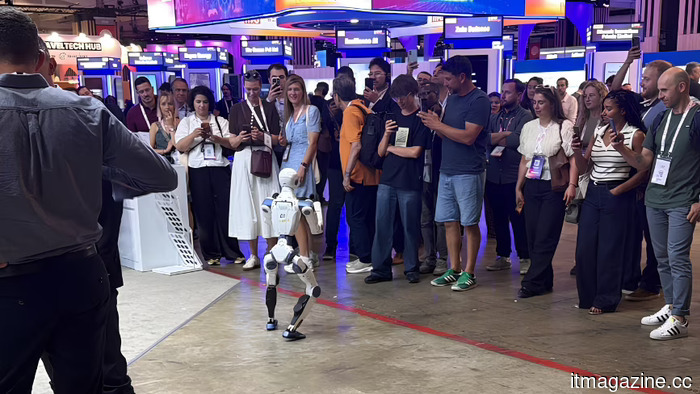
In terms of tangible innovations, the festival floor was where the idea of "impact, not illusion" was truly demonstrated. Exhibits showcasing humanoid robotics were more prevalent than ever. The Chinese company Unitree, in partnership with the French neuro-AI startup HABS, showcased a humanoid robot directed using non-invasive brain signals. French startup Enchanted Tools presented Mirokai, a wheeled humanoid previously tested in hospitals, while PAL Robotics exhibited its TIAGo Pro and a new humanoid named Kangaroo. Agibot from China featured its Lingxi X2.
Not everything revolved around robotics; Lifepods, a French company, attracted attention with a personal survival capsule designed for flood-prone areas and earthquakes, symbolizing the decade in which it was launched. The audio startup Skyted unveiled an earpiece that facilitates private conversations in noisy environments, while beauty-tech firm Perfect Corp showcased AI tools for tailored skincare and makeup solutions. The overarching theme emphasized AI as an integral part of everyday applications rather than mere spectacle.
Despite the star power, VivaTech's real strength lies in recognizing companies on the verge of significant growth. Its annual "Top 100 Next Unicorns" list, along with several awards, signifies its commitment to promoting emerging talent, and a third of the companies listed from 2019 to 2023 have already achieved unicorn status.
Other articles
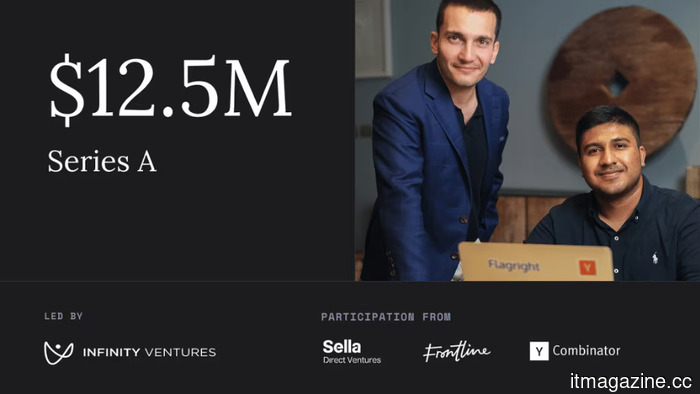 Flagright secures $12.5 million for AI-driven financial crime compliance.
Flagright secured $12.5 million in a Series A round led by Infinity Ventures for its 'AI operating system' designed to assist banks in detecting fraud and money laundering in real-time.
Flagright secures $12.5 million for AI-driven financial crime compliance.
Flagright secured $12.5 million in a Series A round led by Infinity Ventures for its 'AI operating system' designed to assist banks in detecting fraud and money laundering in real-time.
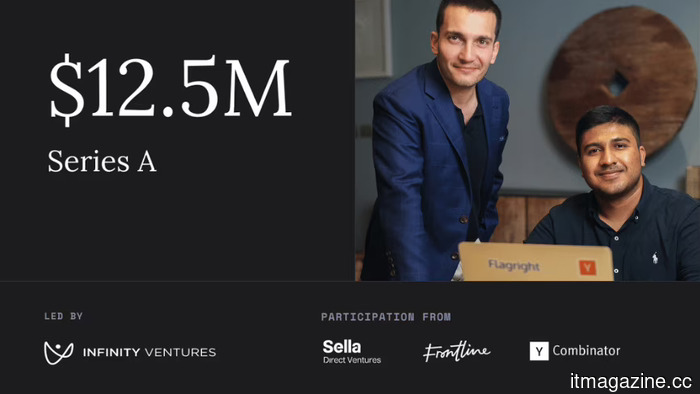 Flagright secures $12.5 million for AI-driven compliance in financial crime prevention.
Flagright secured $12.5 million in a Series A funding round led by Infinity Ventures for its 'AI operating system' designed to assist banks in detecting fraud and money laundering in real time.
Flagright secures $12.5 million for AI-driven compliance in financial crime prevention.
Flagright secured $12.5 million in a Series A funding round led by Infinity Ventures for its 'AI operating system' designed to assist banks in detecting fraud and money laundering in real time.
 General Atlantic targets China's Kling AI in a $2 billion funding round.
General Atlantic is negotiating to spearhead a $2 billion funding round for Kuaishou's Kling AI, valuing the company at $18 billion. This represents a rare investment from the US in Chinese AI as Beijing advises companies to reject US funding.
General Atlantic targets China's Kling AI in a $2 billion funding round.
General Atlantic is negotiating to spearhead a $2 billion funding round for Kuaishou's Kling AI, valuing the company at $18 billion. This represents a rare investment from the US in Chinese AI as Beijing advises companies to reject US funding.
 Retailers are seeking an exemption for AI-generated advertisements from the transparency regulations set by the EU.
A retail association contends that advertisements created by AI should be excluded from the transparency regulations outlined in Article 50 of the EU AI Act before they take effect in August.
Retailers are seeking an exemption for AI-generated advertisements from the transparency regulations set by the EU.
A retail association contends that advertisements created by AI should be excluded from the transparency regulations outlined in Article 50 of the EU AI Act before they take effect in August.
 Copia secures $26 million to safeguard the software that operates factories.
Copia secured $26 million, increasing its total funding to $55 million, to introduce version control and backups for the PLC code operating factories and essential infrastructure.
Copia secures $26 million to safeguard the software that operates factories.
Copia secured $26 million, increasing its total funding to $55 million, to introduce version control and backups for the PLC code operating factories and essential infrastructure.
 This seemingly average pen is capable of recording meetings and producing AI-generated transcripts.
The Flowtica Scribe appears to be a regular pen, yet it has the capability to record discussions, highlight significant moments, and convert meetings into AI-generated transcripts and actionable items.
This seemingly average pen is capable of recording meetings and producing AI-generated transcripts.
The Flowtica Scribe appears to be a regular pen, yet it has the capability to record discussions, highlight significant moments, and convert meetings into AI-generated transcripts and actionable items.
VivaTech celebrates its 10th anniversary and fully invests in AI that delivers real results.
VivaTech 2026 attracted 200,000 attendees to Paris for its tenth edition: Bezos presented his vision for the Moon, while Modi and Macron proposed an alternative approach to AI, and the exhibition showcased robots.