
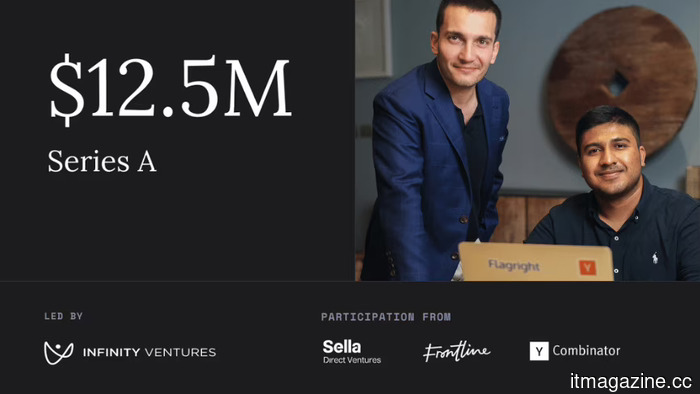
Flagright secures $12.5 million for AI-driven compliance in financial crime prevention.
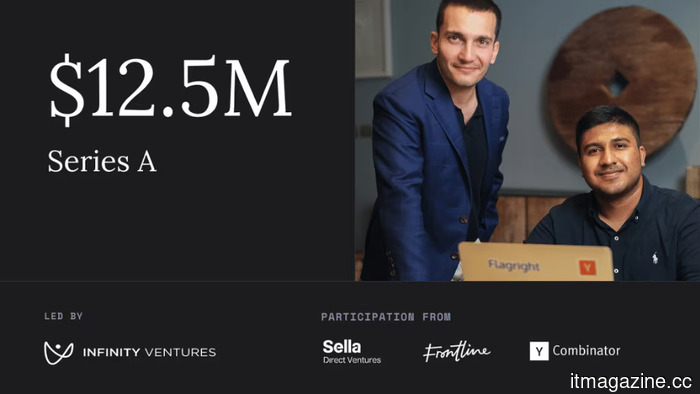
Baran Ozkan spent 15 months searching for non-existent software. As the head of financial-crime products at a European bank, he aimed for a single tool to detect money laundering and fraud. Vendors made exaggerated promises, and his own organization attempted to create one internally but fell short. Consequently, he developed the solution himself. His startup, Flagright, has successfully raised a $12.5 million Series A led by Infinity Ventures, a San Francisco fund where partners previously managed deals at PayPal. Sella Direct Ventures joined as a new investor, alongside existing backers Frontline Ventures and Y Combinator.
The pitch for the ‘operating system’
Flagright brands itself as the AI operating system for financial-crime compliance. Simply put, it aims to replace two elements: the outdated systems banks have utilized for years and the collection of disconnected tools that have been added on top. It integrates transaction monitoring, watchlist screening, risk scoring, case management, and investigations into a single platform. When a payment passes through a customer's system, Flagright assesses it in real time for fraud, money laundering, and sanctions risk. It then provides compliance teams with results that can be communicated to regulators.
This is a crucial point. Banks are unwilling to utilize a black box. Therefore, Flagright emphasizes “explainable” AI, which includes auditable agents and ensures human involvement in the process. Clients switching from older systems report up to a 93 percent decrease in false positives, according to the company.
AI competing with AI
The timing is critical. Banks are pressured from two fronts: an increase in transactions to monitor and criminals leveraging AI to execute fraud on a larger scale. Interpol estimates global fraud losses at $442 billion and states that AI significantly enhances the profitability of such crimes.
Defensive measures involve the development of their own AI, and investors are heavily supporting this, as seen with Behavox’s $175 million fundraising and various startups automating regulated back-office processes. The financial-crime compliance market was valued at approximately $26.5 billion in 2025 and could nearly triple by 2034, according to one projection.
A competitive landscape with limited time
Flagright is relatively small, with around 40 employees and offices in London, San Francisco, and Singapore, servicing over 100 banks and fintechs in more than 30 countries. It faces competition from well-funded incumbents such as NICE Actimize, Feedzai, and ComplyAdvantage.
Ozkan believes timing is key. He contends that older companies are merely attaching generative AI to their legacy systems, while Flagright has built its technology from the ground up. “We are the oldest company focused on generative AI technology in financial crime,” he asserts, a curious claim for a three-year-old company, but it reflects the industry’s slow advancement.
The new funding will be used to enhance the AI and expand into the U.S. The main question is whether a startup with 40 employees can establish itself as the standard before the larger corporations can catch up.
Other articles
 Google's AI Overviews are rambling on about imaginary creatures as if they actually exist.
According to reports, Google's AI Overviews are considering fan-fiction horror pieces from the SCP Foundation as genuine, referencing fabricated forensic records and directing users to purportedly "official" documents.
Google's AI Overviews are rambling on about imaginary creatures as if they actually exist.
According to reports, Google's AI Overviews are considering fan-fiction horror pieces from the SCP Foundation as genuine, referencing fabricated forensic records and directing users to purportedly "official" documents.
 Databricks acquires Panther Labs to enhance its cybersecurity efforts.
Databricks is acquiring Panther Labs, marking its third transaction in the cybersecurity sector, to establish a 'security lakehouse' and compete with Splunk and CrowdStrike using AI agents.
Disney is set to introduce AI-generated television advertisements in July.
Disney is set to launch a July beta of an AI tool designed to create TV advertisements, following in the footsteps of Google, Meta, and TikTok, as companies become increasingly cautious about the quality of AI-generated content.
Databricks acquires Panther Labs to enhance its cybersecurity efforts.
Databricks is acquiring Panther Labs, marking its third transaction in the cybersecurity sector, to establish a 'security lakehouse' and compete with Splunk and CrowdStrike using AI agents.
Disney is set to introduce AI-generated television advertisements in July.
Disney is set to launch a July beta of an AI tool designed to create TV advertisements, following in the footsteps of Google, Meta, and TikTok, as companies become increasingly cautious about the quality of AI-generated content.
 Andera secures $37 million to enhance audit automation through AI technology.
Andera secured a $37 million Series A funding round led by Lightspeed to automate internal audits using AI, addressing the Excel-intensive process that has seen little change since 2002.
Andera secures $37 million to enhance audit automation through AI technology.
Andera secured a $37 million Series A funding round led by Lightspeed to automate internal audits using AI, addressing the Excel-intensive process that has seen little change since 2002.
 Flagright secures $12.5 million for AI-driven financial crime compliance.
Flagright secured $12.5 million in a Series A round led by Infinity Ventures for its 'AI operating system' designed to assist banks in detecting fraud and money laundering in real-time.
Flagright secures $12.5 million for AI-driven financial crime compliance.
Flagright secured $12.5 million in a Series A round led by Infinity Ventures for its 'AI operating system' designed to assist banks in detecting fraud and money laundering in real-time.
 After being turned down by 180 investors, Bland secures $50 million for voice AI.
Voice AI startup Bland secured $50 million in a Series C funding round led by Dell Technologies Capital, confident that its proprietary models can manage calls that typically require human intervention.
After being turned down by 180 investors, Bland secures $50 million for voice AI.
Voice AI startup Bland secured $50 million in a Series C funding round led by Dell Technologies Capital, confident that its proprietary models can manage calls that typically require human intervention.
Flagright secures $12.5 million for AI-driven compliance in financial crime prevention.
Flagright secured $12.5 million in a Series A funding round led by Infinity Ventures for its 'AI operating system' designed to assist banks in detecting fraud and money laundering in real time.