
General Atlantic targets China's Kling AI in a $2 billion funding round.
A US investor is looking to invest in China’s leading AI-video company, but the timing is quite precarious. General Atlantic is reportedly in discussions to head the first external funding round for Kling AI, the video division of Chinese tech conglomerate Kuaishou. Kling is aiming to secure over $2 billion at an $18 billion valuation in preparation for a scheduled stock-market listing. While it initially targeted a $20 billion valuation, the goal was reduced to align with investor interest. Following this news, Kuaishou's shares in Hong Kong surged by up to 8.9 percent.
For General Atlantic, this would represent a significant and daring move. The firm has made early investments in companies like Meta and Uber, and supported Kling’s much larger competitor, ByteDance, in the past. However, venturing into Chinese generative AI is increasingly rare and comes with greater risks now.
The risks are predominantly political rather than technical. In April, Beijing instructed Meta to reverse its $2 billion acquisition of the Chinese-founded AI startup Manus due to concerns about losing vital technology to a competitor. Since then, China has intensified its stance, directing major AI companies to reject US investments without prior approval and imposing travel restrictions on top AI researchers. Currently, a US firm looking to invest in a Chinese AI powerhouse faces these significant hurdles.
Negotiations are still in the early phases, and there are no assurances that a deal will materialize under these conditions. Both General Atlantic and Kuaishou have opted not to comment.
Kling specializes in transforming text prompts into short films, similar to the now-defunct Sora from OpenAI. After OpenAI discontinued Sora earlier this year, Kling is hurrying to seize that opportunity. It is among a group of Chinese AI-video platforms aiming for global users, including ByteDance’s Seedance and the startup Shengshu.
The business is expanding rapidly, at least in terms of reported figures. Bloomberg indicates that Kling's annual recurring revenue reached approximately $500 million in March, up from $300 million in January following the launch of Kling 3.0. In the first quarter, revenue exceeded 650 million yuan, roughly $96 million, which is more than triple compared to the previous year. Kuaishou is contemplating a plan to separate Kling into an independent company, with reports suggesting an IPO might be aimed for 2027.
The significance of this deal, should it proceed, lies in testing how much US investment can still penetrate Chinese AI. Kling is at the forefront of a sector that the West has largely surrendered, and General Atlantic clearly wants a stake. The unanswered question remains whether Beijing will permit it.
Other articles
 Copia secures $26 million to safeguard the software that operates factories.
Copia secured $26 million, bringing its total funding to $55 million, to implement version control and backups for the PLC code that operates factories and essential infrastructure.
Copia secures $26 million to safeguard the software that operates factories.
Copia secured $26 million, bringing its total funding to $55 million, to implement version control and backups for the PLC code that operates factories and essential infrastructure.
 This seemingly average pen is capable of recording meetings and producing AI-generated transcripts.
The Flowtica Scribe appears to be a regular pen, yet it has the capability to record discussions, highlight significant moments, and convert meetings into AI-generated transcripts and actionable items.
This seemingly average pen is capable of recording meetings and producing AI-generated transcripts.
The Flowtica Scribe appears to be a regular pen, yet it has the capability to record discussions, highlight significant moments, and convert meetings into AI-generated transcripts and actionable items.
 The AI bubble, the legislation, and the prohibitions: the reckoning of artificial intelligence.
In a single week, the AI bubble encountered unprecedented debt, controlled pricing, workforce instability, and export restrictions. Here’s why 2026 will be a pivotal year for AI.
The AI bubble, the legislation, and the prohibitions: the reckoning of artificial intelligence.
In a single week, the AI bubble encountered unprecedented debt, controlled pricing, workforce instability, and export restrictions. Here’s why 2026 will be a pivotal year for AI.
 Databricks acquires Panther Labs to enhance its cybersecurity efforts.
Databricks is acquiring Panther Labs, marking its third transaction in the cybersecurity sector, to establish a 'security lakehouse' and compete with Splunk and CrowdStrike using AI agents.
Databricks acquires Panther Labs to enhance its cybersecurity efforts.
Databricks is acquiring Panther Labs, marking its third transaction in the cybersecurity sector, to establish a 'security lakehouse' and compete with Splunk and CrowdStrike using AI agents.
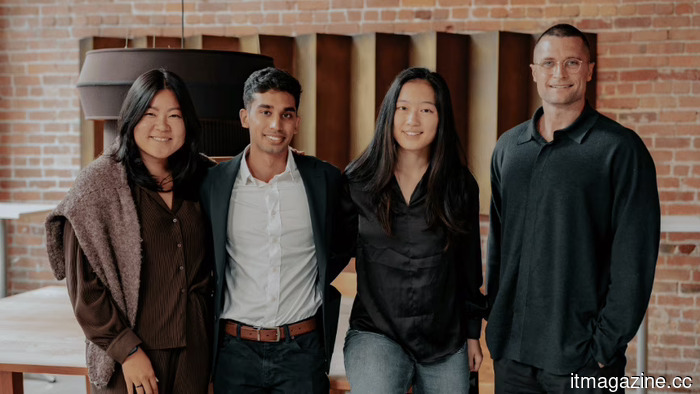 Andera secures $37 million to enhance audit automation through AI technology.
Andera secured a $37 million Series A funding round led by Lightspeed to automate internal audits using AI, addressing the Excel-intensive process that has seen little change since 2002.
Andera secures $37 million to enhance audit automation through AI technology.
Andera secured a $37 million Series A funding round led by Lightspeed to automate internal audits using AI, addressing the Excel-intensive process that has seen little change since 2002.
 Retailers are seeking an exemption for AI-generated advertisements from the transparency regulations set by the EU.
A retail association contends that advertisements created by AI should be excluded from the transparency regulations outlined in Article 50 of the EU AI Act before they take effect in August.
Retailers are seeking an exemption for AI-generated advertisements from the transparency regulations set by the EU.
A retail association contends that advertisements created by AI should be excluded from the transparency regulations outlined in Article 50 of the EU AI Act before they take effect in August.
General Atlantic targets China's Kling AI in a $2 billion funding round.
General Atlantic is negotiating to spearhead a $2 billion funding round for Kuaishou's Kling AI, valuing the company at $18 billion. This represents a rare investment from the US in Chinese AI as Beijing advises companies to reject US funding.