

The number of AI tools that assist students in cheating is increasing, and the detectors are struggling to keep pace.
A report from The New York Times has revealed that cheating tools are advancing more rapidly than the software designed to identify AI-generated writing.
A surge of new applications promoted on TikTok and YouTube is making it increasingly difficult for teachers to discern whether students are completing their own assignments or using AI assistance. The New York Times highlights that tools referred to as humanizers and autotypers have diminished the indications that typically reveal AI-written work, and intriguingly, the same companies that provide detection software may also be aiding students in bypassing it.
These tools circumvent the checks teachers commonly depend on.
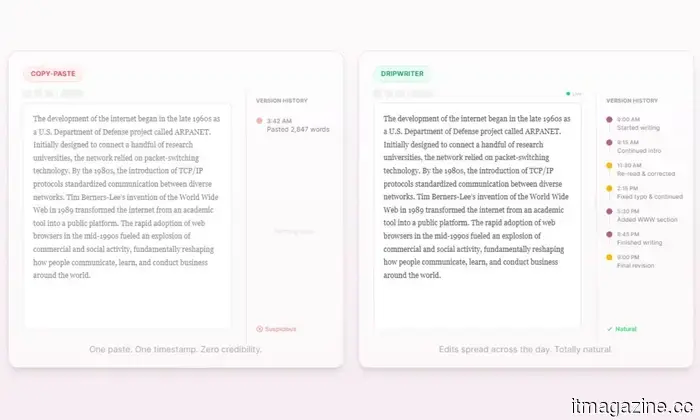
Humanizers modify AI-generated content to make it sound less mechanical and repetitive to avoid detection, while autotypers address the timing issue. Rather than having a thousand words appear all at once, which could alert a teacher reviewing version history, autotypers disperse the text gradually over several hours and even add false typos, deletions, and edits to imitate the appearance of an authentic writing process.
The website for Dripwriter illustrates how the application modifies version history to evade detection.
Applications like Dripwriter and Duey.ai openly promote their features, claiming students can fully disengage and still submit work that appears to be self-written. One app, Typeflo, vowed that students could relax and have a snack while it generated their essay. It was later revealed to be developed and marketed by the teenage son of an Emory University professor, who had been unaware of its extensive social media promotion and took it down after being alerted.
Even the detection tools designed to identify AI-written content can't be completely trusted.
GPTZero's entire premise is based on spotting AI writing that might be overlooked by other tools, but The Times discovered that a marketer employed by the company had created a fictitious graduate teaching assistant persona on TikTok to market it to students. These videos demonstrated how to use GPTZero’s browser extension to check academic papers for AI flags before submission, and disclosed that the same tool could generate a complete paper with citations from scratch.
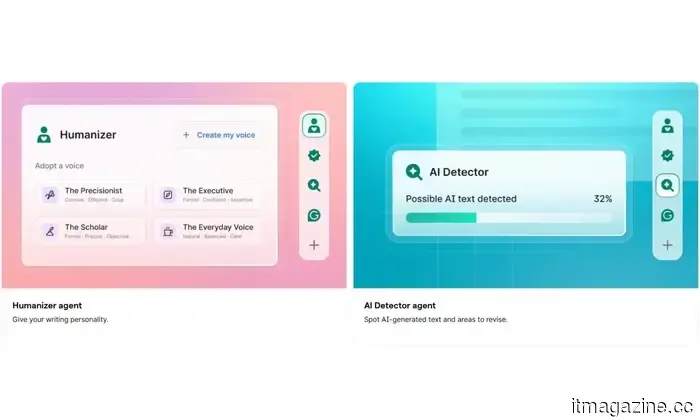
Grammarly's website features both a Humanizer agent and an AI Detector agent side by side.
In response to the article, GPTZero’s co-founder and CEO, Edward Tian, stated that the company has severed ties with the marketer and is reconsidering whether to maintain the paper-generating feature. Grammarly faces a similar conflict, offering an authorship checker for educators while simultaneously providing tools for humanizing, text generation, and paraphrasing on the same platform. This inconsistency isn’t exclusive to these two companies.
A previous report revealed that researchers from the University of Florida assessed the five most popular AI text detectors and found false negative rates as high as 99.6%, with a single adjustment in vocabulary rendering most of them ineffective. These findings imply that educational institutions relying on these tools for disciplinary measures may be operating with significantly less certainty than they believe.
Banning AI in classrooms may seem like an obvious solution, but with detection methods proving unreliable, schools may have no means of enforcing such a ban even if they wanted to. Some educators argue that this point may be irrelevant, as students will require these same tools when they enter the workforce.
---
Pranob is an experienced technology journalist with over eight years of expertise in consumer technology reporting. His work has been...
Asus has set the price of its RTX 5080 gaming laptop higher than that of a last-generation RTX 5090 model. The previous generation RTX 5090 model is actually $200 less expensive on Amazon.
Asus has discreetly introduced an RTX 5080 option for the ROG Zephyrus G16 (2026) for customers in the U.S., priced at $4,799. This is peculiar since last year’s ROG Zephyrus G16 with the more robust RTX 5090 is currently available on Amazon for $4,599. Somehow, Asus has assigned a higher price to a model with a less powerful GPU compared to its predecessor with a superior GPU.
---
This enormous ASUS gaming laptop costs as much as three new MacBook Pros.
Asus’ premier gaming laptop returns, larger, brighter, and extremely costly.
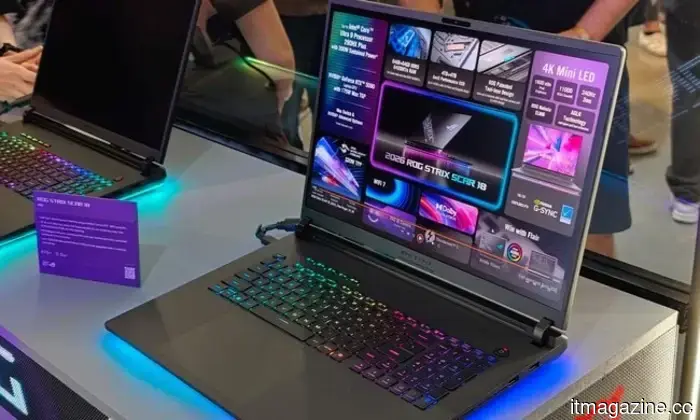
Following the impressive ROG Strix Scar 18 (2025), ASUS has crafted a successor that appears even more extravagant at a glance. The ROG Strix Scar 18 (2026) is not a compact café laptop; it is a flagship gaming machine centered around a sizable 18-inch 4K miniLED display and specifications that surpass most desktop computers. However, all of this comes with a hefty price tag, so you might want to brace yourself for this one.
---
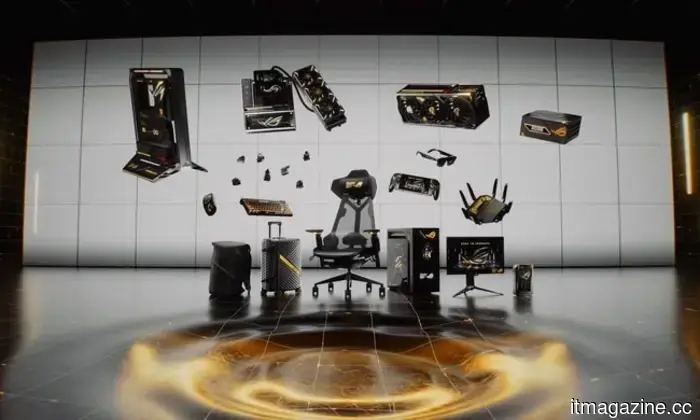
ASUS aficionados can now spend $16,578 on its 20th-anniversary gaming gear.
ASUS’ Republic of Gamers brand is celebrating its 20th anniversary by offering a lavish collection of its most impressive gaming devices. The company recently announced the pricing for its ROG 20th Anniversary Family Bucket Collector’s Edition, a remarkable



Other articles
 Are you gearing up to watch season 3 of House of the Dragon? HBO Max is providing a substantial discount.
HBO Max is offering discounts on its annual subscriptions in anticipation of the third season of House of the Dragon, providing both new and returning subscribers a more affordable option to return to Westeros.
Are you gearing up to watch season 3 of House of the Dragon? HBO Max is providing a substantial discount.
HBO Max is offering discounts on its annual subscriptions in anticipation of the third season of House of the Dragon, providing both new and returning subscribers a more affordable option to return to Westeros.
 Amazon has canceled its nearly completed film about Sam Altman, just four months after putting $50 billion into OpenAI.
Amazon MGM Studios has decided not to release Artificial, a film centered on Altman's firing from OpenAI in 2023, even though it received favorable test screenings and features a notable cast.
Amazon has canceled its nearly completed film about Sam Altman, just four months after putting $50 billion into OpenAI.
Amazon MGM Studios has decided not to release Artificial, a film centered on Altman's firing from OpenAI in 2023, even though it received favorable test screenings and features a notable cast.
 If you noticed that Hourly Activity and Naps were absent from Google Health, a recent update has reinstated them.
The 5.02 update for Google Health brings back two features that were lost during the redesign and introduces several genuinely beneficial enhancements.
If you noticed that Hourly Activity and Naps were absent from Google Health, a recent update has reinstated them.
The 5.02 update for Google Health brings back two features that were lost during the redesign and introduces several genuinely beneficial enhancements.
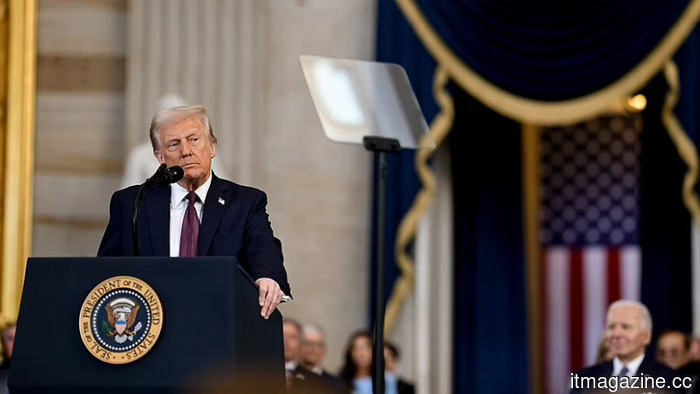 Trump states that he no longer considers Anthropic a national security risk following his G7 meeting with the company's CEO.
Trump mentioned to Axios that Anthropic has "acted very responsibly" and indicated that he might relax restrictions on its Fable 5 and Mythos 5 AI models.
Trump states that he no longer considers Anthropic a national security risk following his G7 meeting with the company's CEO.
Trump mentioned to Axios that Anthropic has "acted very responsibly" and indicated that he might relax restrictions on its Fable 5 and Mythos 5 AI models.
 Norway is prohibiting generative AI in primary schools beginning this fall.
Norway will prohibit students aged 6 to 13 from utilizing generative AI tools in schools starting in late August. Teens aged 14 to 16 will only be allowed to use these tools with teacher supervision.
Norway is prohibiting generative AI in primary schools beginning this fall.
Norway will prohibit students aged 6 to 13 from utilizing generative AI tools in schools starting in late August. Teens aged 14 to 16 will only be allowed to use these tools with teacher supervision.
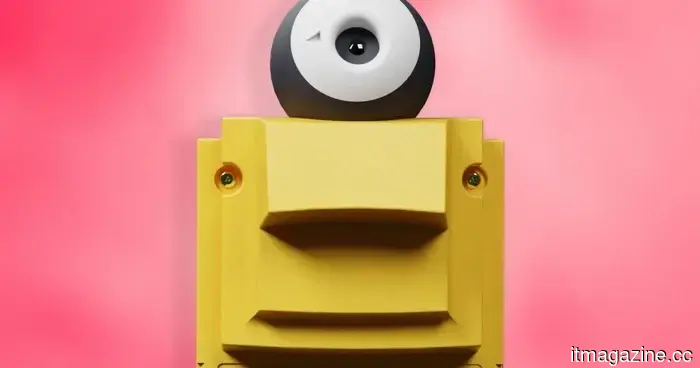 This free app provides your photos with the distinctive style of the Game Boy Camera, without requiring a cartridge.
Epilogue's latest Flashback app emulates the grainy, low-resolution photography style of the Game Boy Camera utilizing your smartphone's camera.
This free app provides your photos with the distinctive style of the Game Boy Camera, without requiring a cartridge.
Epilogue's latest Flashback app emulates the grainy, low-resolution photography style of the Game Boy Camera utilizing your smartphone's camera.
The number of AI tools that assist students in cheating is increasing, and the detectors are struggling to keep pace.
A surge of new applications is assisting students in submitting AI-generated homework to teachers without being noticed. Even the firms that produce AI detection tools are caught in this same dilemma.