

Google's AI Overviews are rambling on about imaginary creatures as if they actually exist.
A recent report indicates that Google's AI Overviews feature has presented entries from the SCP Foundation— a well-known fan fiction universe centered on fictional horror “anomalies”— as though they detailed actual creatures and events in at least 20 instances.
According to Futurism, these AI-generated summaries often omitted any reference to the fictional nature of the SCP entries.
Mistaking fictional creatures for reality
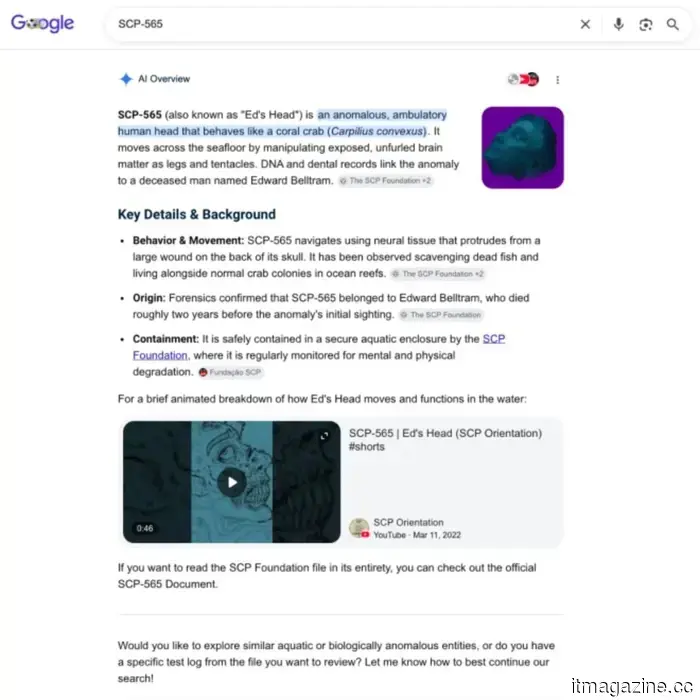
For example, a search for “SCP-565” yielded an AI Overview describing an “anomalous, ambulatory human head” that moves like a crab, which is claimed to be connected to forensic records and the identity of a deceased individual. The overview even directed users to an “official” SCP document for additional information.
Futurism further notes that a search for “SCP-426,” a fictional toaster that supposedly compels anyone who mentions it to speak in the first person, resulted in a response written in first person, where the AI identified as the toaster and recounted made-up injuries suffered by individuals attempting to imitate it. Other instances mentioned in the report included “SCP-922,” known as “Another Version of the Truth,” and “SCP-779,” a parasite purported to resemble a fairy.
In each case, the AI Overview apparently regarded the SCP Foundation's created documentation as genuine research, failing to indicate that it was fiction. This is not the first time Google's AI search results have inaccurately presented false information as truth, with previous mistakes encompassing incorrect dates and fabricated historical details.
No disclaimer or clarification
The SCP Foundation’s official website makes it clear that its entries are fictional, yet, as noted by Futurism, Google's AI Overviews seldom maintained that context, occasionally referring to "lore" without clarifying its meaning. Futurism attempted to contact Google for a comment but did not receive a response prior to publication.
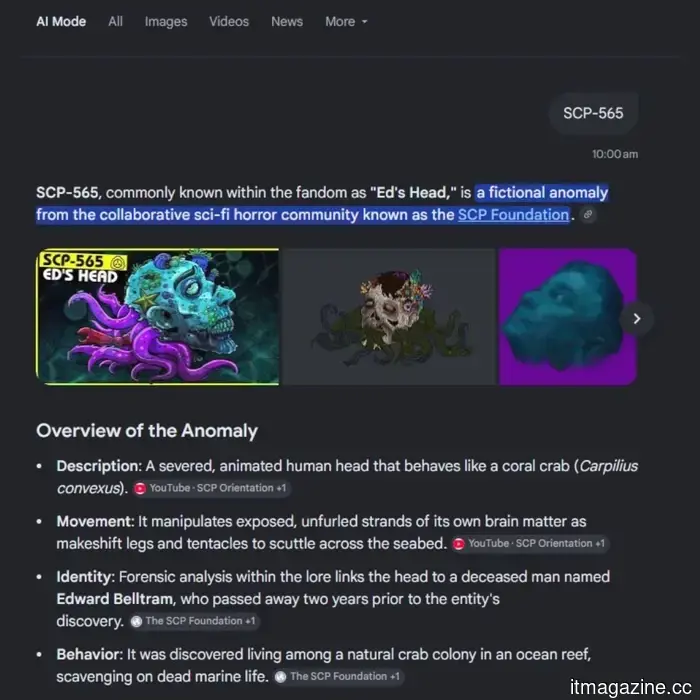
I attempted to replicate these findings, but a search for “SCP-565” did not yield any AI Overview, and Google’s AI Mode classified the entity as a “fictional anomaly” rather than presenting it as real. Efforts to reproduce this behavior with other fictional characters from the SCP universe also yielded no results, indicating that Google may have already resolved this issue, at least for some of the queries highlighted by Futurism. Google has previously implemented updates aimed at enhancing the reliability of AI Overviews and AI Mode, although accuracy issues continue to arise from time to time.
Pranob Mehrotra / Digital Trends
While I was unable to reproduce this behavior, the mistake remains significant because AI Overviews are often positioned at the top of many Google searches, and individuals unfamiliar with the SCP community, including children, may leave with the impression that these stories are factual rather than fictional horror tales. This reflects other missteps associated with AI Overviews, including an incident where the feature suggested adding non-toxic glue to pizza sauce, underscoring the persistent risk of confidently providing incorrect information in AI-powered searches.







Other articles
 Copia secures $26 million to safeguard the software that operates factories.
Copia secured $26 million, increasing its total funding to $55 million, to introduce version control and backups for the PLC code operating factories and essential infrastructure.
Copia secures $26 million to safeguard the software that operates factories.
Copia secured $26 million, increasing its total funding to $55 million, to introduce version control and backups for the PLC code operating factories and essential infrastructure.
 This seemingly average pen is capable of recording meetings and producing AI-generated transcripts.
The Flowtica Scribe appears to be a regular pen, yet it has the capability to record discussions, highlight significant moments, and convert meetings into AI-generated transcripts and actionable items.
This seemingly average pen is capable of recording meetings and producing AI-generated transcripts.
The Flowtica Scribe appears to be a regular pen, yet it has the capability to record discussions, highlight significant moments, and convert meetings into AI-generated transcripts and actionable items.
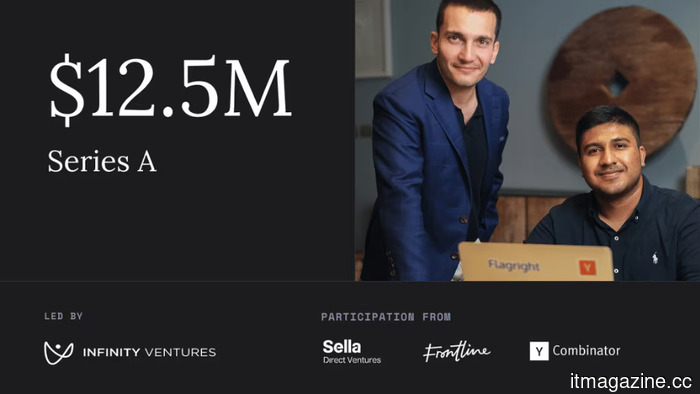 Flagright secures $12.5 million for AI-driven financial crime compliance.
Flagright secured $12.5 million in a Series A round led by Infinity Ventures for its 'AI operating system' designed to assist banks in detecting fraud and money laundering in real-time.
Flagright secures $12.5 million for AI-driven financial crime compliance.
Flagright secured $12.5 million in a Series A round led by Infinity Ventures for its 'AI operating system' designed to assist banks in detecting fraud and money laundering in real-time.
 Adobe's latest AI assistant has the potential to save you hours when using Photoshop and Premiere.
Adobe has introduced a significant expansion of AI across Firefly and Creative Cloud, integrating intelligent assistants into Photoshop, Premiere Pro, Illustrator, and various other creative tools.
Adobe's latest AI assistant has the potential to save you hours when using Photoshop and Premiere.
Adobe has introduced a significant expansion of AI across Firefly and Creative Cloud, integrating intelligent assistants into Photoshop, Premiere Pro, Illustrator, and various other creative tools.
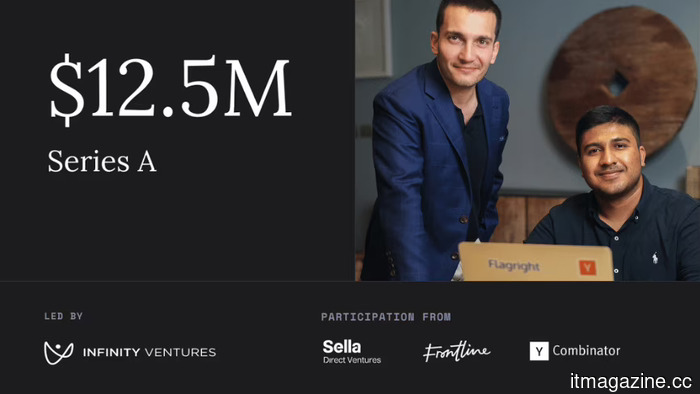 Flagright secures $12.5 million for AI-driven compliance in financial crime prevention.
Flagright secured $12.5 million in a Series A funding round led by Infinity Ventures for its 'AI operating system' designed to assist banks in detecting fraud and money laundering in real time.
Flagright secures $12.5 million for AI-driven compliance in financial crime prevention.
Flagright secured $12.5 million in a Series A funding round led by Infinity Ventures for its 'AI operating system' designed to assist banks in detecting fraud and money laundering in real time.
 Andera secures $37 million to enhance audit automation through AI technology.
Andera secured a $37 million Series A funding round led by Lightspeed to automate internal audits using AI, addressing the Excel-intensive process that has seen little change since 2002.
Andera secures $37 million to enhance audit automation through AI technology.
Andera secured a $37 million Series A funding round led by Lightspeed to automate internal audits using AI, addressing the Excel-intensive process that has seen little change since 2002.
Google's AI Overviews are rambling on about imaginary creatures as if they actually exist.
According to reports, Google's AI Overviews are considering fan-fiction horror pieces from the SCP Foundation as genuine, referencing fabricated forensic records and directing users to purportedly "official" documents.