

The AI bubble, the legislation, and the prohibitions: the reckoning of artificial intelligence.
Until last week, approximately 200 organizations had access to a preview of Anthropic’s most advanced model, Mythos, through a program named Glasswing, after the system identified numerous software vulnerabilities. However, on the evening of June 12, the US Commerce Department mandated Anthropic to revoke access for all foreign nationals worldwide. The company couldn't distinguish these users in real time, leading to the decision to take Mythos and its counterpart Fable 5 offline for all users globally. Fable 5 had recently excelled in major benchmarks for three days.
By Friday, a few early testers retained access to the preview, including security firms Dragos and Cisco. Earlier, Europe’s cybersecurity agency, ENISA, had also joined Glasswing but was subsequently pushed out by the order.
This situation reflects a small but significant aspect of the AI economy. The technology's value leads customers to seek back-door access, while its sensitivity prompts governmental intervention to cut off access remotely.
For three years, the narrative centered around abundance. The latest from the EU tech scene, insights from our founder Boris, and some questionable AI art can be found in our weekly newsletter. Sign up for free!
Models expanded. Demonstrations became clearer. Marketing claims suggested intelligence that seemed inexpensive. This June marks the end of that era across all sectors. Companies are now reassessing financial metrics, the job market, security frameworks, and political implications simultaneously.
Financial strains have emerged as the first warning sign. Man Group, one of the world’s largest hedge funds, recently cautioned about increasing bubble risks due to a surge in bond sales meant to fund AI endeavors. Sriram Reddy, the firm's head of client portfolio management, expressed that enthusiasm for the sector has led to considerable overreach.
The firm predicts AI-related bond issuance could reach 20% of the total bond supply. The dot-com peak in 2001 was around $85bn. What's noteworthy is who is borrowing now; NextEra Energy, a utility company, has become the largest hybrid-bond issuer globally, surpassing Volkswagen and BP, and sold three bonds this week. This capital is directed toward a $118bn acquisition of Dominion Energy and the necessary infrastructure behind it.
Dave McKay, CEO of Royal Bank of Canada, remarked on an unquenchable thirst for capital. The industry doesn't appear confident in its ability to meet ongoing costs, raising a recurring question TNW has posed: what will happen when the bubble bursts?
On the other hand, a counterargument exists. Evidence does not unanimously indicate doom. JPMorgan Asset Management, managing roughly $4.3tn, advises clients to remain invested in stocks. David Kelly, the chief strategist, anticipates the AI boom will reinvigorate the market through the latter half of the year, describing the economy as okay for Americans while being favorable for the stock market. George Gatch, the unit's CEO, believes a rising tide will benefit all sectors, as evidenced by Nvidia leading the S&P 500 this week.
The Philadelphia semiconductor index even reached a new high.
Those betting against this trend have faced losses. Polen Capital, a firm from Boca Raton, opted for Adobe over Nvidia, resulting in its assets plummeting from approximately $14bn to below $2bn, with Bloomberg estimating the poor bet cost around $50bn. A bubble and a boom can be viewed as the same occurrence from different perspectives, as will be seen by 2026.
The era of unlimited access is coming to an end.
Cost dynamics are reshaping the ongoing dialogue. For years, developers integrated AI into their products while absorbing the computing expenses to attract users. That era is now concluding. The industry is transitioning from flat-rate subscriptions to token-based pricing that charges based on actual usage. Even Google has implemented an AI Credits system to meter access, with annual capital expenditures rising towards $175bn to $185bn.
This repricing has subtle yet significant repercussions. Apollo’s negotiations regarding Shutterfly's debt highlighted the weight AI competition places on average borrowers. Enterprises are also realizing the true costs of implementing AI on a large scale. Free resources are becoming metered services, which opens them up to scrutiny.
The impact on labor illustrates the simultaneous pressures of abundance and concern. Both phenomena are occurring concurrently. McKay is impressed by how quickly AI enhances staff capabilities. However, a pessimistic viewpoint comes from Madrid, where private equity firm Portobello has halted the sale of its 76% stake in the legal services platform Legálitas due to fears that AI could diminish the sector's value before a successful exit.
Europe seeks to employ AI to fill gaps rather than create new ones, as its factory workforce is aging faster than companies can replenish it. Consequently, the continent aims to utilize AI on production floors to bridge this gap, led by Mistral, Siemens, and Schneider Electric.
Critics, however, caution that Europe’s ambition for technological sovereignty may not be entirely realistic.
Other articles
 Databricks acquires Panther Labs to enhance its cybersecurity efforts.
Databricks is acquiring Panther Labs, marking its third transaction in the cybersecurity sector, to establish a 'security lakehouse' and compete with Splunk and CrowdStrike using AI agents.
Databricks acquires Panther Labs to enhance its cybersecurity efforts.
Databricks is acquiring Panther Labs, marking its third transaction in the cybersecurity sector, to establish a 'security lakehouse' and compete with Splunk and CrowdStrike using AI agents.
 Databricks acquires Panther Labs as part of its cybersecurity initiative.
Databricks is acquiring Panther Labs, marking its third move in the cybersecurity sector, to create a 'security lakehouse' and compete against Splunk and CrowdStrike using AI agents.
Databricks acquires Panther Labs as part of its cybersecurity initiative.
Databricks is acquiring Panther Labs, marking its third move in the cybersecurity sector, to create a 'security lakehouse' and compete against Splunk and CrowdStrike using AI agents.
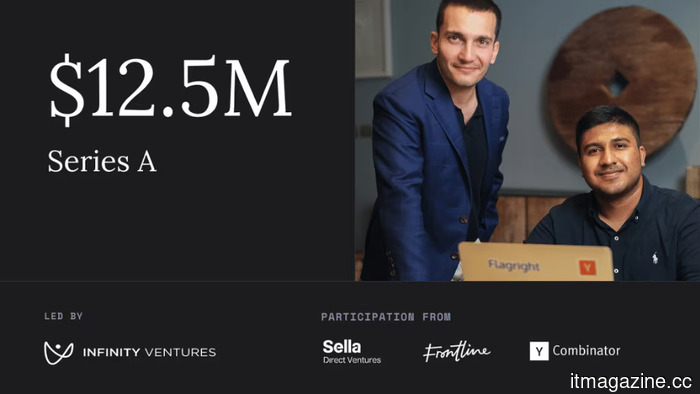 Flagright secures $12.5 million for AI-driven financial crime compliance.
Flagright secured $12.5 million in a Series A round led by Infinity Ventures for its 'AI operating system' designed to assist banks in detecting fraud and money laundering in real-time.
Flagright secures $12.5 million for AI-driven financial crime compliance.
Flagright secured $12.5 million in a Series A round led by Infinity Ventures for its 'AI operating system' designed to assist banks in detecting fraud and money laundering in real-time.
 After being turned down by 180 investors, Bland secures $50 million for voice AI.
Voice AI startup Bland secured $50 million in a Series C funding round led by Dell Technologies Capital, confident that its proprietary models can manage calls that typically require human intervention.
After being turned down by 180 investors, Bland secures $50 million for voice AI.
Voice AI startup Bland secured $50 million in a Series C funding round led by Dell Technologies Capital, confident that its proprietary models can manage calls that typically require human intervention.
 Andera secures $37 million to automate auditing using AI.
Andera secured a $37 million Series A funding round led by Lightspeed to enhance internal audits through AI, addressing the Excel-dependent workload that has seen little change since 2002.
Andera secures $37 million to automate auditing using AI.
Andera secured a $37 million Series A funding round led by Lightspeed to enhance internal audits through AI, addressing the Excel-dependent workload that has seen little change since 2002.
 Retailers are seeking an exemption for AI-generated advertisements from the transparency regulations set by the EU.
A retail association contends that advertisements created by AI should be excluded from the transparency regulations outlined in Article 50 of the EU AI Act before they take effect in August.
Retailers are seeking an exemption for AI-generated advertisements from the transparency regulations set by the EU.
A retail association contends that advertisements created by AI should be excluded from the transparency regulations outlined in Article 50 of the EU AI Act before they take effect in August.
The AI bubble, the legislation, and the prohibitions: the reckoning of artificial intelligence.
In a single week, the AI bubble encountered unprecedented debt, controlled pricing, workforce instability, and export restrictions. Here’s why 2026 will be a pivotal year for AI.