
Big Tech claimed that AI would replace your job. Now employers are saying otherwise.
For the past two years, those developing AI repeatedly warned that it would take our jobs. However, this month, the same individuals shifted their narrative, claiming it will generate new jobs instead.
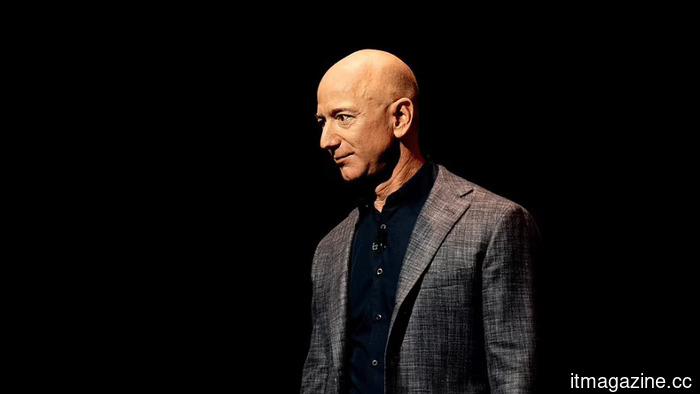
Speaking in Paris, Jeff Bezos stated that AI would lead to “a labor shortage” rather than widespread unemployment, and it would generate nearly limitless demand for builders and entrepreneurs. Just days prior, Sam Altman expressed his relief at being “delighted to be wrong” about one of his major concerns: that AI would swiftly eliminate white-collar positions.
As Gizmodo aptly noted, corporate leaders have ceased to publicly threaten job displacement.
This represents a significant shift. Not long ago, Altman cautioned that “whole categories of jobs” would vanish. Other executives competed to announce how many jobs their technologies would soon render obsolete, even as new graduates faced one of the toughest job markets in recent years. Now, the narrative has shifted to one of opportunity and collaboration between humans and AI.
So, what caused this change, and why now? The timing plays a crucial role. OpenAI and Anthropic are nearing significant public offerings, and a jobs apocalypse does not appeal to retail investors. Growing worker dissent and increasing scrutiny from regulators have rendered doomsday talk less advantageous, while a message of optimism resonates better on conference stages.
It's also important to consider who is delivering these messages. Bezos now heads Prometheus, a $41 billion AI firm. His statement that "AI creates jobs" is more than just a forecast; it serves as a sales pitch.
The reality, however, is more complicated than either extreme narrative suggests. A new PwC study revealed that AI is dividing the labor market: it benefits companies that utilize AI to enhance their workforce, while those that solely focus on cutting costs are left behind. This situation does not signify collapse; it represents a redistribution of roles.
Nonetheless, job losses are significant. The tech industry eliminated hundreds of thousands of positions in 2025, and graduate unemployment remains stubbornly high. The individuals affected are very much real. For example, the retailer Rainbow cautioned its fashion models that “fewer people will be needed,” and then those models saw AI-generated versions of themselves displayed on the company's website.
It's essential to focus on what these companies are actually building, rather than solely on their statements. Both narratives are partly shaped by public relations. The doomsday scenario flattered the technology by suggesting that our models are so powerful they threaten livelihoods, which also provided justification for layoffs that stemmed primarily from expense management. Mark Zuckerberg acknowledged that Meta's job cuts were driven by capital expenditure, not productivity from AI. The renewed optimism serves to benefit upcoming IPOs.
The reality is much less exciting. The eventual impact remains uncertain, with effects varying across sectors, and the most reliable indicator is how these companies treat their own employees—not what their leaders proclaim on stage. While executives have altered their rhetoric, the layoff notifications remain unchanged.
Until the situation regarding employment reflects the positive outlook presented, approach this newfound optimism with the same skepticism you had toward the earlier doomsday predictions: see it as a prediction from those with a vested interest to promote.
Other articles
 This research discovered an unexpected mental health benefit lurking in your game collection.
A recent study discovered that adults who engage in open-world games or casual titles tend to feel less lonely and exhibit greater emotional resilience compared to those who do not play games at all.
This research discovered an unexpected mental health benefit lurking in your game collection.
A recent study discovered that adults who engage in open-world games or casual titles tend to feel less lonely and exhibit greater emotional resilience compared to those who do not play games at all.
 Warren secures €10 million to reform Belgium's workplace pension system.
Warren, a fintech company located in Ghent, has secured €10 million in funding, spearheaded by Motive Ventures, to address Belgium's workplace pension issues through a no-fee ETF fund and an AI coaching system.
Warren secures €10 million to reform Belgium's workplace pension system.
Warren, a fintech company located in Ghent, has secured €10 million in funding, spearheaded by Motive Ventures, to address Belgium's workplace pension issues through a no-fee ETF fund and an AI coaching system.
 Guardrails Alliance: a $5 million political action committee for tech workers taking on Big Tech.
The Guardrails Alliance, a super PAC for tech workers and unions with a budget of $5 million, has been established to challenge the over $100 million in funding from Silicon Valley supporting pro-AI candidates.
Guardrails Alliance: a $5 million political action committee for tech workers taking on Big Tech.
The Guardrails Alliance, a super PAC for tech workers and unions with a budget of $5 million, has been established to challenge the over $100 million in funding from Silicon Valley supporting pro-AI candidates.
 AI cheating tools are succeeding. The focus isn't on detection.
AI humanizers and autotypers have now outperformed the detectors designed to identify cheaters. The core issue lies not in the tools themselves, but in what schools decide to evaluate.
AI cheating tools are succeeding. The focus isn't on detection.
AI humanizers and autotypers have now outperformed the detectors designed to identify cheaters. The core issue lies not in the tools themselves, but in what schools decide to evaluate.
 This research uncovered an unexpected benefit for mental health lurking in your game collection.
A recent study discovered that adults who engage in open-world games or casual titles feel less lonely and exhibit greater emotional resilience compared to those who do not play games at all.
This research uncovered an unexpected benefit for mental health lurking in your game collection.
A recent study discovered that adults who engage in open-world games or casual titles feel less lonely and exhibit greater emotional resilience compared to those who do not play games at all.
 A city halted the establishment of AI data centers, while Amazon investigated its engineers.
Three Amazon engineers report that they were subjected to an investigation following their support for limits on Seattle's data centers. The opposition to the AI expansion has now gained bipartisan support and has become an internal matter.
A city halted the establishment of AI data centers, while Amazon investigated its engineers.
Three Amazon engineers report that they were subjected to an investigation following their support for limits on Seattle's data centers. The opposition to the AI expansion has now gained bipartisan support and has become an internal matter.
Big Tech claimed that AI would replace your job. Now employers are saying otherwise.
Jeff Bezos predicts that AI will lead to a shortage of labor, while Sam Altman expresses his pleasure in being mistaken about job losses. The layoffs and the timing of the IPO add complexity to the situation.