
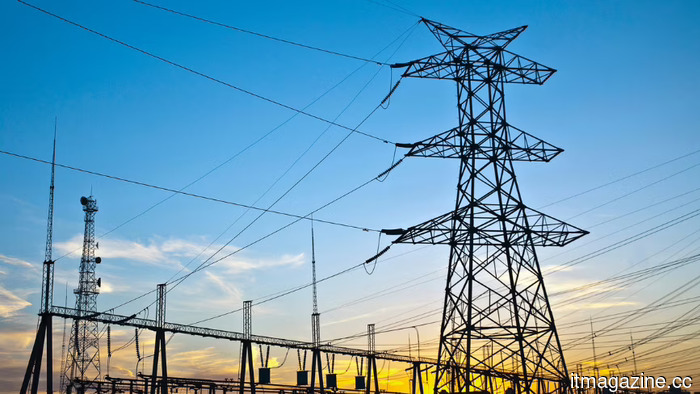
FERC accelerates the process for connecting data centers to the grid.
TL;DR: The Federal Energy Regulatory Commission (FERC) instructed six major grid operators to expedite interconnections for data centres, but this does not tackle the fundamental issue of insufficient generating capacity. On the same day, the Trump administration allocated $765 million to annul offshore wind leases, exacerbating the supply dilemma.
On Thursday, FERC mandated that six major grid operators prioritize interconnection requests from data centres and other substantial electricity consumers. The unanimously approved directive requires grid operators to show that data centres can connect to the transmission system promptly and systematically.
Data centres are charged with covering their own interconnection costs. Additionally, FERC urged grid operators to explore "alternative transmission technologies," hinting at innovations like solid-state transformers and superconducting transmission lines.
The queue issue is a significant concern, as the orders address a delay that has frustrated data centre developers and utilities nationwide. By the end of 2023, requests for grid connections from power plants surpassed the current capacity of the existing fleet, creating a situation where the queue was longer than the grid could potentially accommodate.
Grid operators now have 30 days to report available generating capacity and 60 days to justify or adjust electricity rates in their areas. FERC also instructed them to be more open to behind-the-meter power solutions, which tech companies have increasingly turned to out of necessity.
This urgency stems from Energy Secretary Chris Wright's October caution that slow data centre grid connections might jeopardize U.S. competitiveness in AI. As per Bloomberg, electricity demand from data centres is projected to nearly triple by 2035, with wholesale electricity rates increasing by up to 267 percent compared to five years ago.
PJM Interconnection, the largest grid operator in the U.S. covering 13 states, has become emblematic of these struggles, with capacity auction prices soaring from $28.92 to $329.17 per megawatt-day in just two years, resulting in an estimated $9.4 billion in additional costs.
American Electric Power, a key utility in PJM, has considered withdrawing from the operator altogether, while federal officials have discussed breaking PJM into smaller units to alleviate the strain.
Community backlash is also intensifying, as grassroots organizations halted 75 data centre projects worth $130 billion in the first quarter of 2026, driven by concerns over electricity costs, water usage, and noise.
While FERC's orders focused on the interconnection of data centres, they did not resolve the critical issue of electricity supply, which has compelled Denmark to suspend all new grid connections due to an overshift in demand driven by AI, overwhelming its clean energy resources.
On the same day, the Trump administration revealed it would pay $765 million to Invenergy to cancel four offshore wind leases off the coasts of California, Maine, and New York, with one project estimated to produce up to 2.4 gigawatts, enough at peak output to supply approximately 1.8 million homes. Invenergy announced plans to redirect the funds towards natural gas plants in the Midwest and geothermal projects in the western U.S. Overall, the Trump administration has spent around $2.6 billion to halt offshore wind initiatives.
This contrast illustrates the central conflict in U.S. energy policy, where Washington is pushing the grid to facilitate quicker data centre connections while simultaneously funding the cancellation of one of the few substantial new sources of large-scale generation that could meet this demand. Projects like Meta's $200 billion gas-powered Hyperion campus in Louisiana highlight the immense demand the grid needs to manage, and whether the supply side can keep pace will depend on decisions being made not at FERC, but at the White House.
Other articles
 General Intuition is securing $300 million for AI developed using gaming data.
The startup turned down OpenAI's $500 million offer for its gaming video data. It is now seeking to raise $300 million at a valuation of $2 billion to develop AI agents using 2 billion video game clips annually.
General Intuition is securing $300 million for AI developed using gaming data.
The startup turned down OpenAI's $500 million offer for its gaming video data. It is now seeking to raise $300 million at a valuation of $2 billion to develop AI agents using 2 billion video game clips annually.
 Waymo's robotaxis continue to encounter new obstacles, with construction zones being the most recent addition.
Waymo's robotaxis navigated highway construction areas 13 times before the company decided to remove the entire fleet from highway operations.
Waymo's robotaxis continue to encounter new obstacles, with construction zones being the most recent addition.
Waymo's robotaxis navigated highway construction areas 13 times before the company decided to remove the entire fleet from highway operations.
 Spotify introduces Reserved ticketing for dedicated fans.
Spotify's Reserved feature will retain concert tickets for Premium members based on their listening habits, debuting in the US through a multi-year exclusive partnership with Live Nation.
Spotify introduces Reserved ticketing for dedicated fans.
Spotify's Reserved feature will retain concert tickets for Premium members based on their listening habits, debuting in the US through a multi-year exclusive partnership with Live Nation.
 A 201-year-old mutual bank has recently established an AI Center of Excellence in collaboration with a startup partner.
Liberty Bank, the oldest mutual bank in the United States with assets amounting to $9 billion, has established an AI Center of Excellence in collaboration with enterprise AI partner Flare AI.
A 201-year-old mutual bank has recently established an AI Center of Excellence in collaboration with a startup partner.
Liberty Bank, the oldest mutual bank in the United States with assets amounting to $9 billion, has established an AI Center of Excellence in collaboration with enterprise AI partner Flare AI.
 Rivian faces a lawsuit for making misleading claims about the self-driving capabilities of its first-generation R1.
A class action claims that Rivian spent five years guaranteeing hands-free driving for its R1T and R1S models, despite being aware that the first-generation hardware would never be able to support such features.
Rivian faces a lawsuit for making misleading claims about the self-driving capabilities of its first-generation R1.
A class action claims that Rivian spent five years guaranteeing hands-free driving for its R1T and R1S models, despite being aware that the first-generation hardware would never be able to support such features.
 Pre-orders for GTA 6 will begin on June 25 as Rockstar intensifies its marketing efforts for the game's launch.
Rockstar Games has announced that pre-orders for GTA 6 will begin on June 25, providing fans with further assurance that the eagerly awaited game is still set for its November 2026 launch.
Pre-orders for GTA 6 will begin on June 25 as Rockstar intensifies its marketing efforts for the game's launch.
Rockstar Games has announced that pre-orders for GTA 6 will begin on June 25, providing fans with further assurance that the eagerly awaited game is still set for its November 2026 launch.
FERC accelerates the process for connecting data centers to the grid.
FERC instructed grid operators to expedite the connection of data centers to the grid. Meanwhile, the Trump administration allocated $765 million on the same day to terminate offshore wind leases.